




Why October is Prime Time for Saturn
October 2026 is an exceptional month for viewing Saturn, largely thanks to an event called 'opposition' which occurred on October 4th. Opposition is when Earth passes directly between the Sun and an outer planet. This alignment makes Saturn appear at its
biggest and brightest for the year and means it's visible for most of the night. It rises in the east around sunset, climbs to its highest point in the sky around midnight, and sets in the west near sunrise. While opposition day was the peak, Saturn moves slowly, so these perfect viewing conditions persist throughout the entire month.
How to Find the Ringed Planet
Finding Saturn is easier than you might think. You won't need a telescope just to spot it; the planet is bright enough to be seen with the naked eye. Look towards the eastern sky after sunset for a bright, steady, golden-yellow point of light. A key difference between planets and stars is that stars tend to twinkle, while planets usually shine with a more constant light. This October, Saturn will be in the constellation Cetus (the Whale), located near Pisces. A helpful landmark is the Great Square of Pegasus; Saturn will be shining brightly below this large, four-star box in the sky.
What to Expect: Naked Eye vs. Telescope
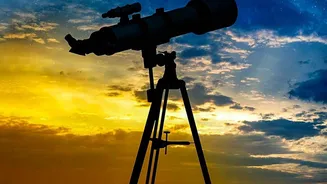
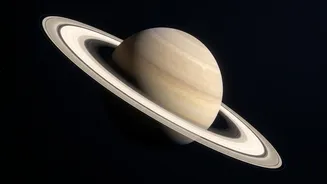
Your viewing experience will depend entirely on the equipment you use. With just your eyes, Saturn will appear as a bright, unblinking star. To see the feature that makes Saturn famous—its magnificent rings—you will need some form of optical aid. While powerful binoculars might show the planet as a slightly elongated oval, a telescope is required to truly resolve the rings as a separate structure. Even a small beginner's telescope with at least 25x magnification is powerful enough to reveal the rings, a sight that hooks many people on astronomy for life.
Tips for the Best Viewing Experience
To make the most of your stargazing session, a little preparation goes a long way. First, check the weather forecast for a clear night. Next, check the lunar calendar. The Moon's brightness can wash out fainter objects. The new moon in October 2026 falls on October 10th, making the days around it ideal for dark skies. Give your eyes at least 15-20 minutes to fully adjust to the darkness, and avoid looking at your bright phone screen. If you're using a telescope, let it sit outside for an hour to cool down to the ambient temperature, which prevents blurry views. And don't forget to dress warmly!
What You're Looking At
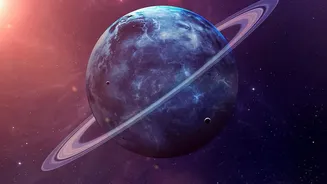
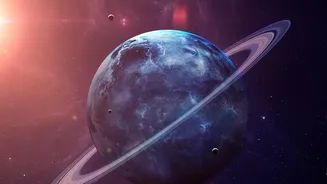
When you finally get Saturn in your eyepiece, what exactly are you seeing? Those stunning rings are made of billions of individual pieces of ice and rock, ranging in size from tiny dust grains to chunks as large as a house. With a decent backyard telescope on a steady night, you might even be able to spot the Cassini Division, a prominent dark gap separating Saturn's two main rings. The planet's rings are tilted towards Earth at an angle of about 7.5 degrees this year, giving a clear view of their southern face. You may also spot Saturn's largest moon, Titan, appearing as a tiny star-like point of light nearby.