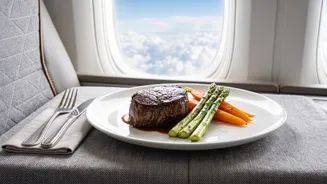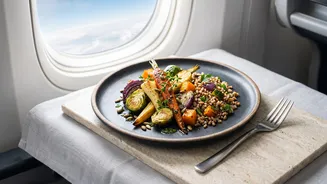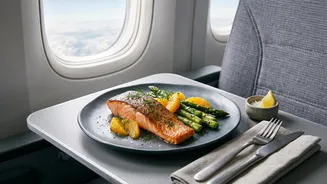






You settle into your seat, the meal arrives, and it looks promising. Yet, the first bite is a let-down: bland, flat, and uninspired. Before you blame the airline's chef, know that the culprit isn't the food—it's the plane itself.
An Atmosphere Drier Than a Desert
The main offender behind
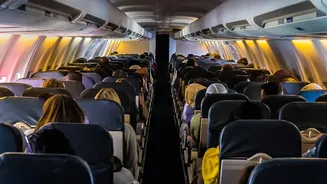
your disappointing in-flight dining experience is the incredibly low humidity in the cabin. At a cruising altitude of 35,000 feet, the air is almost completely devoid of moisture. To maintain a safe and stable environment, this frigid, dry air is pumped into the cabin, bringing the relative humidity down to between 10-20%. For context, the Sahara Desert averages around 25% humidity. This desert-like air immediately begins to dry out your body, starting with your nose and mouth. This is an engineering necessity, as higher humidity could cause condensation and corrosion on the aircraft's structure, but it has a significant biological cost.
How Dry Air Disables Your Sense of Smell
Your sense of smell is responsible for up to 80% of what you perceive as flavour. Your olfactory receptors, located in the nasal passages, are coated in a thin layer of mucus. For you to smell anything, odour molecules from your food must first dissolve into this mucus before they can be detected. When you breathe in the bone-dry cabin air for an extended period, this crucial mucous membrane evaporates. Your olfactory system essentially becomes numb. Without the ability to properly detect aromas, the complex flavours of a gourmet meal—the difference between lamb and beef, or lemon and lime—simply disappear, leaving only the most basic tastes behind.
Pressure and Your Palate
As if a disabled sense of smell wasn't enough, the low cabin pressure also wages war on your taste buds. While planes are pressurized, it’s not to sea-level pressure. The cabin environment is equivalent to being at an altitude of 6,000 to 8,000 feet. This lower pressure, combined with the dry air, has been shown to reduce your perception of saltiness and sweetness by as much as 30%. Research conducted for Lufthansa in a simulated cabin environment confirmed this dramatic drop. This is why food that was perfectly seasoned by chefs on the ground can taste incredibly bland once it reaches your tray table at cruising altitude.
The Unexpected Role of Engine Noise
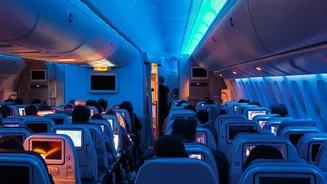
The final factor in this sensory assault is the constant, loud drone of the jet engines, which typically hovers around 85 decibels. It might seem strange, but studies have shown that loud background noise can further suppress our ability to perceive sweet tastes. However, there's a fascinating twist: that same noise appears to enhance our perception of 'umami,' the fifth basic taste known for its savoury, rich quality. This explains the enduring popularity of tomato juice on flights—it's packed with umami-rich compounds called glutamates, which cut through the sensory fog and deliver a satisfying flavour when other drinks fall flat.
How Airlines Fight Back with Flavour
Airline caterers are well aware of this triple-threat of dryness, pressure, and noise. They don't just reheat standard restaurant food; they design menus specifically for the inflight environment. To compensate for passengers' dulled palates, chefs intentionally increase salt, spices, and acidity in their recipes. They also lean heavily on umami‐rich ingredients like tomatoes, mushrooms, parmesan cheese, and soy sauce, which retain their flavour at altitude. Braises, curries, and stews are also popular choices because their sauces help retain moisture and carry aromas more effectively than a dry piece of grilled chicken. So, the next time your in‐flight meal seems a bit heavily seasoned, remember it was made that way on purpose, all to give you a fighting chance at tasting something.