



A Sip of History
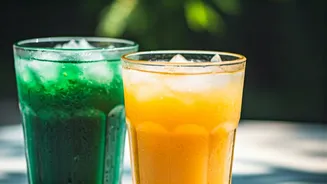
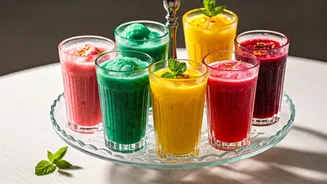
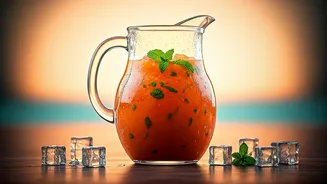
The story of sherbet, or ‘sharbat’, is a journey through time and empires. Derived from the Arabic word ‘shariba’, which means ‘to drink’, the concept is believed to have originated in ancient Persia. It was a luxurious concoction made from fruit and flower
petals, designed to refresh and delight. However, it was the Mughal emperors who truly embedded sherbet into the cultural fabric of India. They transformed it from a simple refreshment into an art form, a symbol of hospitality and sophistication in their opulent courts. Babur, the first Mughal emperor, was famously fond of these drinks and often lamented the lack of them when he first arrived in India, going so far as to send for ice from the Himalayas to cool his beverages.
The Mughal Royal Touch
Under Mughal patronage, the art of sherbet-making flourished. Royal kitchens, known as ‘matbakhs’, had dedicated artisans who perfected complex recipes. They used exotic ingredients like rose petals from Kannauj, sandalwood, vetiver (khus), and rare fruits. These weren't just about flavour; they were about creating a multi-sensory experience. The colours were vibrant, the aromas were intoxicating, and the temperatures were perfectly chilled with ice laboriously transported from the mountains. Empress Nur Jahan, known for her refined taste, is credited with creating a legendary rose sherbet. Serving a guest a glass of meticulously prepared sherbet was the highest form of welcome, a practice that trickled down from the palaces to the people.
Nature's Cooling System
The term ‘wellness sip’ is not a modern marketing gimmick; it’s rooted in centuries of traditional wisdom. Indian sherbets were formulated based on the principles of Ayurveda and Unani medicine, designed to balance the body and counteract the harsh effects of the summer heat. Each key ingredient served a specific purpose. Khus, for instance, is renowned for its powerful cooling properties. Bel (wood apple) is a digestive aid, perfect for soothing the stomach during hot weather. Kokum, popular along the Konkan coast, is not only refreshing but also known to prevent dehydration and acidity. Similarly, rose petals are believed to calm the mind and body, while fennel (saunf) acts as a coolant and a mouth freshener. These drinks were a form of preventative medicine, helping people stay healthy and hydrated naturally.
A Tapestry of Regional Flavours
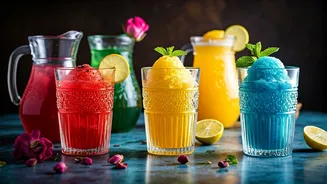
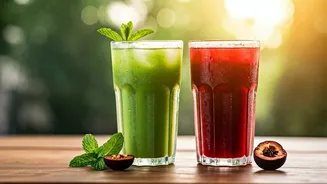
As the tradition of sherbet spread across India, it adapted to local climates and flora, creating a rich and diverse tapestry of flavours. In the north, you might find a refreshing Aam Panna made from raw mangoes to fight heatstroke, or a Falsa sherbet when the tangy berries are in season. Head south, and you’ll encounter Nannari sherbet, made from the root of the Indian sarsaparilla, prized for its blood-purifying and cooling qualities. In the west, the deep purple Kokum sherbet is a staple. In the east, the Bael sherbet reigns supreme during the summer months. Each region took the basic concept of a fruit or floral concentrate mixed with water and sugar and made it distinctly its own, celebrating local produce and traditional knowledge.
Rediscovering Our Roots
In an age dominated by carbonated drinks and processed juices loaded with artificial sweeteners and preservatives, the humble sherbet offers a compelling alternative. It represents a return to natural ingredients and a more mindful way of consumption. Thankfully, a quiet revival is underway. Home cooks are looking up their grandmothers' recipes, and artisanal brands are bottling traditional sherbet concentrates without chemical additives. These drinks are more than just a nostalgic throwback; they are a testament to the fact that the most effective solutions are often the simplest ones, passed down through generations. They connect us to our history, our land, and a more sustainable way of living.