




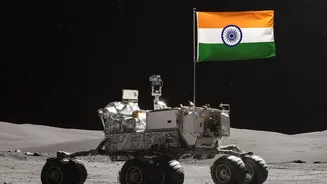
A New Frontier of Opportunity
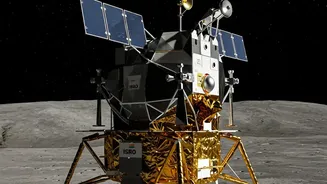
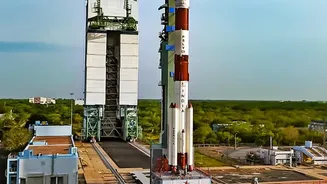
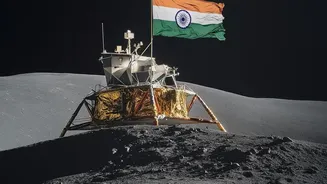
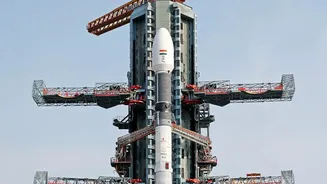
For decades, a career in space in India was almost synonymous with the Indian Space Research Organisation (ISRO). While ISRO remains the backbone of the nation's space ambitions, the landscape is rapidly transforming. The government's decision to open
the sector to private enterprise has unleashed a wave of innovation, with startups like Skyroot Aerospace, Agnikul Cosmos, and Pixxel now making significant strides. These companies are developing everything from cost-effective launch vehicles and 3D-printed rocket engines to constellations of Earth-observation satellites. This public-private partnership is creating a vibrant ecosystem and expanding the scope of jobs far beyond traditional government roles, fueling what is expected to be a multi-billion dollar space economy.
In-Demand Career Roles
The modern space industry requires a diverse range of specialists. Aerospace Engineers remain central, designing spacecraft, satellites, and missiles. However, many other roles are becoming equally critical. Satellite Systems Engineers design and manage complex communication and navigation systems. With spacecraft becoming more autonomous, Avionics Engineers are needed to develop their electronic systems, including navigation and communication. As vast amounts of data stream back from orbit, Satellite Data Analysts and Remote Sensing Experts are required to interpret this information for applications in agriculture, defence, and climate monitoring. Other emerging roles include space robotics engineers, mission operations specialists, and even space law experts who navigate the complex regulations of orbital activities.
The Skills That Launch Careers
A strong foundation in STEM is non-negotiable. A deep understanding of physics, advanced mathematics, and core engineering principles is essential for most technical roles. On the technical side, proficiency in programming languages like Python, C++, and software like MATLAB and CAD is highly sought after. However, soft skills are just as important. The ability to work in multidisciplinary teams, solve complex problems, and communicate clearly are crucial in an industry where collaboration is key. Analytical skills are needed to assess new technologies, while a passion for aerospace and a drive for innovation will set candidates apart.
Your Educational Launchpad
The most common pathway into India's space sector begins with a Bachelor of Technology (B.Tech) or Bachelor of Engineering (B.E.). Specialisations in Aerospace, Mechanical, Electronics & Communication, or Computer Science Engineering are the most direct routes. For those aspiring to join ISRO, the Indian Institute of Space Science and Technology (IIST) in Thiruvananthapuram is a premier institution, with many of its top graduates being directly absorbed into ISRO. Other top-tier institutions like the Indian Institutes of Technology (IITs) in Madras, Bombay, and Kanpur offer excellent aerospace programs. For research-focused careers, a B.Sc in Physics or Astrophysics followed by a Master's or PhD is a strong alternative.
Getting Your Foot in the Door
Gaining practical experience is vital. Students should actively seek internships and project opportunities to apply their theoretical knowledge. ISRO offers structured internship and project trainee schemes for students at various academic levels. Many private companies also hire interns, providing exposure to the fast-paced startup environment. The Indian Space Association (ISpA) also runs an internship program for graduates. To get a direct entry into ISRO as a scientist or engineer, candidates often need to clear the ISRO Centralised Recruitment Board (ICRB) exam, for which a B.Tech degree is a common prerequisite. Staying updated on the latest recruitment notices from ISRO and private companies is key.