





A Cosmic Firework Display
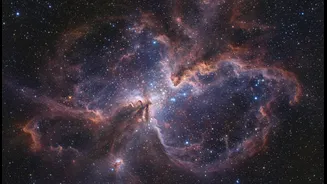
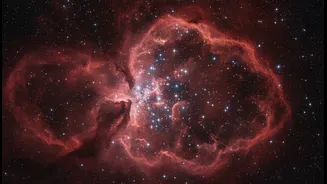
NASA has released a spectacular new photograph captured by the Hubble Space Telescope showing a region known as LH 95. Located in the Large Magellanic Cloud, a small satellite galaxy orbiting our own Milky Way, LH 95 is a bustling hub of star creation.
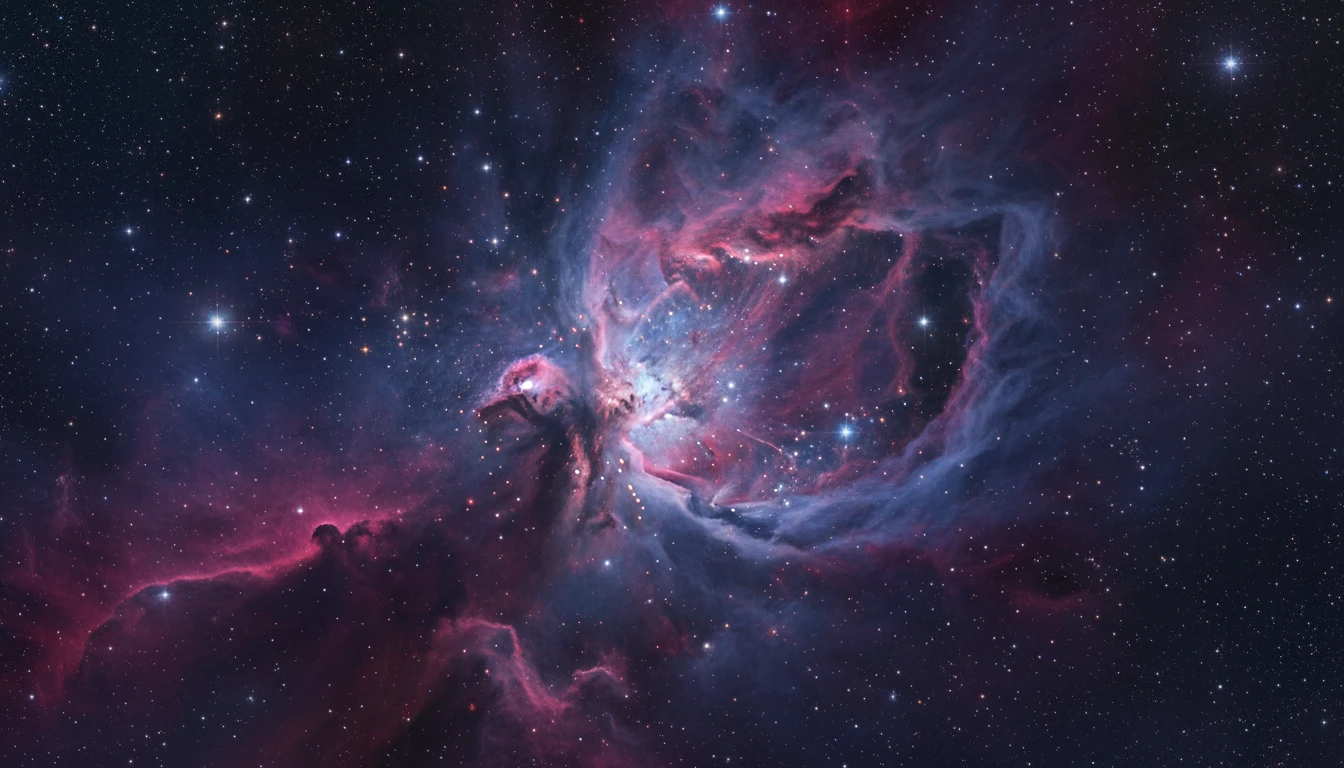
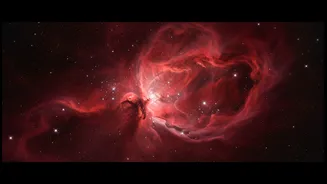
The image resembles a cosmic firework display, with brilliant blue and white stars sparkling against a backdrop of crimson gas clouds that look like drifting smoke. This is a stellar nursery, a vast cloud of gas and dust where thousands of stars are coming into existence. By capturing multiple generations of stars living side-by-side, this single image provides an unprecedented opportunity to understand how star formation unfolds over millions of years.
The Old Mystery of Star Birth
For decades, astronomers have understood the basic recipe for making a star: take a giant, cold cloud of gas and dust, let gravity pull the material into dense clumps, and wait for one of these clumps to become so hot and dense at its core that it ignites nuclear fusion. This process, from a collapsing cloud to a shining star, can take millions of years. However, the details have been murky. Observing these stellar nurseries is difficult, often because the very dust that forms stars also obscures our view. Key questions remained about how quickly young stars gather their mass and how they interact with their environment. It was hard to get a clear picture of the various stages happening all at once.
What the New Image Clarifies
The new Hubble image of LH 95 clarifies this process by capturing an astonishing 2,500 young stars that have not yet become full-fledged stars. These are called pre-main-sequence stars. They have gathered most of their mass but haven't started nuclear fusion, the process that makes them shine. The image's stunning colours are also scientific data. The deep red glow comes from heated hydrogen gas, which allows astronomers to pinpoint the youngest stars embedded within the cloud. By studying these developing stars, researchers confirmed that the rate at which they pull in more gas and dust decreases as they get older, a crucial detail that helps refine theories of stellar evolution. It shows that these baby stars continue gathering material for millions of years, extending a key phase of their development longer than some models had predicted.
Generations of Stars Side-By-Side
Perhaps the most significant insight from the LH 95 image is the clear evidence of multiple stellar generations coexisting. The region isn't a place where all stars formed in one big burst. Instead, star formation appears to be a continuous, ongoing process over an extended period. For instance, the most massive star in the image is estimated to be about a million years younger than many of its neighbours, which are around four million years old. The massive blue giant stars in the image, some with more than three times the mass of our Sun, blast out intense radiation and stellar winds. These powerful forces heat the surrounding hydrogen gas, making it glow red, and carve out the shapes we see in the nebula, showcasing the dramatic influence that newborn stars have on their own cosmic cradle.