

The Starting Point: Hands at Heart Centre
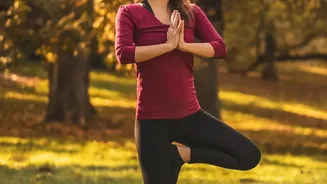
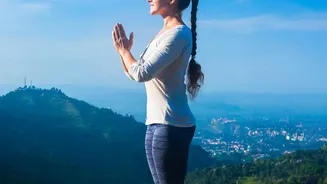
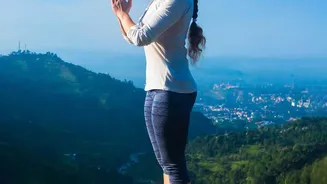
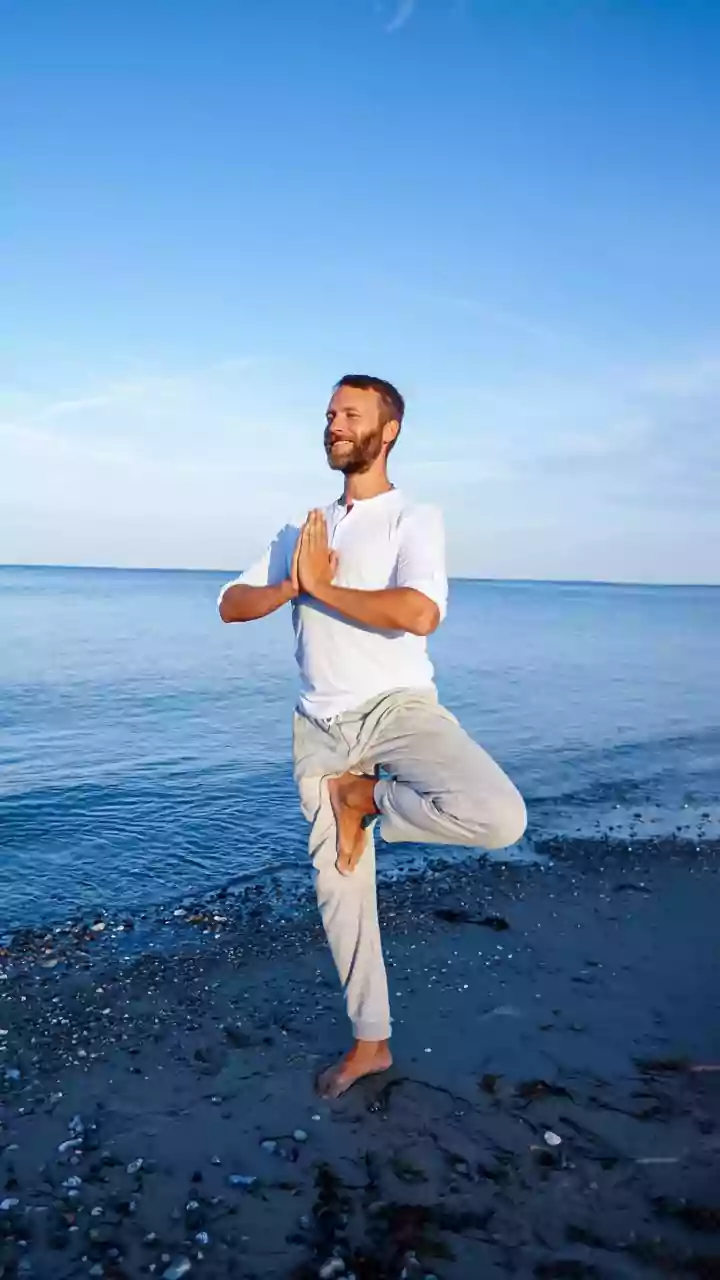
The most common and grounding variation of Tree Pose involves bringing the palms together in Anjali Mudra, or prayer position, at the heart. This is the ideal place to start, as it helps you find your physical and energetic centreline. Keeping the hands
at the chest lowers your centre of gravity, making balance more accessible. It allows you to focus on the key actions of the pose: rooting down through the standing leg, engaging your core, and pressing the lifted foot into the thigh or calf (never the knee). This position encourages a calm mind and steady breath, setting a stable foundation before you explore more demanding variations.
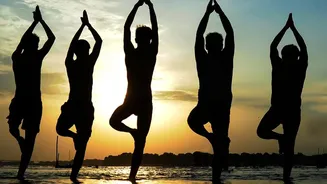
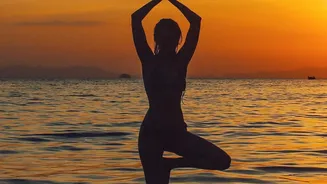
The Classic Expression: Arms Raised Overhead
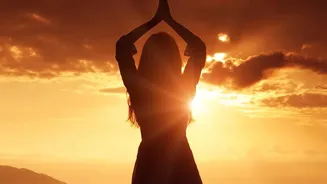
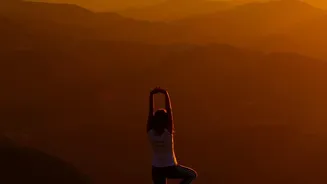
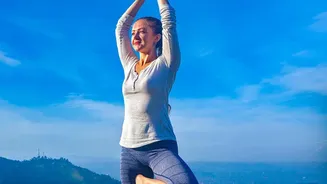
Reaching the arms skyward, like the branches of a tree, is the traditional expression of Vrksasana. You can keep palms together or separate them shoulder-width apart. This variation immediately increases the challenge by raising your centre of gravity, requiring more core engagement and stability from your standing leg. The benefit is a wonderful lengthening of the spine and a stretch through the torso and shoulders. If you have high blood pressure or shoulder pain, it's often recommended to keep the hands at the heart. For many, this upward reach embodies the full feeling of growth and expansion that the pose symbolises.
The Stability Check: Hands on Hips
Placing your hands firmly on your hips is an excellent diagnostic tool and a great modification for beginners. This variation allows you to physically feel whether your hips are level, which is a key alignment point in Tree Pose. It’s common for the hip of the lifted leg to hike up, but keeping your hands on the pelvic brim provides instant feedback to correct this. By taking the arms out of the equation, you can direct all of your focus toward building strength and awareness in the feet, legs, and core. This variation simplifies the pose, helping you master the foundation before adding more complex arm movements.
The Heart Opener: Cactus Arms
For a variation that provides both a balance challenge and a chest-opening stretch, try Cactus Arms. From your stable Tree Pose, bend your elbows at a 90-degree angle, with your fingertips pointing toward the sky and palms facing forward. This position broadens the collarbones and stretches the pectoral muscles, counteracting the slouched posture many of us develop from sitting at desks. While less demanding on balance than fully extending the arms overhead, it still requires significant core control and introduces a new element of upper body engagement. It’s a great intermediate step that adds variety and a satisfying shoulder stretch.
The Playful Challenge: Arms Out to the Side
Extending the arms straight out to the sides, parallel to the floor, turns them into balancing tools. Much like a tightrope walker uses a pole, you can make micro-adjustments with your arms to maintain equilibrium. This can feel more stable for some than raising the arms overhead. For a more dynamic challenge, you can try 'Windy Tree,' where you allow your arms to flow freely, as if they are branches blowing in a breeze. This variation playfully tests your stability and focus by introducing movement into the upper body, forcing your standing leg and core to work harder to stay grounded.
The Advanced Test: Binding Behind the Back
For experienced practitioners looking to deeply challenge their balance, bringing the arms behind the back is a significant step up. Variations include clasping opposite elbows or bringing the hands into a reverse prayer position (Pashchima Namaskarasana). By taking the arms completely out of the forward visual field and restricting their use as a counter-balance, these positions demand immense core strength and unwavering focus. These binds also provide a deep opening for the chest and front of the shoulders. They are humbling variations that strip the pose down to its essentials: just you, your base of support, and your breath.