


The Danger That Lingers Upstream
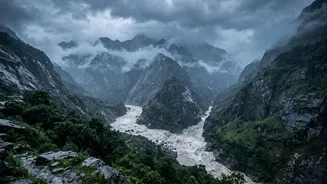
For communities in the valleys of Nepal, the danger doesn't always end when the floodwaters of an initial disaster recede. The recent catastrophic flood on August 26, 2026, which was triggered by a massive glacial collapse, serves as a brutal reminder
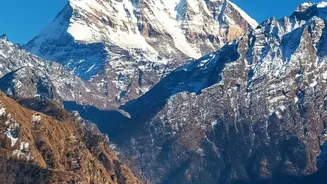
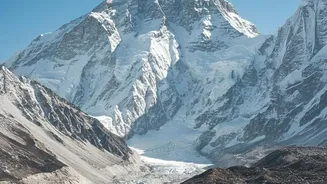
of the power of nature in the Himalayas. That event, however, is part of a larger, more insidious problem. The very same forces that caused it—warming temperatures and melting glaciers—are creating unstable conditions high in the mountains, setting the stage for a different kind of flood, one that can be even more powerful.
Meet the GLOF: A Time Bomb in the Mountains
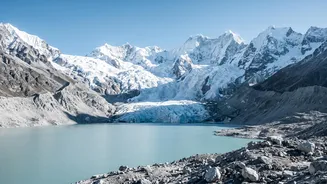
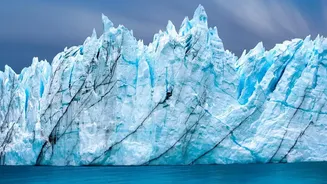
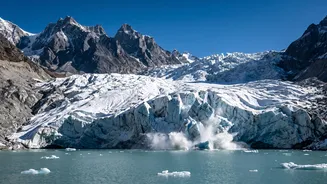
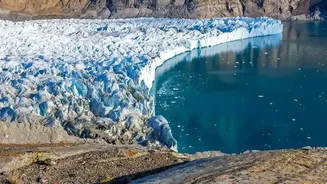
The threat is known as a Glacial Lake Outburst Flood, or GLOF. It’s a terrifyingly simple concept. As Himalayan glaciers melt at an accelerated rate due to climate change, they leave behind vast pools of meltwater. These pools often collect in the basin scoured out by the now-retreating glacier, forming a new lake. The problem is what holds this massive body of water in place. It isn't solid bedrock, but something far more precarious.
The Unstable Walls of a Moraine Dam
These glacial lakes are often dammed by a moraine—a ridge made of loose rocks, silt, sand, and other debris that was pushed forward by the glacier over centuries. Some of these moraine dams even contain large cores of ice, which can melt from within, further weakening the entire structure. Think of it as an enormous, natural dam made of unconsolidated rubble. As the lake behind it grows larger and deeper, the pressure on this fragile barrier intensifies. Eventually, the dam can reach a breaking point.
What Pulls the Trigger?
Several events can trigger the catastrophic failure of a moraine dam. A landslide or an avalanche of rock and ice from an adjacent mountain can crash into the lake, creating a massive displacement wave that overtops the dam wall and quickly erodes it. An earthquake, a common occurrence in the seismically active Himalayas, can shake the unstable moraine apart. Even heavy and prolonged monsoon rainfall can be enough to saturate the dam, causing it to collapse, or simply raise the water level until it spills over the edge, triggering a rapid and violent breach. When the dam fails, the entire lake can empty in a matter of hours, or even minutes, releasing a torrent of water, mud, and boulders that is many times more powerful than a normal river flood.
A Worsening Problem in a Warming World
This isn't a new phenomenon, but it is becoming a more urgent one. The Himalayan region is warming at a rate significantly faster than the global average, leading to unprecedented glacier melt. As a result, existing glacial lakes are expanding, and new ones are forming every year. Studies have identified dozens of potentially dangerous glacial lakes across Nepal alone, with many situated in remote, difficult-to-monitor locations. Since 1977, the country has experienced more than two dozen GLOF events, which have destroyed villages, roads, and vital hydropower plants. Each event serves as a stark warning that as the planet warms, these mountain time bombs are ticking ever faster.