



The Northern Glow of Rama’s Return
In North India, the festival is overwhelmingly linked to the return of Lord Rama to his kingdom of Ayodhya after 14 years in exile and his victory over the demon king Ravana. The celebration here is a grand affair, often spanning five days. It begins
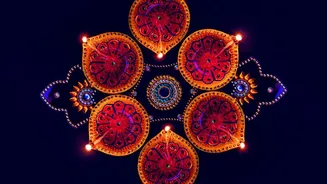
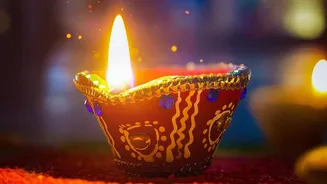
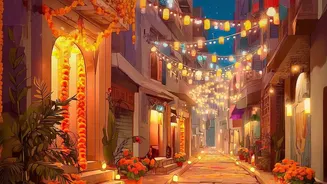
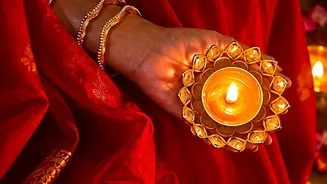
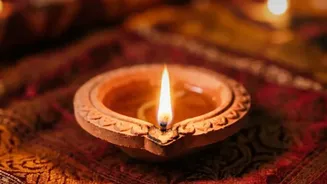
with Dhanteras, cleaning homes and buying gold or new utensils to welcome prosperity. The main event is Lakshmi Puja on the amavasya (new moon) night, where families pray to the goddess of wealth. Homes glow with rows of diyas and candles, and the Ramlila—a dramatic performance of the Ramayana—culminates around this time, reinforcing the theme of good triumphing over evil.
Eastern Radiance and Fierce Devotion
Travel east, particularly to West Bengal, and the focus of devotion shifts dramatically. On the night of Diwali, while much of India worships Lakshmi, Bengalis celebrate Kali Puja. Goddess Kali, a fierce and powerful form of Durga, is worshipped in elaborate pandals and homes, with rituals often taking place at midnight. The day before, known as Bhoot Chaturdashi, families light 14 lamps, or 'choddo prodip', to honour their ancestors and ward off spirits. This tradition highlights a different facet of the victory of good over evil, emphasising strength and the destruction of malevolence.
Southern Splendour and a Demon’s Defeat
In South India, the main story behind Deepavali is not Rama's return but Lord Krishna's victory over the demon Narakasura. Because of this, the most important day is Naraka Chaturdashi, often celebrated a day before the main Diwali festivities in the north. The day begins before sunrise with a ritualistic oil bath, symbolising purification. In Goa, this victory is marked by creating and burning large effigies of Narakasura. While Lakshmi Puja is also performed, the primary celebration is rooted in the legend of Krishna freeing the world from a powerful evil force.
Western Traditions of Wealth and Wellness
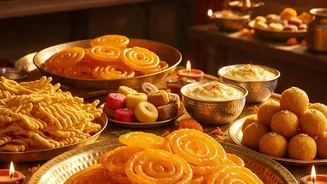
In Maharashtra, Diwali begins with Vasu Baras, a celebration honouring cows and their calves. Dhanteras takes on a unique form with Yamadeepdaan, where a lamp is lit for Yama, the god of death, praying for longevity and protection from untimely demise. Like in the south, Narak Chaturdashi is marked with a pre-dawn oil bath, called Abhyang Snan. The festival culminates in Lakshmi Puja, where Maharashtrians worship not just money and jewellery but also the humble broom, symbolising the importance of cleanliness in welcoming prosperity. Families prepare a special feast of snacks known as 'Faral' to share. In Gujarat, Diwali also marks the beginning of the New Year, Bestu Varas, a time for new account books and visiting family.
The Art of the Threshold: Rangoli vs. Kolam
The beautiful floor art seen during Diwali also has regional flavours. Rangoli, common in North and West India, is often a free-flowing, colourful design made with powders, sand, and flower petals, celebrating festive exuberance. In the South, you are more likely to see Kolam. Traditionally made with white rice flour, Kolam is a more intricate, geometric pattern drawn around a grid of dots ('pulli'). Its purpose is not just decorative; the rice flour is meant as an offering to ants and birds, a daily act of living in harmony with nature.
Lanterns Lighting Up the Sky
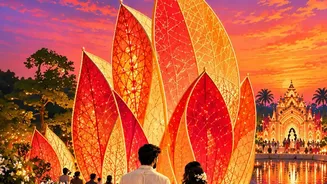
Across many regions, especially in Maharashtra and Goa, you'll see colourful paper lanterns called 'Akashdeep' or 'Kandil' hung outside homes. The term 'Akashdeep' translates to 'lantern of the sky'. This tradition holds multiple meanings. For some, it symbolises an invitation to ancestral spirits to visit and bless the home during the festival. For others, it is simply another beautiful way to symbolise the victory of light over darkness, adding another layer to the millions of diyas that make Diwali the true festival of lights.