



An Oasis of Darkness
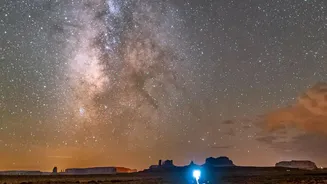
A Dark Sky Reserve is a designated area where the exceptional quality of the starry nights is protected for scientific, natural, and cultural value. These sanctuaries enforce strict regulations to minimise artificial light pollution, creating a pristine
window to the universe. The Hanle Dark Sky Reserve, officially designated in December 2022, covers an area with a radius of approximately 22 kilometres. It is a joint effort by the Ladakh Union Territory administration, the Ladakh Autonomous Hill Development Council (LAHDC), and the Indian Institute of Astrophysics (IIA). This initiative aims not just to safeguard the night but to create a sustainable model that blends science with community welfare.
Why Hanle, Ladakh?
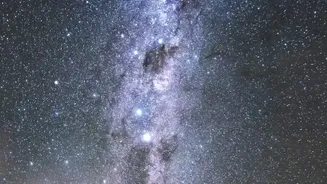
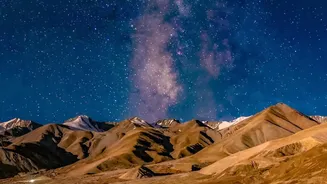
Hanle's selection was no accident. Located in the Changthang plateau at a staggering altitude of 4,500 metres (about 14,800 feet), the region is a cold, high-altitude desert. This unique geography provides incredibly dry, clear air with minimal atmospheric disturbance, offering around 300 cloud-free nights a year. Its remote location, far from major urban centres, means it has naturally low levels of light pollution, qualifying it for a Bortle Class 1 rating—the darkest possible classification for a night sky. This pristine environment is precisely why the Indian Institute of Astrophysics established its premier Indian Astronomical Observatory (IAO) here back in 2001.
A Boost for Indian Science
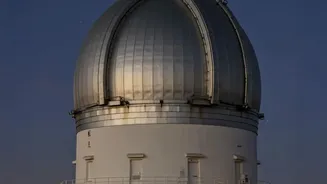
For the powerful telescopes at the Hanle observatory, darkness is not just a preference; it's a necessity. The reserve protects the IAO's ability to conduct cutting-edge research by ensuring artificial light doesn't interfere with observations of faint, distant celestial objects. The observatory is home to several major instruments, including the 2-metre Himalayan Chandra Telescope and the High Altitude Gamma Ray (HAGAR) telescope array. By preserving the natural darkness, the reserve enhances India's capabilities in optical, infrared, and gamma-ray astronomy, making Hanle one of the most important astronomical sites in the world.
A New Dawn for Astro-Tourism
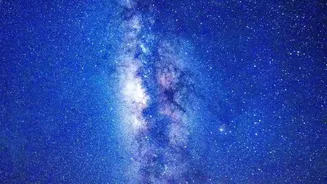
The Hanle Dark Sky Reserve is more than a scientific outpost; it's a burgeoning destination for astro-tourism. The initiative has empowered the local community by training residents as 'Astronomy Ambassadors'. More than two dozen villagers, many of them women, have been trained to operate telescopes and guide visitors through the wonders of the night sky. This has led to a boom in homestays, providing a sustainable source of income for a region traditionally reliant on pastoralism. Tourists can now experience unparalleled views of the Milky Way, distant galaxies, and nebulae, all while contributing directly to the local economy in a responsible way.
Community at the Core
The success of the reserve hinges on community participation. Villagers have embraced the project, adopting new practices to curb light pollution. The IIA has helped distribute special blackout curtains and shielded, warm-toned lights to homes and establishments to minimise skyglow. Even vehicle headlights are regulated within the reserve's boundaries. This collaborative approach ensures that the benefits of tourism are balanced with the core mission of conservation. The project has not only brought economic prosperity but has also fostered a renewed sense of pride and connection to the celestial heritage that has canopied their home for millennia.