







The Humidity and Hair Connection
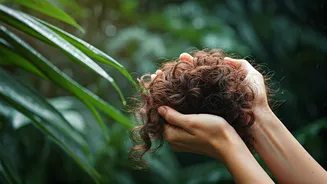
The primary culprit behind monsoon hair troubles is humidity. When the air is saturated with moisture, your hair, which is porous, absorbs this excess water. This causes the hair shaft to swell up, weakening the cuticle—the protective outer layer. A compromised
cuticle leads to frizz, but more importantly, it makes the hair strand weaker and more susceptible to breakage from simple acts like brushing or styling. Your hair isn't necessarily falling from the root in greater numbers, but the strands themselves are more fragile and likely to snap.
A Troubled Scalp Environment
Your scalp is a delicate ecosystem, and the constant dampness of the monsoon disrupts its balance. The humidity, combined with sweat and pollutants trapped by the moisture, creates a perfect breeding ground for fungal and bacterial growth. This is why many people experience a sudden flare-up of dandruff, scalp itchiness, and folliculitis during this season. An unhealthy, inflamed scalp cannot support strong hair growth, leading to increased shedding from the root. The build-up of grime and oil can also clog hair follicles, further weakening the hair.
Your Monsoon Hair Care Game Plan
Adapting your hair care routine is non-negotiable. Start by washing your hair a little more frequently—perhaps three to four times a week—with a gentle, sulphate-free shampoo. This helps keep the scalp clean and free from fungal build-up without stripping it of its natural oils. Always follow up with a conditioner, but apply it only from the mid-lengths to the ends, avoiding the scalp to prevent greasiness. Most importantly, never tie up or sleep with damp hair. Take the extra few minutes to let your hair air-dry completely or use a blow dryer on a cool setting to ensure your scalp stays dry.
Strengthen from Within: The Monsoon Diet
What you eat plays a significant role in your hair's resilience. Ensure your diet is rich in protein, the building block of hair. Include sources like eggs, lentils, chickpeas, and paneer. Iron is also crucial for preventing hair fall; load up on leafy greens like spinach, beetroot, and dates. Omega-3 fatty acids, found in walnuts, flaxseeds, and fish, help maintain scalp health. Finally, don't forget Vitamin C, which aids in iron absorption and collagen production. Amla, lemons, oranges, and guavas are excellent sources widely available during this season.
Simple Habits to Adopt and Avoid
Small changes can make a big difference. Avoid tight hairstyles like high ponytails or buns, as they pull on the already fragile hair roots, leading to traction alopecia. Instead, opt for loose braids or leave your hair down. Ditch harsh chemical treatments and excessive heat styling during this period. When you towel-dry your hair, pat it gently instead of rubbing vigorously. A microfibre towel is a great investment as it's much gentler on the hair cuticle. A weekly oil massage with coconut or almond oil can improve blood circulation, but be sure to wash it off within a couple of hours to avoid attracting dirt.
When to Consult a Professional
While an increase in hair fall is normal during the monsoon (shedding up to 150 strands a day can be typical), there are signs that warrant a visit to a dermatologist. If you notice bald patches, excessive and persistent itching, or if the hair fall is sudden, severe, and doesn't subside after the season changes, it's time to seek professional help. These could be symptoms of an underlying condition that requires a specific medical diagnosis and treatment, which over-the-counter products and home remedies cannot address.