


Meet the String of Pearls
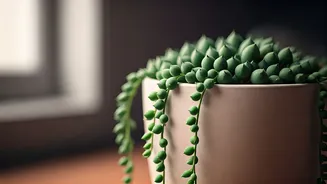
The plant capturing the hearts of decor enthusiasts is the String of Pearls (Curio rowleyanus). This isn't your average houseplant. It features long, slender, trailing stems adorned with small, perfectly round leaves that look exactly like a string of green
beads. Native to the arid regions of Southwest Africa, its unique appearance is actually a clever survival adaptation. The spherical leaves store water, allowing the plant to thrive in dry conditions, and they have a small translucent stripe, or 'window', that lets in light for photosynthesis. This whimsical, cascading succulent brings a sense of movement and delicate elegance to any room, making it a fun and dynamic addition to your home.
Why It’s the Perfect Decor Accent
The String of Pearls is more than just a plant; it's a living piece of decor. Its trailing nature makes it incredibly versatile. It excels in hanging baskets or macrame planters where its vines can cascade downwards, creating a stunning waterfall effect. You can also place it on a high shelf, mantle, or bookcase, allowing the 'pearls' to spill gracefully over the edge. This vertical interest softens hard lines and adds a touch of bohemian charm to modern or minimalist spaces. In mixed arrangements, it acts as the perfect 'spiller' element, complementing other succulents while stealing the show with its unique texture. Its fast growth rate means you get a rewarding visual impact relatively quickly, with stems that can reach up to two or three feet long.
Finding the Right Light
Proper lighting is key to a happy String of Pearls. These plants crave bright, indirect sunlight for at least six to eight hours a day. An east-facing window that provides gentler morning sun is ideal. A spot near a south or west-facing window also works well, but you may need to position the plant slightly away from the glass to prevent the delicate 'pearls' from getting scorched by intense afternoon sun. If your plant isn't getting enough light, you might notice its growth slows down or the stems become sparse and 'leggy'. Too much direct sun, on the other hand, can cause the leaves to burn.
The Secret to Watering
The most common mistake with String of Pearls is overwatering. As a succulent, it's adapted to dry conditions and is highly susceptible to root rot if the soil stays wet. The rule of thumb is to water thoroughly only when the soil has completely dried out. In most Indian climates, this might mean watering once every 10 to 14 days in the summer and reducing frequency to every two to three weeks in the winter. A good way to check is to feel the top inch or two of soil; if it's dry, it's time to water. Shriveling pearls can be a sign of both underwatering and overwatering, so always check the soil before you act. If the roots are rotting from too much water, they can't absorb moisture, leading to shriveled leaves.
Potting and Soil Essentials
Good drainage is non-negotiable for a String of Pearls. Use a well-draining succulent or cactus potting mix. You can improve drainage further by adding sand or perlite to your soil mixture. Choosing the right pot is also important. Terracotta or clay pots are excellent choices as they are porous and help wick excess moisture away from the soil, preventing waterlogged roots. Ensure any pot you choose has ample drainage holes. Because these plants have a shallow root system, they don't need a deep container, but repotting may be necessary every year or two if the plant becomes root-bound.
A Word of Caution
While beautiful, it's important to know that the String of Pearls plant is considered mildly toxic to humans and pets like cats and dogs if ingested. The sap can cause irritation or stomach upset. It's best to place this plant in a hanging basket or on a high shelf, where its cascading beauty can be admired from a safe distance, out of reach of curious children and pets. This placement also happens to be the best way to showcase its stunning trailing habit, making it both a practical and stylish solution.