




The Toll of a Sedentary Day
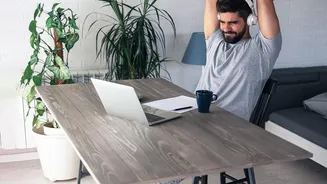
Sitting for eight hours a day takes a predictable toll on the body. Prolonged sitting holds muscles in shortened or static positions, which can lead to stiffness, pain, and reduced mobility over time. Key problem areas include the hip flexors, which shorten and tighten;
the spine, which compresses; and the shoulders, which tend to round forward from typing and looking at a screen. Studies show that extended sitting can reduce blood flow to muscles and is linked to musculoskeletal issues in the neck, back, and upper limbs. The goal of a movement break is to counteract these static positions, restore circulation, and gently move your joints through their intended range of motion.
Neck and Shoulder Savers
Neck and shoulder tension is one of the most common complaints for office workers. To find relief, try the simple chin tuck. While sitting tall, gently draw your chin straight back as if creating a double chin, without tilting your head. Hold for five seconds and repeat 10 times to counteract forward head posture. Next, perform shoulder blade squeezes. Sit or stand tall and squeeze your shoulder blades together and down, as if tucking them into your back pockets. Hold for a few seconds and repeat. Finally, try a side neck stretch by slowly tilting your right ear toward your right shoulder, holding for 15-20 seconds, and then repeating on the left side.
Spinal Mobility and Core
Your spine needs movement to stay healthy. A seated spinal twist is an excellent way to improve mobility. Sit tall with your feet flat on the floor. Place your right hand on your left knee and gently twist your torso to the left, using the chair for support. Hold for a few breaths and repeat on the other side. This helps relieve the stiffness that builds up in the mid-back. Another great movement is a seated cat-cow. Place your hands on your knees, and as you inhale, arch your back and lift your chest. As you exhale, round your spine and tuck your chin. Repeating this motion helps open up the thoracic spine.
Wake Up Your Hips
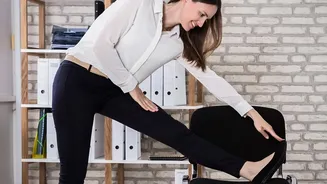
Sitting keeps your hips in a constant state of flexion, causing the hip flexor muscles to become short and tight. To counteract this, try a seated figure-four stretch. While sitting, cross your right ankle over your left knee. Gently press down on your right knee until you feel a stretch in your right glute and hip. Hold for 30 seconds before switching sides. You can also stand up and use your desk for a hip flexor stretch. Facing your desk, place your hands on the surface for support and step one foot back into a lunge position. Gently tuck your pelvis forward until you feel a stretch in the front of your hip.
Don't Forget Wrists and Ankles
The smaller joints also need attention, especially with constant typing and mouse use. Extend one arm forward with the palm down. Use your other hand to gently pull the fingers back toward your body, stretching the forearm. Hold for 15–30 seconds, then flip your hand palm–up and repeat the stretch. Follow this with ten gentle wrist circles in each direction. For your feet and ankles, simply perform ankle circles while seated, and then alternate between pointing your toes and flexing your feet. These simple movements help maintain blood flow and prevent stiffness in your extremities.