


The Main Event: A Deep Partial Lunar Eclipse
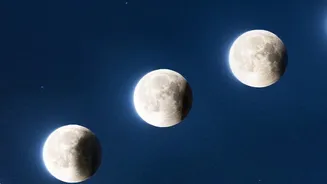
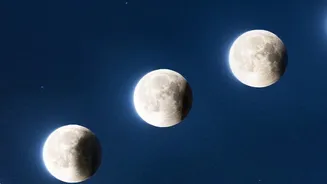
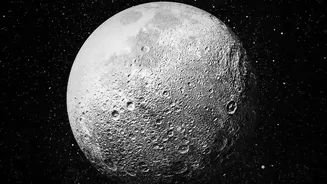
Mark your calendars for the night of August 27-28, when Earth’s shadow will take a dramatic bite out of the full Moon. A deep partial lunar eclipse will be visible, covering about 96% of the lunar surface at its peak. This means you won’t see the full “blood
moon” of a total eclipse, but the Moon will take on a fascinating, shadowy appearance, possibly with a subtle reddish or orange glow on the covered portion. The event will be visible across North and South America, as well as parts of Europe and Africa. For observers in the Americas, the show takes place on the evening of the 27th. No special equipment is needed; simply look up at the full Moon and watch as our planet’s shadow slowly creeps across its face. It's a slow, mesmerizing process and one of the most accessible astronomical events you can witness.
The Evening Star: Dazzling Venus
If you've noticed an impossibly bright 'star' lingering in the west after sunset, you've already found Venus. Often called the “Evening Star,” Venus will dominate the western sky all through August, making it the easiest planet for any beginner to spot. You don’t need a map or a telescope—just a clear view of the western horizon as twilight deepens. Its intense, steady light sets it apart from the twinkling stars. On August 15, a slender crescent Moon will hang nearby, creating a beautiful pairing in the evening sky. Because it’s so bright, you can even spot it from a light-polluted city. It’s a rewarding and can't-miss sight that serves as a perfect starting point for any new stargazer.
The Lord of the Rings: Spotting Saturn
While Venus rules the evening, Saturn is the main attraction as the night deepens. The famous ringed planet rises in the east in the evening and will be visible all night long. Throughout late August, Saturn will be in the constellation Pisces, appearing as a steady, yellowish point of light. While you won’t see its rings with the naked eye, even a basic pair of binoculars will stabilize its light, and a small telescope will reveal the iconic rings that make it one of the most breathtaking sights in the solar system. The planet is currently heading toward its annual opposition in early October, the point where it will be at its biggest and brightest for the year. That makes late August an excellent time to start tracking it as it grows more prominent each night.
The Sky’s Giant Signpost: The Summer Triangle
Feeling lost among the countless stars? Look straight up. High overhead on August evenings, you'll find a giant, unmistakable triangle formed by three of the brightest stars in the sky. This is the Summer Triangle, an asterism (or star pattern) so clear it's the perfect guidepost for navigating the night. The three stars that form its corners are Vega (the brightest), Altair, and Deneb. Each one is the brightest star in its own constellation: Lyra (the Lyre), Aquila (the Eagle), and Cygnus (the Swan), respectively. You don't need to know the individual constellations to appreciate the Triangle itself. Once you learn to spot this massive and simple shape, you'll feel a sense of familiarity every time you look up, and you can use it as a reference point to find other celestial treasures.
A River of Stars: The Milky Way
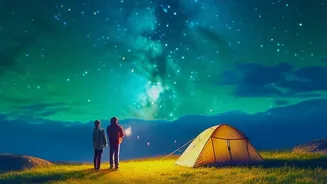
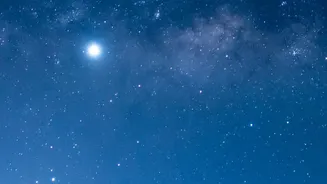
If you can get away from city lights, late August offers a spectacular view of our own galaxy, the Milky Way. The dark skies around the mid-month new moon are ideal, but any clear, moonless night will do. The best part? The Summer Triangle serves as a perfect marker. The hazy, luminous band of the Milky Way runs right through the triangle, stretching from the southern horizon up through the constellations of Sagittarius and Scorpius, passing between Vega and Altair, and flowing through Cygnus, the home of Deneb. To the naked eye, it looks like a faint, shimmering river of light—a collection of billions of distant stars and glowing gas clouds. Let your eyes adjust to the darkness for at least 15-20 minutes to see it in its full glory. It's a humbling and awe-inspiring sight that connects you directly to the grand scale of our universe.