




India’s Next Great Space Adventure
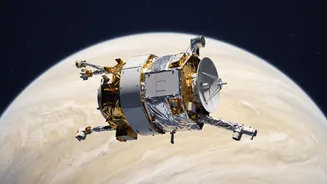
After conquering the Moon and Mars, ISRO has set its sights on the second planet from the sun. The Venus Orbiter Mission, named Shukrayaan-1, represents India's next major leap in interplanetary exploration. Formally approved by the Union Cabinet in September
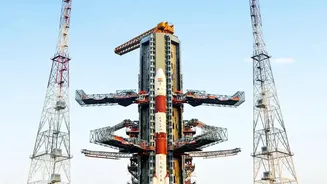
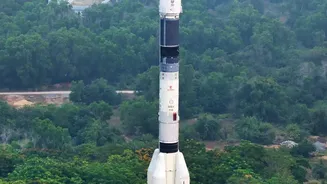
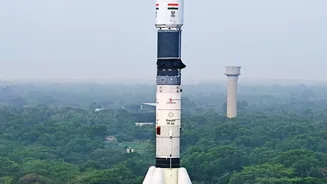
2024, the mission is a testament to the nation's growing capabilities and scientific ambitions. Scheduled for launch aboard the powerful LVM-3 rocket on March 29, 2028, Shukrayaan-1 will embark on a 112-day journey to our planetary neighbour. This mission places India in an elite club of space agencies that have dared to explore one of the most hostile environments in our solar system.
Why Venus? Earth’s Cautionary Tale
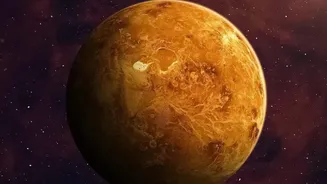
Venus is a world of extremes. Though similar to Earth in size and mass, it suffers from a runaway greenhouse effect that has turned it into the hottest planet in the solar system, with surface temperatures high enough to melt lead. Its atmospheric pressure is over 90 times that of Earth's, and its skies rain sulfuric acid. Yet, scientists believe Venus may have once hosted liquid water before this dramatic climate shift. Understanding why our planetary twin took such a different evolutionary path is crucial. It serves as a natural laboratory for studying climate change dynamics, offering invaluable insights that could help us better model and protect Earth's future climate.
The Enigma of the Cloud Layers
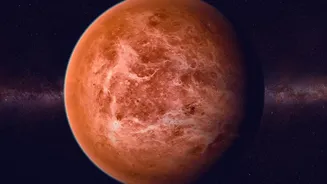
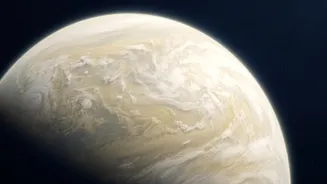
The thick, perpetual cloud cover of Venus is one of its most defining and mysterious features. For decades, scientists have been puzzled by strange dark patches, known as “unknown absorbers,” that absorb huge amounts of ultraviolet radiation. The composition of these patches remains a mystery, with theories ranging from iron compounds to, speculatively, microbial life. Furthermore, the clouds are sustained by processes not fully understood, though active volcanism is a leading theory. Some recent studies have even pointed to giant atmospheric waves, called hydraulic jumps, that cause massive disruptions in the upper cloud layers. Shukrayaan aims to study the structure, composition, and dynamics of this complex atmosphere, potentially solving a century-old puzzle.
A Custom-Built Indian Toolkit
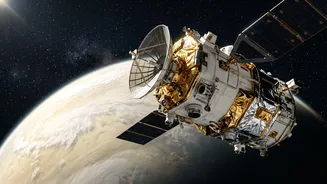
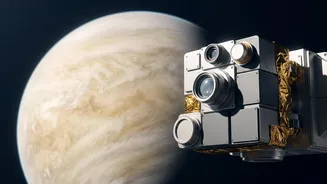
To peer through the dense clouds and analyse the atmosphere, Shukrayaan-1 will be equipped with a suite of sophisticated instruments, the majority of which are Indian-made. The flagship instrument is a high-resolution Synthetic Aperture Radar (SAR), which can map the planet's surface in incredible detail, day or night, regardless of cloud cover. Another groundbreaking payload is a ground-penetrating radar, a world-first for Venus, designed to study its subsurface geology. The orbiter will also carry instruments to analyse the composition of the atmosphere, monitor cloud patterns, and study the interaction between Venus and the solar wind. International partners, including Sweden, Germany, and Russia, will contribute key instruments, making it a global scientific collaboration.
Mapping an Unseen World and Beyond
The primary goal of Shukrayaan-1 is to create the most comprehensive global survey of Venus to date. This includes mapping volcanic hotspots and lava flows, understanding its geological activity, and sounding its subsurface layers. The mission will also investigate one of the most tantalizing questions in modern science: the potential for life. Following the debated detection of phosphine—a gas associated with anaerobic life on Earth—in the Venusian clouds, Shukrayaan’s instruments have been designed to search for such biosignatures. The VIRAL instrument, a collaboration with Russia and France, is one of several payloads that will analyse atmospheric gases for clues. Whether it finds evidence of past water or present-day chemical anomalies, the mission promises to reshape our understanding of Venus.