






India's National Quantum Leap
The National Quantum Mission (NQM), approved in April 2023, is India's formal entry into the global quantum race. With a budget of over ₹6,000 crore to be used by 2031, the mission aims to create a complete ecosystem for quantum technology, from research
and development to startups and a skilled workforce. The government has established four thematic hubs at leading institutions to drive progress in key areas: quantum computing, quantum communication, quantum sensing, and quantum materials. This initiative is designed to accelerate economic growth and position India as a leading power in quantum technologies, moving from a follower to a shaper of the future.
Unbreakable Secrets: Quantum Communication
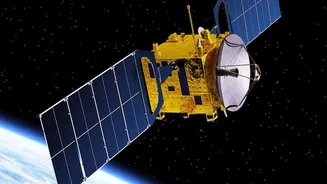
One of the most immediate and critical applications of the NQM is in quantum communication. This field focuses on creating ultra-secure communication channels that are theoretically impossible to hack. The core technology, Quantum Key Distribution (QKD), uses the principles of quantum mechanics to distribute encryption keys. Any attempt to eavesdrop on the key exchange disturbs the quantum state, immediately alerting the users. This has massive implications for national security, banking, and critical infrastructure. The NQM has set ambitious goals, including establishing satellite-based secure communication over 2,000 kilometers and creating inter-city QKD networks. Progress is already ahead of schedule, with reports in 2026 indicating that over 1,000 kilometers of secure quantum communication lines have already been established.
A New Era of Measurement
While less publicized, quantum sensing is another cornerstone of India's strategy, promising a revolution in precision measurement. Quantum sensors leverage the extreme sensitivity of quantum states to detect tiny changes in their environment. This enables the development of highly sensitive magnetometers and atomic clocks that far surpass the capabilities of classical technology. The applications are vast, from next-generation medical imaging and underground resource mapping to creating navigation systems for the military that do not rely on GPS and are immune to jamming. The NQM is actively funding the development of these sensors, aiming to move them from laboratory prototypes to field-deployable devices that can give India a strategic edge.
From Lab to Market
The focus on communication and sensing reveals a pragmatic approach. While the long-term goal of building a powerful quantum computer is a key part of the mission, the emphasis on communication and sensing targets technologies that are closer to real-world deployment and can offer immediate strategic and commercial advantages. By developing secure communication networks and next-generation sensors, India aims to bolster its self-reliance (Atmanirbhar Bharat), strengthen its defense capabilities, and create high-value commercial products. Organizations like the Quantum Ecosystems Technology Council of India (QETCI) are working to bridge the gap between government, academia, and industry, fostering an environment where research translates into market-ready solutions.