




The Unsung Hero: An Orbiter's Long Game
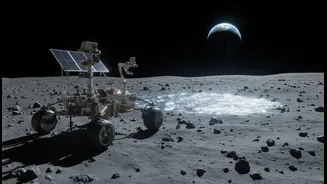
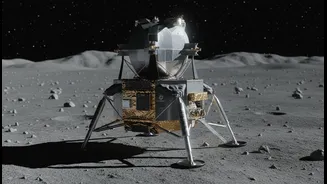
While the Chandrayaan-2 mission is often remembered for the heartbreaking loss of communication with the Vikram lander in 2019, that is only half the story. The other half, the mission's orbiter, has been a resounding success. For years, it has been silently
circling the Moon, meticulously mapping its surface and exosphere with a suite of eight sophisticated instruments. This orbiter is the unsung hero, a testament to ISRO's robust engineering. It continues to gather and transmit a colossal amount of data, a scientific treasure trove that researchers in India and around the world are only just beginning to unlock.
New Headlines from Old Data
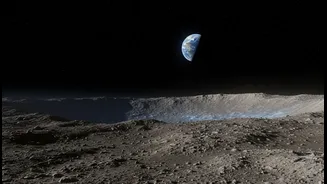
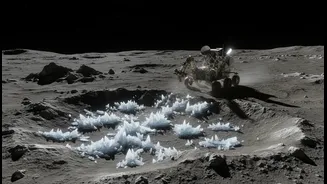
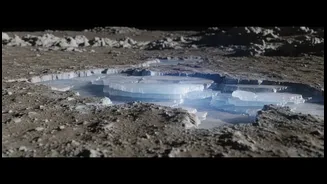
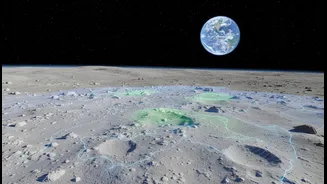
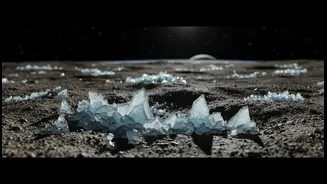
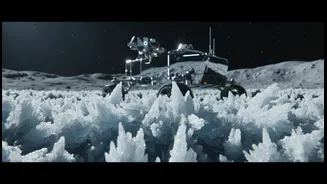
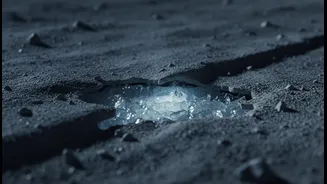
Recent findings published by scientists at the Physical Research Laboratory in Ahmedabad demonstrate the orbiter's enduring value. By analyzing radar data from the Dual Frequency Synthetic Aperture Radar (DFSAR) instrument, they found strong evidence of subsurface water ice in the Moon's south polar region. The data pointed to ice hidden beneath the floor of "doubly shadowed" craters—areas so cold and dark that sunlight has never touched them, with temperatures plunging to minus 248 degrees Celsius. This discovery is not just a scientific curiosity; it's a game-changer for future lunar missions, which could potentially use this ice for drinking water, breathable oxygen, and even rocket fuel. This breakthrough didn't come from a new mission, but from a new way of looking at data that was already collected.
The Art of Scientific Data Mining
How do scientists find new secrets in old data? The process is akin to digital archaeology. ISRO makes the data from Chandrayaan-2 available to the public and scientific community through the Indian Space Science Data Centre (ISSDC). Researchers can then apply new techniques, improved algorithms, or simply ask different questions than the original mission planners. The detection of subsurface ice, for example, involved using advanced radar analysis to identify specific ways microwave signals scattered back from the lunar surface—a signature that distinguishes ice from rock. The DFSAR instrument is uniquely suited for this, being the first fully-polarimetric radar to study the Moon, capable of peering several metres beneath the surface. It's a meticulous process where new tools and fresh perspectives can reveal patterns that were previously invisible.
A Legacy of Continuous Discovery
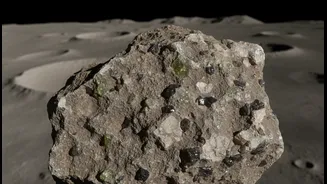
The discovery of potential water ice is just one example. Over the years, data from Chandrayaan-2's other instruments have led to a cascade of findings. The CLASS instrument has mapped the abundance of key elements like sodium and magnesium on the lunar surface. The CHACE-2 instrument discovered Argon-40 gas in the lunar exosphere far beyond where it was thought to exist, changing our understanding of the Moon's thin atmosphere. The Solar X-ray Monitor (XSM) has observed solar microflares, providing valuable data for solar science. Each discovery builds upon the last, painting a more complex and detailed picture of our celestial neighbour. These findings aren't isolated events; they are the product of a sustained scientific effort built on the foundation laid by a single mission.
A Global Standard of Science
This practice of revisiting archival data is a cornerstone of modern space exploration. NASA, for example, frequently makes new discoveries using decades-old data from missions like Voyager, which launched in the 1970s. Archaeologists have even used old satellite data to discover lost cities. By making its mission data accessible, ISRO is participating in this global scientific tradition, ensuring that the investment in missions like Chandrayaan-2 pays dividends for decades to come. It allows a new generation of scientists, who may have been in school when the mission launched, to contribute to lunar science. This long-term approach multiplies the value of every rupee spent and solidifies India's position as a major player in space exploration.