




The Search for a Post-Lithium Future
India is one of the world's largest solar power producers, a key part of its clean energy ambitions. But this success has created a new challenge: what to do with all that power? Solar generation peaks mid-day, but demand often stays high into the evening,
long after the sun has set. This mismatch forces the grid to either waste clean energy or rely on coal to fill the gap. The obvious solution is large-scale energy storage, a role currently dominated by lithium-ion batteries. However, these batteries present significant hurdles for India. They rely on costly, imported materials, creating strategic and economic vulnerabilities. Safety is another concern, as lithium-ion batteries can be flammable. This has pushed scientists to find a homegrown alternative that is cheaper, safer, and built with readily available resources.
Introducing Zinc-Air: The Safer, Cheaper Contender
Enter the zinc-air battery. The technology isn't new—it has been used for decades in small devices like hearing aids. The concept is simple: it generates electricity through a reaction between zinc metal and oxygen from the air. Its advantages are compelling. Zinc is abundant in India, far cheaper than lithium, and the batteries themselves are inherently safer because they use a water-based electrolyte instead of flammable chemicals. They also boast a high theoretical energy density, meaning they can store a lot of energy for their weight. For a country focused on energy security and the "Make in India" initiative, a battery technology based on local resources is a powerful proposition. The challenge has always been making them effectively rechargeable for large-scale use.
What Indian Researchers Just Solved
For years, two major flaws have held back rechargeable zinc-air batteries. First, the zinc anode corrodes and forms unwanted hydrogen gas during charging, wasting energy. Second, the air cathode reaction is sluggish and has traditionally required expensive catalysts like platinum to work efficiently. Recent breakthroughs from Indian scientists, particularly a team at SASTRA Deemed University, have tackled both problems at once. They developed a low-cost "nanofluid electrolyte" by adding tiny, inexpensive particles of silica and zinc oxide. This single solution both protects the zinc anode from corrosion and speeds up the reaction at the air cathode, a significant leap forward. The team also created a new catalyst from copper-doped manganese dioxide that outperforms expensive platinum-based options and even found ways to create battery materials from waste like used surgical masks. This patented technology makes rechargeable zinc-air batteries more efficient and commercially viable.
From Lab to Grid: The Real-World Impact
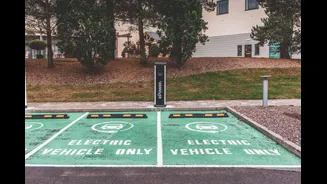
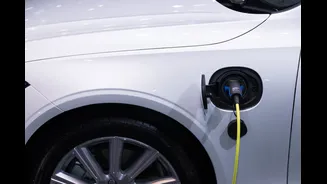
This research isn't just an academic exercise; it has direct relevance for India's national goals. For large-scale energy storage, these safer, cheaper batteries could be deployed alongside solar and wind farms to create a stable, 24/7 supply of renewable power. This would solve the solar "duck curve" problem, where midday oversupply is followed by an evening shortfall. Beyond the grid, this technology is also being developed for electric vehicles. Researchers at IIT Madras, in collaboration with Hindustan Zinc, are working on mechanically and electrically rechargeable zinc-air prototypes for two and three-wheelers. Instead of lengthy charging, future EV stations could simply swap out depleted zinc cartridges, similar to refuelling a car today. This could accelerate EV adoption by making them more affordable and convenient.
The Road Ahead: Hurdles to Commercialization
Despite the promising research, the path from a laboratory breakthrough to mass production is complex. Scaling up the manufacturing of these new electrolytes and catalysts to industrial levels is a significant challenge. While the technology is patented and deemed ready for commercial use, building the entire ecosystem, from raw material supply chains to battery assembly plants and recycling facilities, will require substantial investment and time. The number of times the battery can be recharged effectively—its cycle life—is another area that needs to meet commercial standards for demanding applications like grid storage and EVs. However, with strong backing from government bodies like the Department of Science and Technology and collaborations between academic institutions like IITs and major industries, the momentum to overcome these hurdles is building.