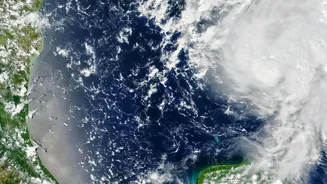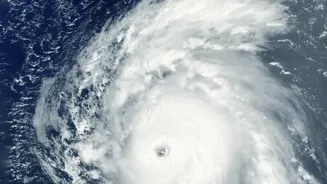







For generations, India has looked to its east, where the Bay of Bengal served as the nation's notorious 'cyclone alley'. But a new and unsettling reality is taking shape on the other side of the peninsula, drawing fresh and urgent attention.
A Tale of Two Seas
Historically,
the Bay of Bengal has been the undisputed epicentre of cyclonic activity for India. Its unique, funnel-like shape, warm waters, and high sea surface temperatures have made it a prolific generator of storms. For every cyclone that formed in the Arabian Sea, the Bay of Bengal brewed about four. This eastern sea was responsible for some of the most devastating cyclones in history, shaping disaster management policies and leaving an indelible mark on coastal communities in states like Odisha and West Bengal. The Arabian Sea, by contrast, was traditionally calmer. Cooler waters and less favourable atmospheric conditions meant that the cyclones it did produce were typically fewer and weaker. But that long-standing pattern is now changing, and the script is being rewritten at an alarming pace.
The Arabian Sea Heats Up
The primary reason for this shift is climate change, which is causing unprecedented ocean warming. The Indian Ocean is warming faster than any other tropical ocean, and the Arabian Sea is feeling the heat most acutely. Its surface temperature has risen by as much as 1.4°C over the past few decades, creating a fertile breeding ground for powerful cyclones. Think of warm ocean water as fuel for a storm. More heat means more energy, allowing cyclones to form more often, last longer, and, most critically, grow stronger. Recent studies have observed a staggering 52% increase in the frequency of cyclones in the Arabian Sea, with the number of 'extremely severe' storms jumping by 150%. Meanwhile, the Bay of Bengal has seen a slight decline in overall cyclone numbers, though the storms that do form remain incredibly potent.
The Danger of Rapid Intensification
Alongside increasing frequency, scientists are worried about a more dangerous trend: rapid intensification. This is when a cyclone's wind speeds increase dramatically in a very short period, often in less than 24 hours. This phenomenon is particularly dangerous because it leaves coastal communities and disaster management teams with significantly less time to prepare and evacuate. A storm that appears manageable one day can become a catastrophic threat the next. This dangerous trend is directly linked to the increased heat content in the upper layers of the ocean. Recent analyses of cyclones have shown that human-induced climate change is already making storms more destructive, increasing their wind speeds and rainfall rates, leading to substantially more economic damage than the same storm would have caused in a pre-industrial climate.
A New Two-Front Challenge for India
This evolving threat presents a complex new challenge for India's disaster preparedness authorities. For decades, the primary focus was on the highly vulnerable east coast. Now, a second front has opened on the west coast. States like Gujarat and Maharashtra, once considered relatively safe from major cyclones, are facing a growing risk profile. This dual threat stretches resources and requires a significant strategic rethink. It’s no longer enough to have robust plans for one coastline. Another worrying trend is that some cyclones appear to be slowing down as they approach land. A slower-moving storm dumps more rain over the same area and exposes structures to prolonged high-speed winds, amplifying the potential for destruction even if its peak intensity doesn't change. This means disaster response must account for not just wind speed, but the duration of a storm’s impact.