



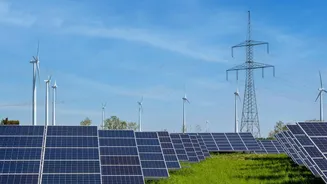
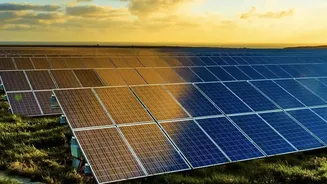
For Indian farmers, the sun provides more than just light for their crops; it now offers a second harvest. As energy costs rise and grid power remains unreliable, many are looking at their unused land and wondering: is solar farming a viable path to a stable
income?
Understanding the Initial Investment
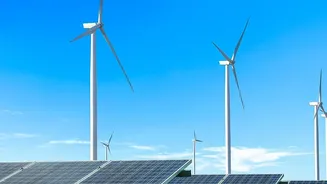
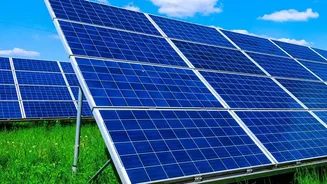
The first hurdle for any farmer considering solar energy is the upfront cost. Setting up a solar power project is a capital-intensive venture. The primary expenses include solar panels, inverters, mounting structures, wiring, and installation. For a small-scale solar pump system of around 5 HP, the initial cost before any government support can range from ₹3 lakh to ₹5 lakh. If a farmer aims to generate power to sell, a larger setup is required. The cost for a 1-megawatt (MW) solar farm, which needs about 4-5 acres of land, can be anywhere from ₹4 crore to ₹5 crore. While these figures seem daunting, they represent the total project cost, a significant portion of which can be offset by government schemes.
The Role of Government Subsidies
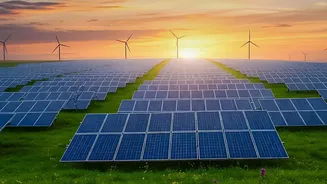
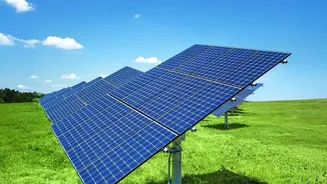
The Indian government's PM-KUSUM (Pradhan Mantri Kisan Urja Suraksha evam Utthaan Mahabhiyan) scheme is a game-changer for farmers. This initiative aims to reduce agriculture's dependence on diesel and unreliable grids while providing farmers with an additional income source. The scheme is divided into three components, offering flexibility. Component A helps farmers set up small solar plants (0.5 MW to 2 MW) on their barren land to sell power to the grid. Component B provides subsidies for installing standalone solar agricultural pumps, and Component C supports the solarization of existing grid-connected pumps. Under these schemes, farmers can receive substantial subsidies, often covering up to 60% of the initial cost, with options for bank financing for another 30%, leaving the farmer to contribute a much smaller share.
How Farmers Earn an Income
Beyond saving on diesel and electricity bills, solar farming opens up a direct revenue stream. Under Component A of the PM-KUSUM scheme, farmers can enter into a Power Purchase Agreement (PPA) with their local electricity distribution company (DISCOM). A PPA is a long-term contract, typically for 25 years, where the DISCOM agrees to buy the electricity generated at a pre-determined tariff. These tariffs vary by state and the specifics of the auction but provide a stable, long-term source of income. For example, a 1 MW solar plant has the potential to generate an annual revenue of ₹40 to ₹50 lakh. Even leasing fallow land to a solar developer can generate steady annual income, providing a financial cushion against agricultural volatility.
Agrivoltaics: Farming and Power Generation on the Same Land
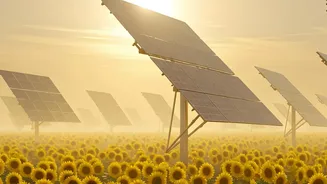
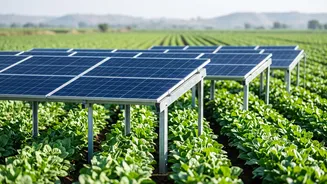
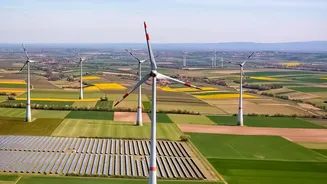
A newer concept gaining traction in India is agrivoltaics, the practice of cultivating crops underneath elevated solar panels. This innovative approach addresses the land-use conflict, as 85% of Indian farmers are small and marginal landholders who cannot afford to stop cultivation. While agrivoltaic projects are about 25–30% more expensive than conventional ground–mounted solar plants due to the cost of elevated structures, they allow farmers to earn from both agriculture and energy from the same plot of land. Initial studies show this method is suitable for fruits and leafy vegetables and can even improve yields for certain crops and conserve water. The government is actively working on a policy to promote this dual–use model.
Is It Truly Feasible? A Look at the Realities
While the numbers look promising, the path to a profitable solar farm has its challenges. The return on investment (ROI) typically takes between five to eight years. Success is not guaranteed and depends heavily on factors like solar irradiation in the region, the final tariff secured in the PPA, and efficient project execution. Farmers also face bureaucratic hurdles in getting approvals and grid connectivity. Furthermore, there is a general lack of awareness about the intricacies of the schemes and financing options. Maintenance costs, though low, are a recurring expense for cleaning panels and ensuring the system runs efficiently. Despite these challenges, for a farmer with unused arid land and the ability to navigate the process, solar farming presents a powerful opportunity for long–term financial stability.