


Cosmic Kitchens in the Cold
For decades, scientists believed that the formation of complex organic molecules—the carbon-based compounds that are the building blocks of life—required the relative warmth and energy of a budding star system. The prevailing theory was that these molecules formed
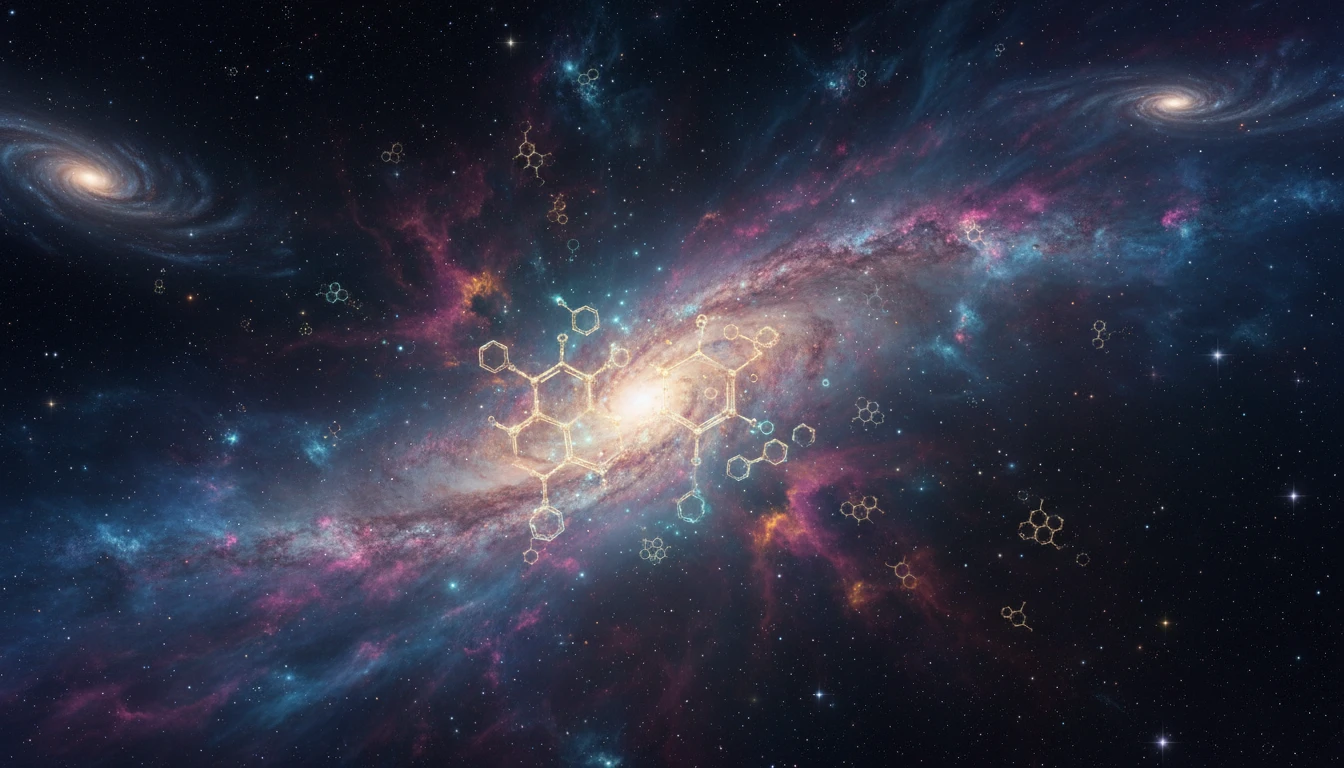
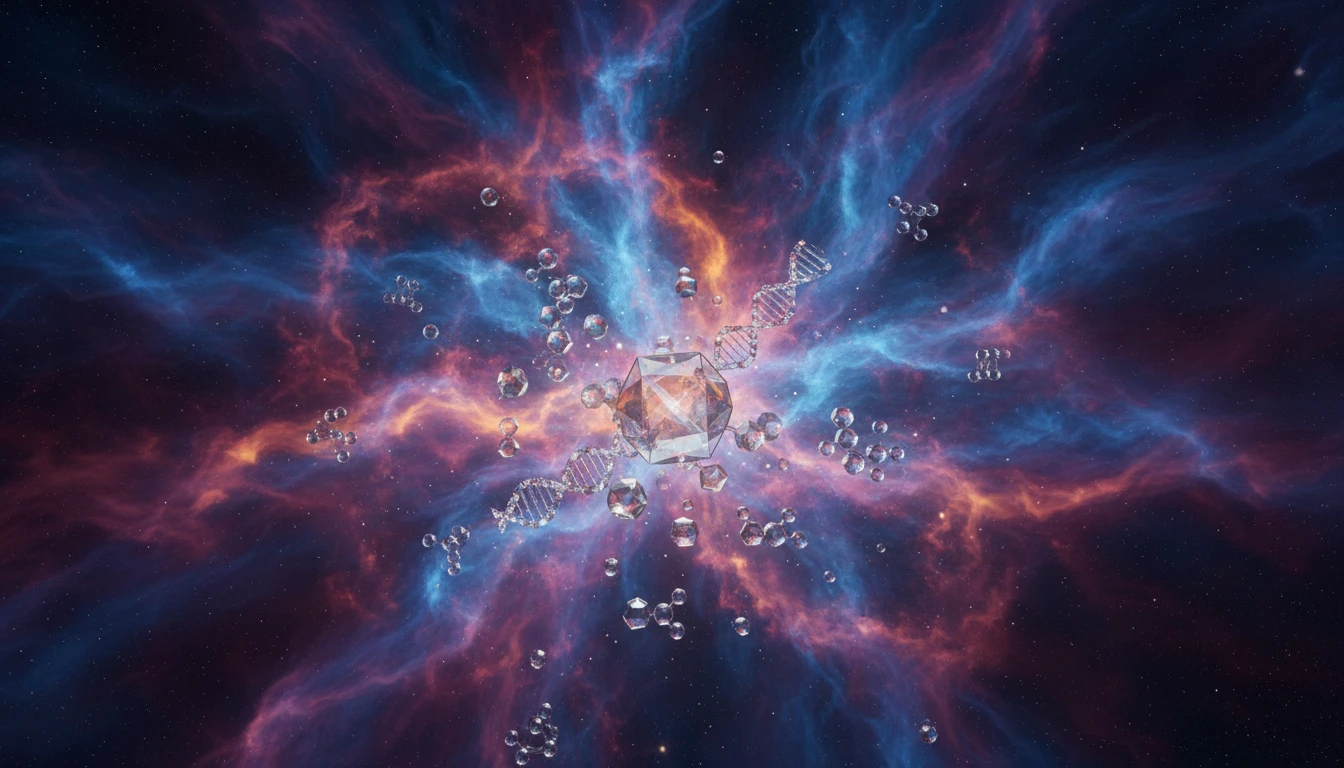
in the “hot cores” of collapsing interstellar clouds. However, recent findings are challenging this view, suggesting the process starts much earlier. Studies of regions like the Taurus Molecular Cloud have found a surprising abundance of these complex organics in cold, starless cores. This indicates that the chemical groundwork for life is being laid long before stars and planets even begin to form.
What Are Interstellar Clouds?
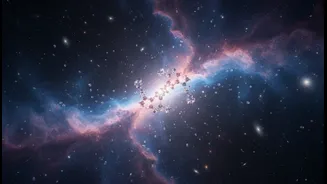
Interstellar clouds are vast, diffuse collections of gas and dust that drift between stars. They are incredibly cold, with temperatures often hovering just a few degrees above absolute zero, and their densities are so low they would be considered an ultra-high vacuum on Earth. These conditions seem hostile to any kind of complex chemistry. Yet, these clouds are now seen as cosmic chemical laboratories. Over millions of years, simple atoms and molecules freeze onto the surfaces of tiny dust grains, forming icy mantles. It is on these frozen surfaces, shielded from some of the harshest radiation, that a slow but steady chemical synthesis takes place.
The Recipe for Life's Ingredients
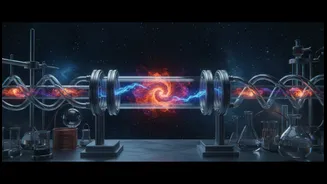
So how do these molecules form in such extreme cold? Several mechanisms are now thought to be at play. One key process involves cosmic rays—high-energy particles that zip through the galaxy—bombarding the icy mantles on dust grains. This bombardment can break apart simpler molecules, creating reactive fragments called radicals. These radicals can then recombine to form more complex structures. Laboratory experiments simulating these conditions have shown this method to be surprisingly efficient. Recent discoveries have identified specific, life-relevant molecules forming this way, including sugars like erythrulose—a four-carbon sugar related to the ribose in RNA—and large, ring-shaped molecules containing sulfur, an element essential for proteins.
From Stardust to Planets
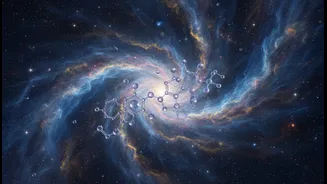
The discovery that these prebiotic molecules exist in interstellar clouds is a crucial piece of the puzzle connecting the cosmos to life on Earth. The process doesn't end in the cloud. As the cloud eventually collapses under its own gravity to form a new star and planetary system, these molecule-rich dust grains are incorporated into the mix. They become part of the asteroids and comets that form alongside the planets. For billions of years, these cosmic delivery vehicles have rained down on planets, including a young Earth, potentially seeding them with the organic raw materials necessary for life to emerge. Analysis of meteorites that have landed on Earth, as well as samples returned from asteroids like Bennu, have confirmed they carry a rich inventory of organic compounds, including amino acids—the building blocks of proteins.
A Universe Primed for Life?
This growing body of evidence fundamentally changes our perspective. Instead of life’s ingredients being a rare outcome of specific planetary conditions, it appears the universe is widely seeded with them. The chemistry of life may not start on a planet's surface, but in the dark, cold voids of interstellar space, long before a planet even exists. This suggests that the potential for life is not an isolated phenomenon but a natural consequence of the cosmic lifecycle of stars and dust. While this does not mean life itself is common, it does imply that the necessary chemical starting blocks are far more widespread than previously imagined, making the universe a more promising place to search for life beyond Earth.