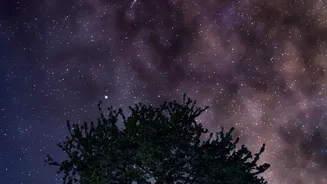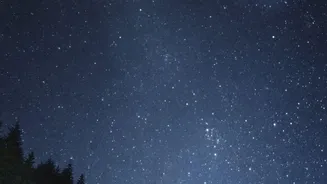






First, What Are the Orionids?
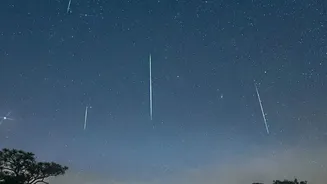
The Orionid meteor shower is an annual event that occurs when Earth passes through a stream of debris left behind by the famous Halley's Comet. These tiny particles, often no bigger than a grain of sand, burn up upon entering our atmosphere, creating
the beautiful streaks of light we call 'shooting stars'. They are known for being particularly fast and can leave glowing trails that linger for a few seconds. This shower gets its name because the meteors appear to radiate from a point in the constellation Orion, the Hunter. In 2026, the shower is active from early October to early November, offering a wide window for viewing.
Know the Best Time to Look Up
Timing is everything. The Orionids are set to peak on the night of October 21-22, 2026. The best viewing hours are typically after midnight and into the pre-dawn hours, when the sky is at its darkest and the radiant point in Orion is high in the sky. For 2026, there will be a bright waxing gibbous moon, which can wash out fainter meteors. However, the moon will set around 3 a.m. local time, opening up a window of dark skies until dawn begins to break. This period between moonset and sunrise will be your prime time for spotting the most meteors.
Find Your Urban Observation Post
The biggest challenge in any city is light pollution. While you can't escape it completely, you can minimise it. Look for the darkest spot you can safely access. This might be a park, a large field, a rooftop, or even a quiet street with few streetlights. The key is to find a location with an open view of the sky, away from the direct glare of buildings and lamps. Even moving to the side of a building to block a major light source can make a significant difference. The goal is to reduce the amount of direct light hitting your eyes.
Give Your Eyes Time to Adjust
This is the most crucial and often overlooked hack. Your eyes need about 20 to 30 minutes to fully adapt to the darkness and achieve their maximum night vision. During this time, the light-sensitive cells in your eyes become more active, allowing you to see faint objects like meteors. This means no looking at your phone. The bright screen will instantly reset your night vision, forcing you to start the adjustment process all over again. So, find your spot, get comfortable, and just gaze up at the sky. Be patient; the stars will slowly start to appear more numerous, and soon enough, you'll be ready to spot the meteors.
Look in the Right Direction (Without Staring)
While the meteors radiate from the constellation Orion, you don’t need to stare directly at it. In fact, it's better not to. Meteors seen right at the radiant will have very short trails due to perspective. For the best views of long, spectacular streaks, look about 45 to 90 degrees away from Orion. The meteors will appear all across the sky, so a wide-open view is more important than pinpointing the radiant. Simply lie back, look up, and take in as much of the sky as you can. Your peripheral vision is excellent at detecting motion, which is perfect for spotting the sudden flash of a meteor.
Comfort Is Key for This Waiting Game
Meteor watching is an exercise in patience. Since you'll be outside for a while, make sure you are comfortable. October nights can be cool, so dress in layers. Bring a blanket or a reclining chair to lie on; craning your neck for an hour is a recipe for a bad time. The best way to watch a meteor shower is to lie flat on your back and look straight up. This gives you the widest possible view of the sky and keeps you comfortable while you wait for the show to begin. No special equipment is needed—in fact, binoculars or a telescope are not recommended as they restrict your field of view, making it harder to spot the fast-moving meteors.