


The Reigning Champion: Basque Cheesecake
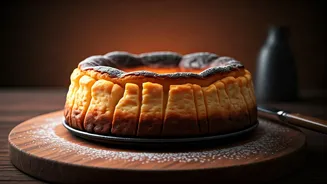
The dessert in question is the Basque cheesecake. Forget everything you know about a traditional New York-style cheesecake with its perfect crust and smooth, pale top. The Basque cheesecake is its rebellious, more interesting cousin. It’s famously crustless,
baked at a high temperature to achieve a deeply caramelised, almost burnt top that provides a slightly bitter contrast to the impossibly creamy, gooey, and barely-set custard centre. It’s intentionally rustic, often sporting cracked edges and an uneven, browned surface. It’s a study in contrasts: bitter and sweet, firm and molten, ugly and beautiful. This unique profile is precisely what has made it the undisputed star of the dessert counter, a far cry from the perfectly symmetrical pastries that once dominated.
From a Spanish Bar to Your Plate
This global sensation has humble origins. It was created in the 1990s at a small pintxos bar called La Viña in San Sebastián, Spain. The chef, Santiago Rivera, wanted a simpler, quicker cheesecake for his menu. He ditched the water bath and the crust, cranked up the oven, and created what locals called 'tarta de queso'. For years, it remained a local delicacy. But thanks to food writers, travelling chefs, and of course, Instagram, its fame exploded. Chefs around the world began recreating it, and by the late 2010s, it had landed firmly in India. The pandemic-era home baking boom further solidified its status, as amateur bakers found it surprisingly forgiving to make. Soon, it graduated from home kitchens to professional ones, becoming a non-negotiable menu item.
The Recipe for Viral Success
So, why did the Basque cheesecake succeed where other dessert trends faded? It’s a perfect storm of factors. For customers, it offers a novel texture and flavour experience that feels both comforting and sophisticated. Its 'burnt' top makes it visually striking and highly photogenic, a crucial asset in the age of social media. The hashtag #basquecheesecake is a testament to its online appeal. For cafe owners and chefs, it’s a dream dessert. It uses simple, readily available ingredients: cream cheese, heavy cream, sugar, eggs, and a touch of flour. It requires no special equipment, no fussy water bath, and its rustic appearance means imperfections are part of its charm. This makes it consistent, profitable, and relatively easy to scale for a busy service, unlike more temperamental desserts.
The Contenders for the Crown
While the Basque cheesecake currently wears the crown, it doesn't rule in a vacuum. The old guards still command loyalty. A well-made Tiramisu, with its delicate balance of coffee, mascarpone, and cocoa, remains a sophisticated favourite. The classic Molten Chocolate Lava Cake, offering that guaranteed gush of warm chocolate, is still the go-to for indulgent comfort. You'll also find Tres Leches cake making a strong showing, its milky, moist crumb appealing to the Indian palate. Yet, none of these currently possess the same trifecta of novelty, Instagrammability, and operational ease that has propelled the Basque cheesecake to the top of nearly every menu.
A Trend or a New Classic?
Every few years, a new dessert captures the public imagination—think of the red velvet craze or the moment freakshakes were everywhere. Most of these fads burn bright and fast, eventually becoming dated. The Basque cheesecake, however, feels different. Its popularity isn't just built on novelty but on a genuinely compelling flavour profile and texture. Its simple, classic foundation suggests it has staying power. It has already evolved, with cafes offering variations like matcha, chocolate, or Biscoff-swirled versions. This adaptability suggests it’s not just a fleeting trend but is embedding itself into our dessert culture as a new classic, a permanent fixture we’ll be ordering for years to come.