

Catch a Few Shooting Stars
Look out for the September Epsilon-Perseid meteor shower, which will be active from September 5th to 21st. While not as dramatic as the famous August Perseids, this minor shower is expected to produce its peak rate of meteors on the night of September 9th.
With the shower's radiant point in the constellation Perseus rising in the east after 9 PM, the best viewing time will be in the pre-dawn hours when the radiant is highest in the sky. Since the shower peaks close to the new moon, moonlight interference will be minimal, offering a good chance to spot the handful of meteors it produces per hour. It's a perfect, quiet opportunity for patient observers to catch a few shooting stars.
Venus Shines Brightest
The planet Venus will be a dazzling sight throughout the month. On September 22, it reaches its maximum brightness in the evening sky. You won't need any special equipment to see it; Venus will be unmistakable as a brilliant, star-like object. On September 2, Venus will pass very close to the bright star Spica, offering a beautiful pairing for the naked eye. The Moon also joins the planetary dance, passing near Venus on September 14, creating another lovely celestial arrangement to look for shortly after sunset.
Neptune at its Best
For those with binoculars or a small telescope, September 26 marks a key date: Neptune reaches opposition. This is when Earth passes directly between the Sun and the distant ice giant, making Neptune appear at its biggest and brightest for the year. The planet will rise in the east around sunset, reach its highest point around midnight, and be visible all night long in the constellation Pisces. While it's too faint to be seen with the naked eye, shining at a magnitude of +7.8, opposition provides the best opportunity all year to hunt down this elusive, blue-hued world.
The Autumnal Equinox Arrives
Marking the official start of the astronomical autumn season in the Northern Hemisphere, the Autumnal Equinox falls on September 23. On this day, the Sun shines directly over the Earth's equator, and the length of day and night are nearly equal across the globe. In India, the event occurs in the early morning. While not a visual event you can watch in the sky, the equinox is a significant moment in Earth's yearly journey around the Sun, signaling the gradual shift towards cooler weather and longer nights, which are ideal for stargazing.
The Harvest Full Moon
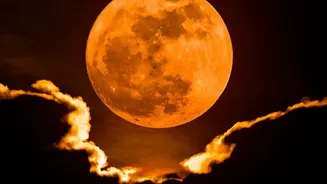
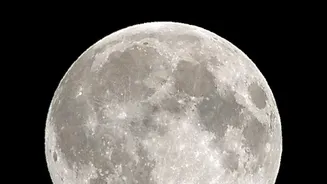
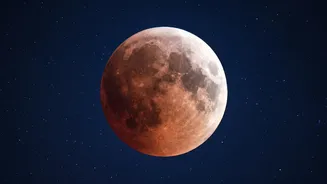
September's celestial finale is the Full Moon on September 26. This particular full moon is known as the Harvest Moon, a name given to the full moon that occurs closest to the autumnal equinox. Historically, its bright light helped farmers work late into the night to bring in their crops. A unique feature of the Harvest Moon is that for several consecutive nights, it rises around the same time shortly after sunset, instead of the usual 50-minute delay each night. This provides an extended period of bright moonlight in the early evening, making it a beautiful spectacle to observe. Look for it rising in the east as the sun sets in the west.