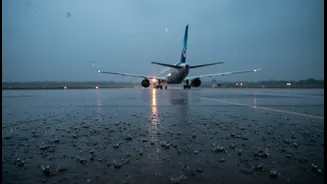









More Than Just A Downpour
The scene is familiar to any seasoned traveller in India: departure boards flashing with delays, long queues at airline counters, and thousands of passengers stranded. Recent heavy rains in Kolkata created exactly this scenario, leading to widespread
disruptions. Airlines issued advisories as waterlogging affected airport access and adverse weather impacted flight operations. But here’s the crucial question: if monsoons are a predictable, yearly event, why do they still cause such crippling, system-wide meltdowns? The answer isn't just in the sky or on the runway; it's hidden within the complex economics of modern air travel.
Decoding the 'Flight Buffer'
Enter the concept of 'flight buffers'. Think of these as the strategic addition of extra time and resources to absorb unexpected problems. In aviation, this buffer isn't just one thing; it's a combination of several elements. First, there's 'schedule padding', where airlines intentionally list a flight time as longer than it actually takes to fly. A 90-minute flight might be scheduled for 110 minutes to create a 20-minute cushion. Second, there are operational buffers: having spare aircraft on standby, rostering crews with enough flexibility in their duty hours to handle delays, and ensuring quick turnaround times on the ground. This entire system of buffers is designed to act as a shock absorber, ensuring that a single delay doesn't trigger a chain reaction.
The Economics of Tight Schedules
In recent years, these buffers have been shrinking. For airlines, especially in a competitive market like India, time is money. An aircraft only earns revenue when it's in the air. The pressure to maximise 'asset utilisation' means planes are scheduled for more flights per day with minimal time on the ground. This practice, while efficient on paper, removes the slack from the system. Legacy carriers with complex hub-and-spoke models might have more inherent buffers, but the rise of low-cost carriers has pushed the entire industry towards leaner, more aggressive scheduling. Adding longer block times costs airlines in crew pay and reduced aircraft usage, creating a strong financial incentive to keep schedules as tight as possible. A small, predictable delay can be absorbed, but a major, unpredictable event like a monsoon storm in Kolkata exposes the system's fragility.
A Nationwide Ripple Effect
This is where passengers feel the real pain. When Kolkata airport operations slow down, it’s not just flights to and from the city that are affected. The aircraft delayed on the ground in Kolkata is meant to operate another flight from Delhi to Mumbai two hours later. The crew operating that flight may exceed their legally mandated Flight Duty Time Limitations (FDTL) because of the initial delay, making them ineligible to fly. Suddenly, a weather problem in West Bengal has stranded passengers in Delhi. This 'domino effect' ripples across the country, turning a regional weather event into a national travel crisis. With little to no buffer, the entire network is brittle and prone to collapse when stressed.
Navigating the New Normal
While airlines are not required to pay monetary compensation for weather-related delays, which are considered 'extraordinary circumstances', they are still obligated to provide care like meals and refreshments after a two-hour delay, and rebooking or accommodation for longer waits. However, passengers often have to proactively ask for these facilities. For travellers, understanding this new reality is key. The era of assuming your flight will depart on time, especially during monsoon season, is over. Building your own personal buffer—not scheduling tight connections, having travel insurance, and monitoring flight status before leaving for the airport—is now an essential part of flying in India. The delays at Kolkata are a lesson that the efficiency of the airline industry has come at the cost of resilience.