

The Need for Speed
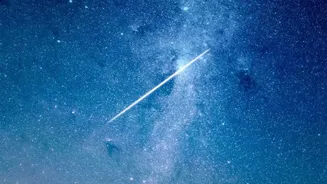
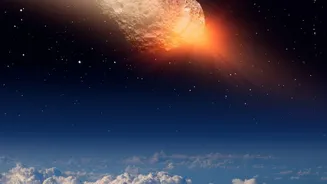
The most immediate and telling clue is speed. Meteors, which are tiny particles of cosmic dust and rock called meteoroids entering our atmosphere, are exceptionally fast. They can travel at speeds ranging from 11 to 72 kilometres per second. This incredible
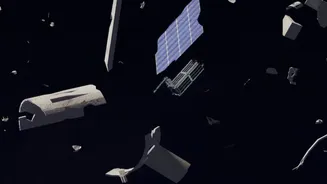
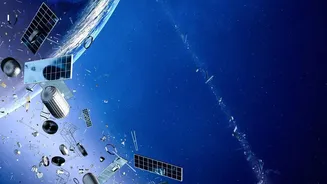
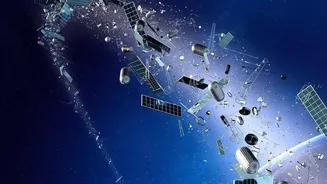
velocity is due to them travelling on their own orbits around the Sun, which Earth intersects at high speed. In contrast, artificial debris like old satellites is already in orbit around Earth. When it re-enters the atmosphere, it's moving much slower, typically around 7 to 8 kilometres per second. This vast difference in speed is often visible to the naked eye. A meteor is a fleeting flash, gone in a second or two. A piece of re-entering debris travels more slowly and gracefully across the sky, sometimes taking a minute or more to disappear.
Trajectory and Angle of Entry
Where an object is coming from and how it enters the atmosphere provides another set of vital clues. Because meteors are hitting Earth from solar orbits, they can appear to come from any direction in the sky and often enter the atmosphere at a steep angle. Meteor showers, like the famous Perseids, occur when Earth passes through the trail of debris left by a comet, causing many meteors to appear to radiate from a single point in the sky. Artificial debris behaves differently. Since it was already orbiting our planet, its re-entry path is much shallower, almost parallel to the ground. Most satellites are launched into prograde orbits, meaning they travel from west to east, and their re-entry paths often reflect this. An object streaking slowly from west to east is much more likely to be space junk than a natural meteor.
Analysing the Light Show
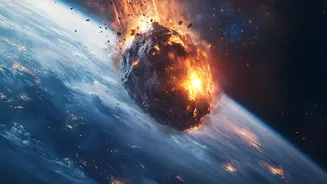
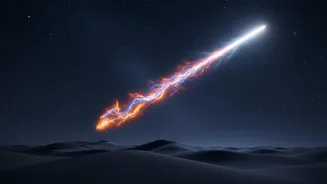
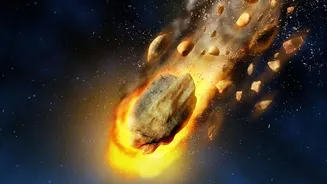
The way an object burns up creates a unique light signature, known as a light curve. Meteors tend to brighten rapidly as they hit denser parts of the atmosphere and then fade just as quickly, creating an asymmetrical streak of light. They can flare up brightly and sometimes explode in an intense burst called a bolide. Artificial debris, on the other hand, often has a more uniform brightness as it streaks across the sky. If it's tumbling, it might flash or flicker in a regular pattern as different surfaces catch the sunlight. The trail of light from debris might also appear to break up into a cluster of smaller bright points moving in the same direction. These differences in brightness and duration are studied using tools like radiometers and specialized cameras to build a detailed picture of the event.
Decoding the Chemical Fingerprint
Perhaps the most definitive method is spectroscopy, which analyzes the light emitted by the burning object to determine its chemical composition. It’s like taking a chemical fingerprint. When a meteoroid burns up, it emits light corresponding to the elements inside it. Spectra from meteors frequently show the presence of magnesium, sodium, iron, and calcium, which are common in rocks and asteroids. The interaction with the atmosphere itself can produce a green glow from oxygen atoms. Artificial debris reveals a very different makeup. Spectroscopy of re-entering junk often shows signatures of materials like aluminium and titanium alloys, stainless steel, and even paint, none of which are found in natural meteoroids. This analysis provides conclusive evidence of an object's origin.
A Sky Full of Satellites
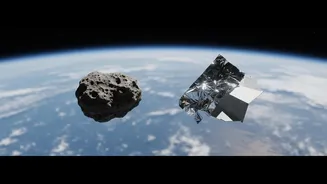
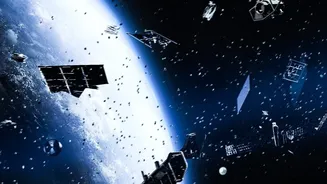
Distinguishing between these objects is becoming more critical—and more difficult. The number of satellites in orbit has exploded, with thousands launched in recent years for large constellations like Starlink. This increases the amount of operational hardware, but also the potential for future debris. These satellite trails can interfere with astronomical observations, including programs designed to spot potentially hazardous asteroids. Astronomers are developing more advanced techniques, including using machine learning to analyze light curve data, to better classify the thousands of objects that streak across our skies. This work is not just for scientific curiosity; it is essential for planetary defense and ensuring the safety of current and future space missions.