

Ladakh's Critical Water Challenge
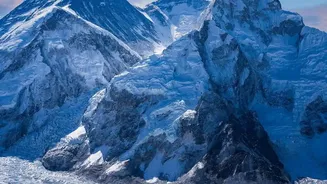
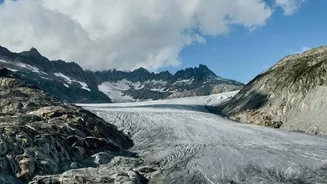
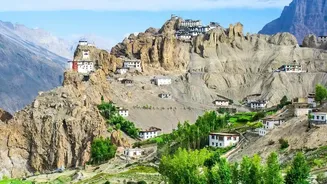
Lying in the rain shadow of the Himalayas, Ladakh receives minimal rainfall, making its agrarian communities almost entirely dependent on the seasonal meltwater from glaciers. For centuries, this rhythm sustained life. But climate change is disrupting
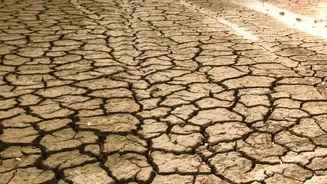
this delicate balance. Glaciers are receding, and winter snowfall patterns have become erratic. The result is a critical timing mismatch: streams swell with runoff during the freezing winters when farming is impossible, and then run dry in the crucial spring planting months of April and May, as the main glaciers are still frozen at high altitudes. This leaves farmers without the water needed to sow their crops like barley, wheat, and potatoes, threatening their livelihoods and regional food security.
An Idea Inspired by Nature
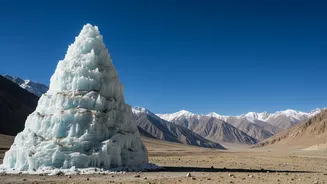
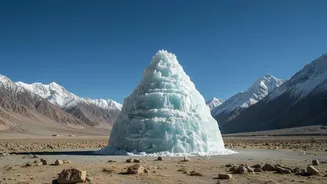
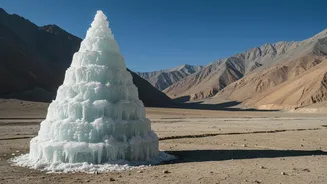
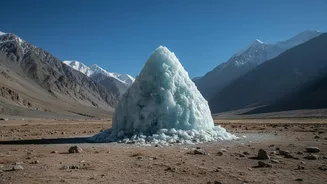
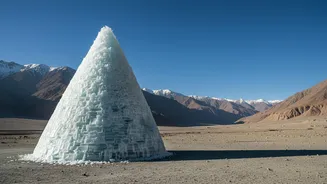
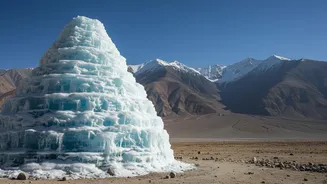
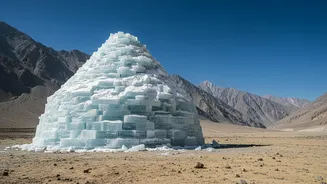
The solution came from Ladakhi engineer and innovator Sonam Wangchuk. He observed that ice formations under a bridge on the shaded side of a road lasted well into the spring, long after other snow had melted. This sparked an idea: what if you could create artificial glaciers at lower altitudes, closer to the villages? Wangchuk's innovation was to think vertically. Previous attempts at artificial glaciers were horizontal and melted too quickly due to their large surface area exposed to the sun. By designing a structure in the shape of a cone—mirroring the sacred Buddhist stupas dotting the Ladakhi landscape—he minimized the surface area exposed to direct sunlight, thus slowing the melting process significantly. In 2013, he built the first prototype, a six-metre-high cone of ice that successfully stored 150,000 litres of water and lasted until mid-May, proving the concept worked.
How to Build a Mountain of Ice
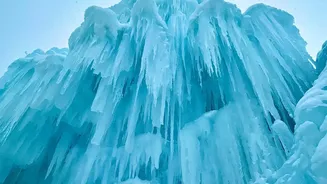
The genius of the ice stupa lies in its simplicity, using gravity and the region's freezing temperatures. The process begins in late autumn as temperatures drop. A pipeline is laid to channel water from a glacial stream at a higher altitude down to the village. Due to the height difference, the water flows down the pipe and, when it reaches the stupa site, is forced up a vertical pipe without any need for electric pumps. At the top, the water is sprayed out through a sprinkler. As this fine mist falls through the sub-zero air, it freezes almost instantly, gradually forming a huge cone of ice layer by layer around a basic structural frame of branches. Throughout the winter, this process continues, creating towering ice cones that can reach heights of over 30 metres and store millions of litres of water that would otherwise have flowed away unused.
From Frozen Asset to Liquid Gold
As spring arrives and temperatures rise, the ice stupa begins to melt. But because of its conical shape, it melts slowly and steadily, releasing a controlled supply of water exactly when farmers need it for sowing their fields. The meltwater is channelled into a storage tank and then distributed to farmlands through a network of drip irrigation pipes, ensuring efficient use. The impact has been transformative. Barren lands have been turned green, with communities planting thousands of trees and cultivating crops in areas that were previously unfarmable. The project, primarily managed by the Students' Educational and Cultural Movement of Ladakh (SECMOL) and later the Himalayan Institute of Alternatives, Ladakh (HIAL), has scaled significantly, with dozens of stupas built across the region.
A Symbol of Hope and Adaptation
The ice stupa project is more than just an irrigation system; it's a powerful model of community-led climate adaptation. The construction and maintenance are labour-intensive, fostering community participation and ownership. To encourage wider adoption, competitions are held between villages to build the tallest stupas. The initiative has also spurred winter tourism and has been recognised globally, winning awards and inspiring similar projects in other mountain regions, including the Swiss Alps. As technology evolves, experiments with automated systems are underway to make the process even more efficient by using sensors to control water flow based on real-time weather conditions. The ice stupa stands as a testament to indigenous innovation, proving that local solutions can offer profound answers to global challenges.