




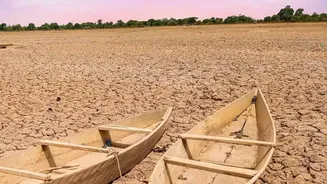
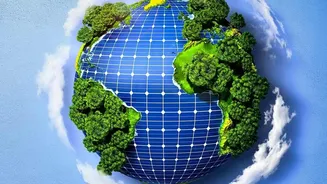
The world is on red alert. A crucial United Nations report warns that global climate action has stalled, placing the Paris Agreement's goal of limiting warming to 1.5°C in serious jeopardy. The window to act is rapidly closing.
What the UN Report Actually Says
The latest UN Emissions
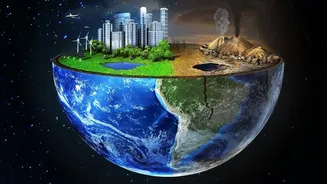
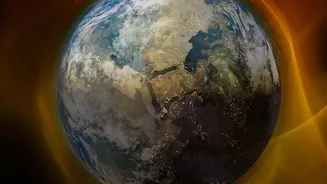
Gap Report, released ahead of the upcoming COP31 climate summit in Türkiye, delivers a sobering message: the world is dangerously off track. According to the analysis, the opportunity to limit global warming to 1.5°C above pre-industrial levels without overshooting the target has now been lost. Current national policies have the planet on a trajectory for a catastrophic 2.6°C to 2.8°C of warming by the end of the century. The report highlights a massive 'emissions gap'—the difference between the climate pledges countries have made and the deep cuts required. Even if all current promises, known as Nationally Determined Contributions (NDCs), are fully met, emissions will only fall by 11-15% by 2035. To have a fighting chance of limiting the overshoot and returning to 1.5°C, global emissions must be slashed by a staggering 45% by 2035.
Why This Temperature Target Matters
The 1.5°C goal, enshrined in the 2015 Paris Agreement, isn't an arbitrary number. It represents a critical threshold beyond which the risks of catastrophic and irreversible climate impacts increase dramatically. The difference between 1.5°C and 2°C of warming is not a minor increment; it is a world of difference. At 2°C, the complete loss of the world's coral reefs becomes a near certainty, sea-level rise would be significantly greater, and the frequency of life-threatening extreme weather events—heatwaves, droughts, and floods—would intensify. For a nation like India, with its vast coastline and agriculture-dependent economy, the stakes are immense. Research shows that every fraction of a degree of warming exposes millions more people to extreme poverty, food insecurity, and water stress.
The Global Stalemate
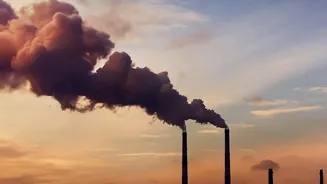
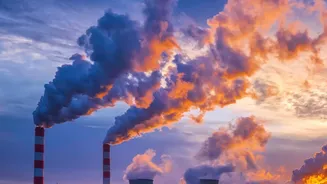
So, why the stall? According to the Climate Action Tracker, an independent research group, collective global climate action has effectively flatlined for five consecutive years. Progress in some areas, like the rapid expansion of renewable energy, is being cancelled out by a continued reliance on fossil fuels and a lack of sufficient policies to drive down emissions across all sectors. Another critical issue identified in recent UN reports is a shortfall in climate finance. Wealthy nations have not met their promises to provide adequate financial support to help developing countries adapt to climate impacts and transition to clean energy. This 'leadership gap' means that while solutions exist, the political will and international cooperation required to implement them at scale are lagging dangerously behind.
Bringing the Crisis Home to India
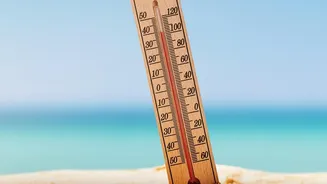
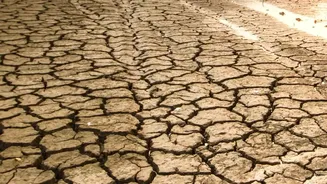
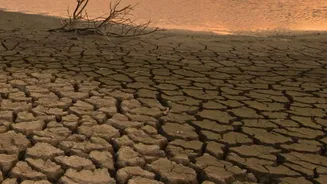
For India, the implications of a stalled global response are stark and immediate. The country is already one of the most vulnerable to climate change, experiencing a rise in temperature higher than the global average. Failing to curb global emissions means more frequent and intense heatwaves that threaten public health and labour productivity. It means more erratic monsoons, leading to devastating floods in some regions and severe droughts in others, jeopardising the livelihoods of millions of farmers. Coastal cities like Mumbai and Kolkata face an existential threat from rising sea levels. While India has made significant strides in renewable energy, it also faces the challenge of rising emissions from its growing economy and continued use of coal. Analysts note that India's climate targets, while a step forward, are not yet aligned with a 1.5°C pathway.
A Narrow and Difficult Path Forward
While the UN report paints a grim picture, it does not declare defeat. Instead, it reframes the challenge: the world must now focus on limiting the 'overshoot'—how far we exceed 1.5°C and for how long. Returning to 1.5°C by the end of the century is still technically possible, but it requires immediate, deep, and sustained emissions cuts across every sector of the global economy. The report calls for a tripling of renewable energy capacity, a rapid phaseout of fossil fuels, and massive investments in energy efficiency and new technologies like carbon removal. For this to happen, upcoming climate negotiations like COP31 must move beyond promises and deliver concrete action, particularly on finance and holding major emitters accountable. The message is clear: the time for incremental steps is over. The world needs a transformative leap.