






The Shifting Science of Batteries
At the heart of the recycling challenge is a moving target: battery chemistry. The lithium-ion batteries powering everything from electric vehicles to smartphones are not a monolith. They come in various formulations, such as Lithium Iron Phosphate (LFP),
which is gaining popularity for its safety and cost, and Nickel Manganese Cobalt (NMC), prized for its energy density. Each chemistry demands a unique and complex recycling process to recover its core minerals like lithium, cobalt, nickel, and graphite. As manufacturers innovate towards new and future technologies like solid-state batteries, the recycling industry must constantly adapt. A process perfected for today's NMC battery may be inefficient for the LFP battery of tomorrow, or entirely obsolete for a future solid-state cell. This constant evolution requires recyclers to invest in flexible, multi-chemistry processing capabilities, a significant technological and financial hurdle. Without this adaptability, recycling plants risk being unable to handle the diverse mix of batteries entering the waste stream, jeopardising the economic viability of the entire enterprise.
Tackling the E-Waste Tide
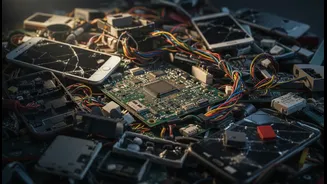
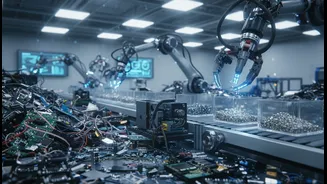
India generates a massive and growing volume of electronic waste, but turning this trash into treasure is a monumental logistical challenge. Currently, a large portion of e-waste management is handled by the informal sector, which often uses rudimentary and hazardous methods that result in low recovery rates for critical minerals. While India has strengthened its E-Waste Management Rules, formalising collection is key. For a recycling plant to be profitable, it needs a consistent, high-volume supply of sorted waste. This means creating an efficient, nationwide system to gather spent batteries and electronics from millions of homes and businesses. The government's Extended Producer Responsibility (EPR) framework makes manufacturers accountable for their products' end-of-life management, which is a crucial step. However, bridging the gap between policy and on-the-ground implementation requires overcoming consumer behaviour, building vast collection networks, and integrating the informal sector into a safe and structured system. Without a reliable feedstock, even the most advanced recycling facility will be underutilised and unprofitable.
The Engineering and Economic Hurdles
Process engineering is where the science of recycling meets the reality of economics. It refers to the specific industrial methods—primarily hydrometallurgy and pyrometallurgy—used to extract pure minerals from shredded e-waste. Pyrometallurgy involves high-temperature smelting, which is energy-intensive and can release harmful emissions if not controlled. Hydrometallurgy uses chemical solutions to leach out metals, which can be more precise but involves handling hazardous chemicals and wastewater. The challenge for Indian firms is to develop or acquire technologies that are not only efficient, achieving high recovery rates of over 90% for minerals like cobalt and nickel, but also cost-effective and environmentally sound. India currently lacks large-scale, low-impact refining technologies, making it dependent on foreign tech. The high capital investment and operational costs for setting up these sophisticated plants are significant deterrents. For recycling to succeed, the value of the recovered minerals must outweigh the immense cost of extraction, a balance that depends entirely on mastering this complex engineering.
Forging a Path to Resource Security
Successfully navigating these three challenges is fundamental to India's goal of achieving resource security and reducing its heavy reliance on mineral imports for lithium, cobalt, and nickel. Government bodies like NITI Aayog recognise that recycling offers the fastest path to securing these materials, as developing domestic mines can take years. Success will require a concerted effort: policy frameworks that incentivise investment in advanced recycling technologies, robust enforcement of e-waste collection targets, and funding for research and development to lower costs and improve yields. Building a skilled workforce, from collection agents to process engineers, is another non-negotiable piece of the puzzle. Ultimately, the goal is to create a fully integrated and profitable ecosystem where the chemistry, the feedstock, and the engineering work in harmony.