





The Monsoon's Retreat and Calmer Air
The annual southwest monsoon is India's great atmospheric reset button. Strong winds and consistent rain wash pollutants out of the air, leading to some of the best air quality days of the year. However, as October begins, the monsoon system withdraws
from northern India. This withdrawal is accompanied by a significant change in weather patterns. The once-strong, moisture-laden easterly winds die down, replaced by calmer and drier air. This lack of strong wind means there is less energy to disperse pollutants that are generated daily from traffic, industry, and construction. Instead of being blown away, they begin to accumulate closer to the ground. Recent data for early October 2026 shows this pattern beginning, with a drop in rainfall and weakening winds allowing local pollution to build up.
The Science of the Temperature 'Lid'
One of the most critical factors in October is a phenomenon called temperature inversion. Normally, the air near the ground is warmer than the air above it, allowing it to rise and carry pollutants upwards and away. In October, the nights start to get cooler, which chills the air at the surface. The air higher up, however, remains relatively warm. This creates an inversion: a layer of cold, dense air trapped at ground level by a 'lid' of warmer air above it. This atmospheric lid prevents the vertical mixing of air, meaning pollutants released at the surface get stuck in the very air we breathe. This effect is especially pronounced in the early mornings after a cool night, leading to a visible build-up of smog. The geography of the Indo-Gangetic Plain, flanked by mountains, can further exacerbate this by creating a natural 'bowl' that traps stagnant air.
Shifting Winds and Distant Fires
The post-monsoon period also sees a shift in the predominant wind direction. The winds, which are now much slower, begin to blow from the northwest. This is significant because it coincides with the paddy harvesting season in the neighbouring states of Punjab and Haryana. Farmers in these regions often burn crop residue, or stubble, to quickly clear their fields. These fires release enormous quantities of smoke and particulate matter. The northwesterly winds then act as a conveyor belt, transporting this plume of pollution directly towards the Indo-Gangetic Plain, including Delhi and other major cities. Studies have shown that emissions from stubble burning can contribute significantly to the PM2.5 load in Delhi during October and November, sometimes accounting for a large percentage of the pollution on the worst days.
A Perfect Storm for Pollution
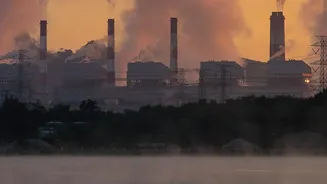
October's weather does not create pollution, but it creates the perfect conditions for it to become a crisis. The calm air, temperature inversions, and northwesterly winds act as multipliers for existing pollution sources. The everyday emissions from vehicles, industrial activity, power plants, and construction dust, which might disperse on a windy summer day, are instead trapped and concentrated. This is why even cities with fewer heavy industries can experience sharp spikes in their Air Quality Index (AQI) during this period. When episodic events like large-scale stubble burning or festival-related fireworks are added to this mix, the AQI can rapidly deteriorate from 'moderate' to 'very poor' or even 'severe' levels within a matter of days. Reports from early October 2026 already show a rise in Delhi's AQI as post-monsoon conditions set in.