

A Simulated Nuclear Detonation in Space
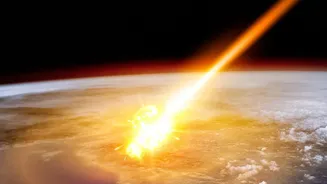
In a sobering new study, researchers from the University of Wisconsin-Madison and Princeton University modelled a hypothetical, worst-case scenario: the detonation of a one-megaton nuclear device in low Earth orbit (LEO). The simulation wasn't designed
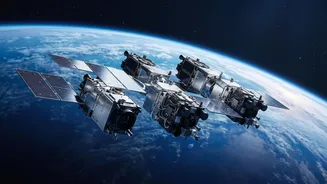
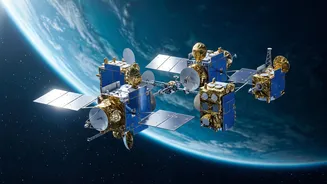
to predict an imminent attack but to test the resilience of the approximately 17,776 active satellites that circle our planet. The results of the simulation, released on the preprint server arXiv, paint a grim picture of extreme vulnerability. It found that a single blast at an altitude of 500 kilometres could disable a staggering 98% of all LEO satellites within a single week.
The Lingering Threat of Radiation
The study revealed that the most severe threat isn't the immediate blast itself, but its lingering after-effects. A nuclear explosion in space would release a flood of high-energy electrons that become trapped by Earth's magnetic field, creating a persistent, artificial radiation belt. Satellites, constantly passing through this hazardous zone, would have their sensitive electronics fried by repeated exposure. The simulation showed that even if satellites were built with three times their current radiation tolerance, 97% would still fail within two weeks, highlighting the overwhelming nature of such a threat. This is a stark contrast to the early days of space; the 1962 US 'Starfish Prime' nuclear test damaged a third of the 20 satellites then in orbit, but today, our reliance is exponentially greater.
From Failure to Kessler Syndrome
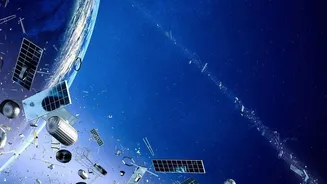
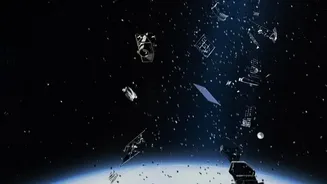
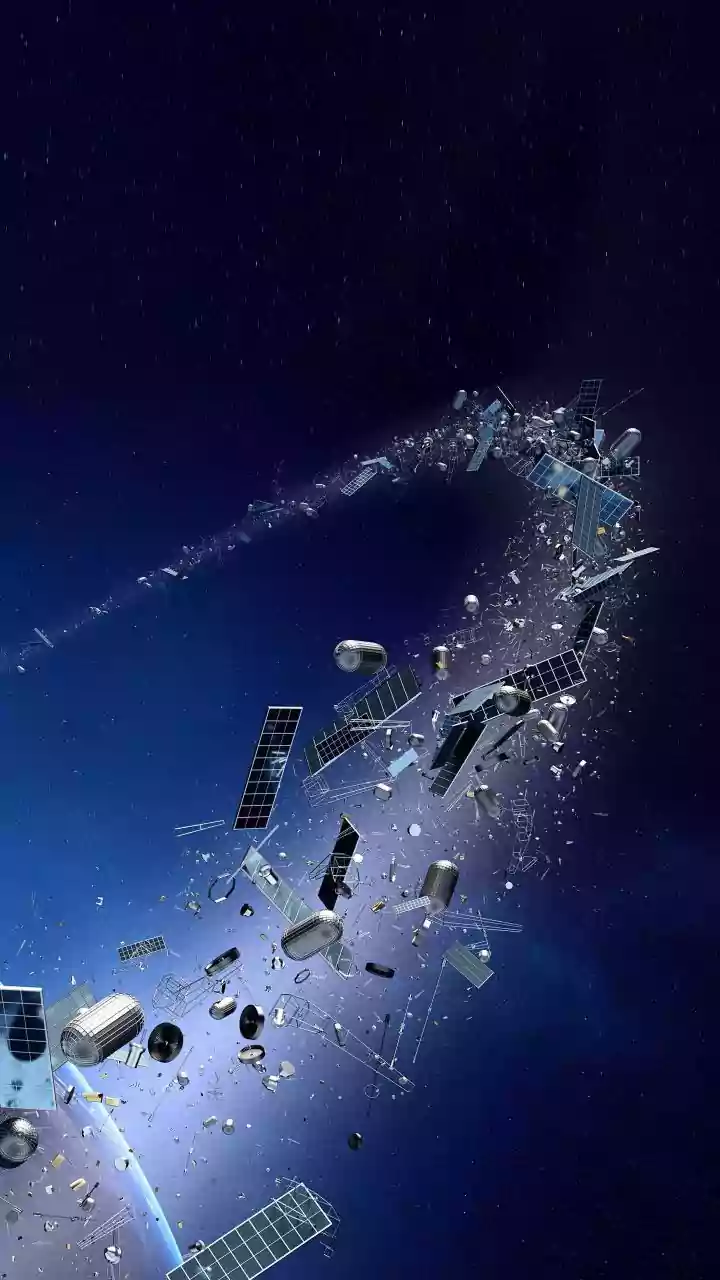
The catastrophic failure of thousands of satellites would trigger a secondary, cascading disaster. Once disabled, these satellites become uncontrollable space junk. The simulation projected that the loss of manoeuvrability would lead to approximately 20 orbital collisions within just two years. Each collision would create thousands of new pieces of high-velocity debris, dramatically increasing the risk of further impacts. This chain reaction is known as the Kessler Syndrome, a scenario where the density of orbital debris becomes so high that it renders entire orbital regions unusable. This would not only destroy functioning satellites but also make it incredibly difficult and dangerous to launch replacements into the contaminated environment.
Why This Matters for India
The findings are not an abstract concern; they have direct implications for India's national infrastructure and economy. India's digital economy, powered by the Unified Payments Interface (UPI), relies on precise timing signals from GPS satellites. Navigation services for ride-sharing apps, logistics, and daily travel are entirely space-dependent. Furthermore, our national security, from military communications to disaster management and weather forecasting, is underpinned by a sophisticated network of both domestic and international satellites. An event like the one simulated would cause a prolonged degradation of these critical services, impacting everything from banking and transport to emergency response and defence readiness. The concentration of so much critical infrastructure into the hands of a few commercial mega-constellations also creates a potential single point of failure.
The Urgent Search for Resilience
The study serves as a critical wake-up call. While treaties prohibit the stationing of nuclear weapons in space, the simulation underscores the need for proactive measures to bolster the resilience of our orbital assets. Efforts are underway globally to develop more robust systems. These include designing satellites with better radiation shielding, creating more resilient ground station networks to defend against cyberattacks, and developing 'space traffic management' protocols to avoid collisions. Furthermore, there is a growing push for active debris removal (ADR) technologies. The European Space Agency and other organisations are clear that prevention alone is no longer sufficient; we must begin actively cleaning up our orbital highways to prevent the Kessler Syndrome from becoming an irreversible reality.