






Choosing the Right Kiwi Variety
Before you start digging, it's essential to select a kiwi variety that suits your local climate. In India, kiwifruit cultivation is most successful in the temperate and sub-temperate hill regions like Himachal Pradesh, Uttarakhand, Sikkim, and Arunachal
Pradesh. These areas provide the necessary chilling hours—around 700-800 hours below 7°C—that kiwi vines need to break dormancy and produce flowers. Popular varieties grown in India include Hayward, Allison, Bruno, and Monty. Crucially, most kiwi plants are dioecious, meaning you need separate male and female plants for pollination. A single male plant, like the 'Tomuri' variety, can pollinate up to eight female plants. For smaller gardens, a self-fertile variety such as 'Issai' or 'Jenny' is an excellent choice as you only need one plant to produce fruit.
Your Essential Toolkit
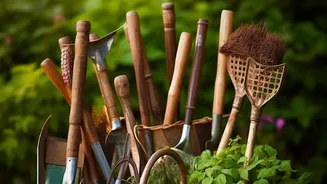
You don’t need an elaborate collection of equipment. The headline holds true: basic garden tools are sufficient. At a minimum, you will need a sturdy spade or shovel for digging the planting hole, a hand trowel for finer soil work, and a pair of sharp pruning shears. A watering can or hose is, of course, essential. You will also need materials to build a strong support structure, as kiwi vines are vigorous climbers and become very heavy. This could be a T-bar trellis, a pergola, or sturdy wires strung between posts. Finally, mulch such as bark chips or straw will help retain soil moisture and suppress weeds.
Site Selection and Soil Preparation
Kiwi vines thrive in a location that receives full sun for at least six to eight hours a day and is sheltered from strong winds. In very hot climates, some protection from the harsh afternoon sun can prevent leaf scorch. The ideal soil is deep, well-drained, and rich in organic matter, with a slightly acidic to neutral pH between 5.5 and 7.0. Heavy clay soil that retains water should be avoided, as kiwis are susceptible to root rot in waterlogged conditions. Before planting, prepare the site by digging a large hole and enriching the soil with plenty of compost or well-rotted manure to improve fertility and drainage.
Planting and Building Support
The best time to plant dormant, bare-root or potted kiwi vines is in late winter or early spring after the last frost has passed. Dig a hole that is large enough to accommodate the root system comfortably. Place the plant in the hole, ensuring the top of the root ball is level with the surrounding soil. Backfill the hole, firm the soil gently, and water thoroughly to settle the plant in. Since kiwi vines are vigorous climbers, a support structure is not optional—it's essential. Install your trellis or wire system before or at the time of planting. A T-bar trellis is a common and effective choice, allowing the vines to spread out and receive ample sunlight and air circulation.
Training and Pruning for Fruit Production
Pruning is critical for managing the vine's growth and encouraging fruit production. In the first year, train a single main shoot (the trunk) to grow up your support. Once it reaches the top wire, you can train two main branches, or cordons, to grow in opposite directions along the wire. Fruit develops on the current season's growth, which arises from last year's canes. Therefore, a two-part pruning schedule is necessary. In winter, while the vine is dormant, remove old canes that have already fruited and any dead or tangled wood. Select new, healthy canes to be the fruiting wood for the upcoming season. During summer, light pruning helps to remove non-fruiting shoots and control vegetative growth, directing the plant's energy toward developing fruit.
Watering, Feeding, and a Dose of Patience
Kiwi vines require consistent moisture, especially during the growing season and as fruit develops, but they hate soggy soil. Water deeply once or twice a week, depending on weather conditions, and apply a thick layer of mulch to help conserve moisture. Feed your vines in the spring with a balanced fertiliser to support healthy growth. The final, and perhaps most important, ingredient is patience. It can take three to five years for a newly planted kiwi vine to begin producing fruit. However, once established, a healthy female vine can become highly productive for decades, rewarding your efforts with an abundant harvest of delicious, homegrown kiwifruit.