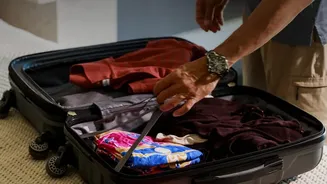








Understand the High Cost of Overpacking
Before diving into the hacks, it's crucial to understand what's at stake. Most domestic airlines in India enforce a strict 7kg limit for cabin baggage. Exceeding this can be costly, with fees ranging from ₹550 to ₹700 per extra kilogram at the airport.
A bag that's just 3kg over the limit could set you back by around ₹2,000. For international flights, the penalties are even higher. These fees can sometimes cost more than the flight ticket itself, especially if you snagged a promotional fare. The goal of smart packing isn't just to fit more in; it's to avoid these punitive, last-minute charges that can derail a travel budget.
Wear Your Heaviest Items on the Plane
This is the oldest and most effective trick in the book. Your bulkiest items—the winter coat, heavy boots, and thickest sweater—should be part of your travel day outfit, not packed in your bag. Airlines weigh what’s in your luggage, not what you're wearing. While you might feel a bit warm navigating the airport, you can always remove layers once you're on the plane. A heavy puffer jacket can even double as a comfortable pillow or blanket during the flight. This single move can free up several kilograms and significant volume in your carry-on, making it the number one strategy for winter travel.
Embrace the Power of Compression
Winter clothes like sweaters, fleece, and down jackets are full of air, which is what makes them bulky. Compression is your best friend here. While simply rolling clothes tightly saves more space than folding, using compression packing cubes or bags takes it to the next level. These organisers use a second zipper to squeeze out excess air, reducing the volume of soft garments by as much as 50%. This allows you to fit chunky knits and even a packable jacket into a carry-on. However, remember the golden rule: compression reduces volume, not weight. So, use this technique for bulky but lightweight items and always weigh your bag at home before leaving for the airport.
Master the Art of Layering
Instead of packing two or three thick, heavy jumpers, think in layers. A successful winter wardrobe is built on a system of thin, efficient layers that trap heat. Start with a base layer of thermal or merino wool tops and leggings. These are lightweight, take up minimal space, and are incredibly warm. Add one or two mid-layers like a fleece or a light wool sweater. Finally, top it off with a packable, insulated outer jacket. This approach gives you versatile outfit options for different temperatures without the bulk of multiple heavy garments.
Choose a Lightweight Bag and Pack It Smartly
Your packing efforts can be undone if your empty suitcase is already heavy. A cabin bag that weighs 2.5kg before you even start packing uses up over a third of your 7kg allowance. Opt for a modern, lightweight soft-shell or hard-shell case that weighs 2kg or less. When packing, place heavier items like shoes at the bottom of the suitcase near the wheels to keep it stable. Maximise every inch of space by stuffing smaller items like socks, chargers, or underwear inside your shoes. This eliminates dead space and helps you make the most of your limited volume.
Downsize Toiletries and Electronics
Liquids and gadgets are surprisingly heavy. Instead of full-size bottles, decant shampoo, conditioner, and lotion into travel-sized containers under 100ml. Better yet, switch to solid toiletries like shampoo bars, conditioner bars, and solid perfume, which save both space and weight. For electronics, review what you truly need. A single universal power adapter with USB ports can charge multiple devices, eliminating the need for separate charging bricks. Instead of a heavy book, load your reading material onto your phone or a lightweight e-reader. Every gram you save contributes to staying under that critical weight limit.