





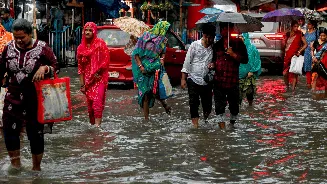


An End to the Anxious Wait
The intense heatwave that gripped much of North India through May and June has finally begun to break. While the monsoon's arrival was delayed compared to its typical schedule, the India Meteorological Department (IMD) has confirmed that conditions are now
favourable for its advance across the remaining parts of Bihar and into Uttar Pradesh. [10, 12] After facing significant rainfall deficits earlier in June, the first widespread showers are being seen as a sign of relief and a reason for cautious celebration. [21, 24] The arrival marks a crucial turning point, ending a period of uncertainty that saw farmers anxiously looking to the skies and contending with heatwave conditions. [10]
A Critical Moment for Kharif Crops
These showers are arriving at a make-or-break moment for the Kharif sowing season. Agriculture in both Bihar and Uttar Pradesh is heavily dependent on the monsoon, which provides about 70% of the country's annual rainfall. [25] Timely rains are essential for the preparation of paddy nurseries and the sowing of other key crops like maize, pulses, and soybeans. [17, 23] The recent dry spell had delayed agricultural activities, with many farmers unable to begin transplanting paddy seedlings. [21] The arrival of the monsoon, even if late, provides the necessary soil moisture to kickstart these vital operations, reducing dependency on expensive diesel-powered irrigation and setting the stage for the agricultural year ahead.
From Deficit to Downpour
The initial phase of June was worrying for both states. Bihar reported a rainfall deficit of nearly 48% as of late June, with similar shortfalls seen across many districts in Uttar Pradesh. [21, 24] This led to concerns about a potential repeat of previous years' drought-like conditions. However, the narrative is shifting quickly. The IMD is now forecasting heavy rainfall for Bihar and the advancement of the monsoon into UP in the final days of the month. [10, 21] This forecast of a strong, wet spell is the primary driver of the current optimism. Farmers are celebrating not just the rain that has fallen, but the promise of much more to come, which could potentially erase the early-season deficit.
The Economic Ripple Effect
Why does this matter beyond the fields of Bihar and UP? These two states are agricultural powerhouses, and their fortunes have a direct impact on India's food security and economy. A healthy monsoon season leads to bountiful harvests, which helps keep food prices stable and inflation in check across the country. [23] Furthermore, good rains boost the rural economy. When farmers have a good year, their income increases, leading to higher demand for goods and services, from tractors and fertilisers to everyday consumer products. This creates a positive ripple effect that supports national economic growth. [23] A successful monsoon in the heartland is, in many ways, a prerequisite for a healthy Indian economy.