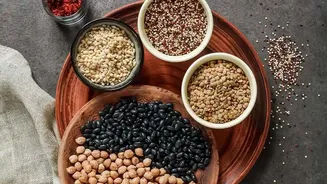








Lentils for Hearty Soups
Lentils are a winter powerhouse. They are packed with soluble fibre, which helps maintain stable blood sugar levels and keeps you feeling full. They form the perfect base for thick, satisfying soups and stews that can warm you up from the inside out.
A simple vegetable soup can be transformed into a substantial meal with the addition of red or green lentils. For an easy winter dinner, try a slow-cooker lentil stew. Combine lentils with root vegetables like carrots, chopped onion, and vegetable broth, then season and let it simmer for hours. The result is a flavourful and incredibly nutritious meal with minimal effort.
Oats Beyond the Breakfast Bowl
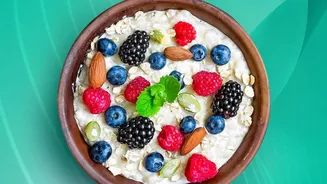
Oats are a well-known fibre champion, but their use extends far beyond morning porridge. While a warm bowl of spiced oatmeal is a fantastic winter start, you can also use oats in savoury dishes. Consider making savoury oatmeal by cooking rolled oats in broth instead of water or milk, then topping it with sautéed mushrooms and greens for a quick, fibre-rich lunch. Rolled oats also make a fantastic, healthier topping for fruit crumbles, adding a crunchy texture to baked pears or apples. Furthermore, you can blend oats into a flour for baking or add them to snack bars and muffins for an extra dose of fibre on the go.
Barley as a Warming Grain
With its chewy texture and nutty flavour, barley is an excellent grain for winter cooking. It's high in dietary fibre and works beautifully as an alternative to rice in warming dishes. A classic winter recipe is a robust barley and vegetable soup or stew, often featuring mushrooms, leeks, and herbs. The grain soaks up the flavours of the broth, becoming tender and delicious after simmering. You can also cook it as a pilaf with roasted vegetables or add it to slow-cooked dishes, where it adds body and substance.
Brussels Sprouts, Roasted to Perfection
Once a muchmaligned vegetable, Brussels sprouts have enjoyed a renaissance, largely thanks to roasting. This cooking method brings out their natural sweetness and gives them a delightfully crispy texture. Brussels sprouts are a cruciferous vegetable loaded with fibre, vitamins, and antioxidants that support overall health. To prepare them, simply toss halved sprouts with olive oil, salt, and pepper, and roast at a high temperature until golden brown and tender. For extra flavour, you can add a balsamic glaze, some crumbled cheese, or toasted nuts after roasting.
Pears for Sweet and Savoury Dishes
Pears are a versatile winter fruit, rich in fibre and perfect for both sweet and savoury applications. Their mellow sweetness pairs wonderfully with robust flavours. For a savoury twist, try adding sliced pears to a salad with walnuts and a sharp cheese, or roast them alongside chicken with herbs. They can also be incorporated into gratins or served with pork. On the sweet side, poached pears in spiced red wine make an elegant winter dessert. A warm pear crumble with an oat topping is another classic comfort food that highlights this fibrerich fruit.
Chia Seeds as a Fibre Booster
Chia seeds are tiny nutritional giants. Just two tablespoons provide a significant amount of your daily fibre needs, along with omega3 fatty acids and protein. Their neutral taste makes them incredibly easy to add to almost any dish. Stir a spoonful into your morning oatmeal, yoghurt, or smoothies. Because they form a gellike substance in liquid, they can be used to create puddings or to thicken soups and gravies. You can even use them as an egg substitute in baking or mix them into homemade energy bars.