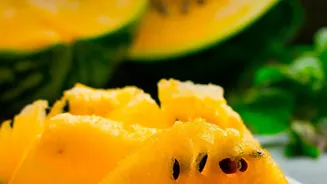







Every time you slice into a juicy watermelon, you're left with a mountain of rind. Instead of tossing it, what if you could turn that scrap into a delicious dish? Welcome to the world of whole-fruit cooking, where the rind is an ingredient.
First, Prep Your Rind
Before you
can cook with watermelon rind, a little prep work is needed. First, slice the sweet, red flesh away from the rind for your usual snacking. You'll be left with the large, curved peels. Using a vegetable peeler or a sharp knife, carefully remove the tough, dark green outer skin. The part you want is the firm, pale white or light green layer. This part has a crisp texture and a mild flavour similar to a cucumber, making it a versatile base for many recipes. Once peeled, you can chop, dice, or slice it according to your chosen recipe. If you're not ready to cook right away, the prepared rind can be stored in an airtight container in the refrigerator for up to five days.
The Savoury Star: Watermelon Rind Curry
In India, using fruit and vegetable peels in cooking is a long-standing tradition of resourcefulness. The watermelon rind, known as 'tarbuj ka chhilka', is no exception. It's often used to make a 'sabzi' or curry that pairs beautifully with roti or rice. The rind's texture is similar to that of lauki (bottle gourd) and it excels at absorbing the spices it's cooked with. A simple preparation involves heating oil, sputtering cumin seeds, and adding aromatics like ginger and green chillies. Turmeric and red chilli powder follow, then the chopped rind is added with a bit of water and salt. You can cook this in a pressure cooker for about 4-5 whistles or in a covered pot for 15-20 minutes until the pieces are tender. A squeeze of lemon juice at the end brightens the flavours.
A Sweet & Tangy Classic: Pickled Rind
Perhaps the most famous use for watermelon rind is pickling. The process transforms the crunchy, neutral-tasting rind into a zesty, sweet-and-sour condiment that’s a fantastic accompaniment to rich dishes, salads, and sandwiches. To make a basic refrigerator pickle, you'll need vinegar, water, sugar, and salt, along with spices like peppercorns, cloves, and coriander seeds. The process often involves simmering the rind pieces in the brine until they become tender, which takes about 5 to 10 minutes. After that, you simply pack the rinds and the hot brine into a jar, let it cool, and then refrigerate. While they can be eaten almost immediately, the flavour deepens after a day or so.
An Unexpected Treat: Candied Watermelon Rind
For those with a sweet tooth, watermelon rind can be turned into a chewy, flavourful candy. The process involves simmering the rind pieces in a sugar syrup until they become translucent. Some recipes call for an initial brining in salt water to help firm up the texture and draw out moisture. After simmering in a syrup of sugar, water, and often lemon and spices like cinnamon, the pieces are drained and dried. You can either air-dry them on a rack or use a low-temperature oven or dehydrator. Once dry, the pieces are often tossed in granulated sugar for a classic candied finish. This candy makes a unique snack or a beautiful garnish for desserts and drinks.
Beyond the Big Three: Other Creative Uses
The versatility of watermelon rind doesn't stop with curries, pickles, and candy. Because of its cucumber-like nature, it can be used in a variety of fresh applications. Grated raw, it makes a crisp and refreshing addition to coleslaw. It can be blended into smoothies, where its high water content and mild taste work well with other fruits. The rind can also be chopped and added to stir-fries, where it cooks quickly and maintains a pleasant crunch. You can even use it to make a cooling gazpacho or a unique pico de gallo, where its firm texture holds up better than softer vegetables.