





The Psychology of Starting Small
The biggest hurdle in fitness is often just starting. A 60-minute gym session can feel daunting, making it easy to procrastinate. A 10-minute workout, however, is psychologically 'too small to fail'. This approach is rooted in habit formation science,
which shows that small, consistent actions are more effective than infrequent, intense efforts. The goal is to make showing up for your workout an automatic part of your day, like brushing your teeth. By lowering the barrier to entry, you reduce the mental resistance that kills motivation. Repeating this small, achievable task daily forges a 'habit loop'—a cue, routine, and reward cycle that builds momentum. The fast results are not in body composition, but in rapidly building the identity of someone who exercises every day.
What Can 10 Minutes Really Do?
While 10 minutes a day won't turn you into a marathon runner overnight, its health benefits are significant and well-documented. Research shows that accumulated short bouts of exercise are just as effective as one continuous session for improving key health markers. Studies indicate that even 10-15 minutes of moderate daily activity can lower your risk of mortality, improve cardiovascular health, boost your mood by releasing endorphins, and help regulate blood sugar levels. The biggest health gains are often seen when someone goes from being sedentary to being even a little active. Think of it as the 'minimum effective dose'—the smallest amount of effort that yields a meaningful result. This daily investment keeps your body and mind active, paving the way for more significant changes later.
How to Design Your 10-Minute Workout
Effectiveness in a short window comes from intensity and efficiency. The best approach is to focus on compound movements that engage multiple muscle groups at once. A simple and effective structure is a circuit. Perform an exercise for 40-45 seconds, rest for 15-20 seconds, and then move to the next exercise. This keeps your heart rate elevated and maximizes your time. Aim for a full-body routine that includes a squat or lunge variation, a pushing movement, a pulling movement (if you have a band or weights), and a core exercise. Always start with a brief 1-2 minute warm-up of light movements like arm circles and leg swings to prepare your body, and finish with a quick stretch.
Sample No-Equipment Bodyweight Circuit
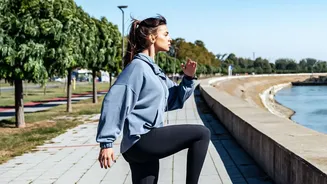
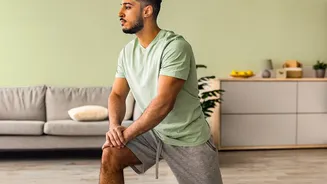
Here is a simple, effective routine you can do anywhere. Perform each exercise for 45 seconds, followed by 15 seconds of rest. Complete the entire circuit twice for a 10-minute workout. 1. Squats: Keep your chest up and back straight, lowering your hips as if sitting in a chair. 2. Push-ups: Perform on your toes or knees, ensuring your body is in a straight line. 3. Alternating Reverse Lunges: Step back with one foot, lowering both knees to 90-degree angles before returning to the start. 4. Plank: Hold a straight line from your head to your heels, engaging your core and glutes. 5. Jumping Jacks: A classic cardio move to keep your heart rate up.
From 10 Minutes to a Lifelong Habit
Once your 10-minute workout feels like a non-negotiable part of your day—usually after a few consistent weeks—you can start to progress. This doesn't necessarily mean making your workouts longer. You can increase the intensity by adding more repetitions, reducing rest time, or choosing more challenging exercise variations. Another option is 'habit stacking'—adding a second 10-minute session later in the day, such as a walk after dinner. Studies show that multiple short bouts of activity throughout the day are highly effective. The key is to make gradual changes. Once consistency is established, intensity and duration can be your next levers to pull for continued progress.