





Understanding the Role and its Prestige
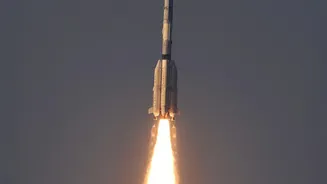
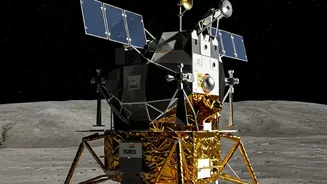
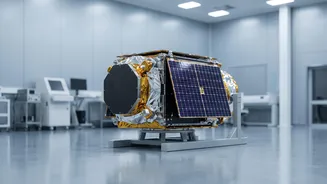
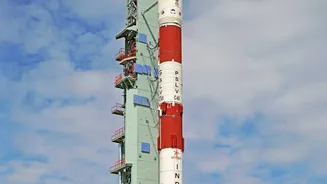
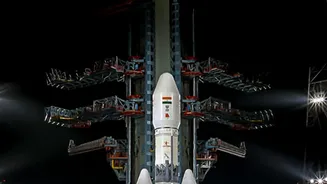
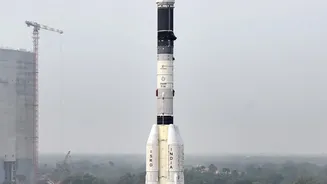
A career as a scientist or engineer at ISRO is more than just a job; it's an opportunity to be at the forefront of India's space exploration, satellite technology, and planetary missions. From designing launch vehicles to developing satellite communication
systems, ISRO engineers play a pivotal role in projects of national and international importance, such as Chandrayaan and Gaganyaan. The work is challenging, innovative, and provides a unique sense of purpose, contributing directly to the nation's technological advancement and global standing in space technology.
Core Eligibility for Aspiring Engineers
The primary entry point for engineers is the Scientist/Engineer 'SC' position. The fundamental requirement is a B.E./B.Tech degree in relevant disciplines like Electronics, Mechanical, or Computer Science from a recognized university. Candidates must secure a minimum aggregate of 65% marks or a CGPA of 6.84 on a 10-point scale. The upper age limit for direct recruits is typically 28 years, though relaxations apply for OBC, SC/ST candidates, and ex-servicemen as per government rules. It is crucial to complete the degree within the standard duration prescribed by the university.
The Two-Stage Selection Process
ISRO primarily recruits through its Centralised Recruitment Board (ICRB). The selection process involves two key stages: a written test and a personal interview. Performance in both stages is critical, as the final selection is based on a 50:50 weightage given to the written test and interview marks. In some specific recruitment drives, ISRO also uses valid GATE scores for shortlisting candidates directly for the interview stage. However, the most common route remains the ICRB written examination.
Decoding the ICRB Exam Pattern
The ICRB written test is an objective, multiple-choice exam designed to assess a candidate's technical and analytical skills. The test typically consists of around 80 questions focused entirely on the specific engineering discipline you have applied for. There is a negative marking scheme, where one-third of a mark is deducted for every incorrect answer, making accuracy as important as speed. The syllabus is not rigidly defined but generally aligns with the GATE syllabus for the respective engineering branch. Aspirants are advised to thoroughly review previous years' ICRB and GATE question papers to understand the scope and difficulty level.
Navigating the Technical Interview
Candidates who clear the written test are shortlisted for a technical interview in a 1:5 ratio. The interview panel consists of senior scientists and experts who assess the depth of your fundamental knowledge. The questions are purely technical and practical, focusing on your core engineering subjects. The panel evaluates your problem-solving skills, conceptual clarity, and passion for space science. It is essential to be honest and demonstrate a strong grasp of the fundamentals, as bluffing is easily caught by the experienced panel.
Salary, Perks, and Career Growth
Upon selection, a Scientist/Engineer 'SC' is placed in Level 10 of the 7th Central Pay Commission matrix, with a basic pay starting at ₹56,100 per month. In addition to the basic salary, employees receive various allowances, including Dearness Allowance (DA), House Rent Allowance (HRA), and Transport Allowance (TA), which significantly increase the gross salary. ISRO offers a structured career progression path through its Merit Promotion Scheme, which allows scientists to grow from Scientist 'SC' to higher grades like 'SD', 'SE', and eventually up to the level of Distinguished Scientist, based on performance and residency period.