
More Than Just a Lens
The secret to your phone's cosmic abilities isn't a single, powerful lens. In fact, due to physical size, smartphone camera sensors are tiny compared to their professional DSLR counterparts, which limits their ability to gather faint light from stars.
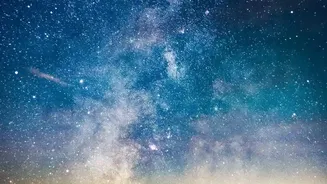
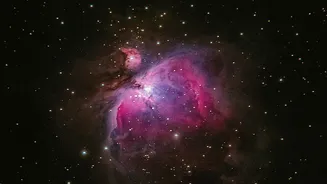
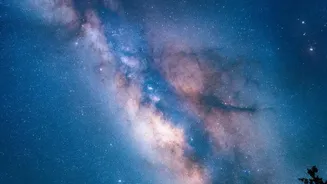
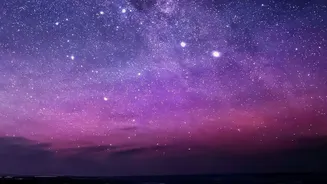
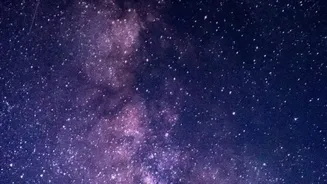
The real innovation lies in computational photography—a fusion of smart software and capable hardware working in concert to overcome these physical limitations. When you engage a feature like Google's Astrophotography mode or similar night modes on other flagship phones, you're not just taking one picture. You're initiating a complex, automated workflow that captures and processes vast amounts of data to construct a single, brilliant image.
The Power of Stacking Images
The core technique is known as image stacking. Instead of one long exposure, which would be blurry from hand-shake and the Earth's rotation, the phone captures a series of shorter exposures over several minutes. For example, Google's Pixel might take multiple frames, each with an exposure time of around 15 seconds. These individual shots might look grainy and dark on their own. However, the software then gets to work. By layering these images on top of one another, it can average out the visual information. The consistent light from stars and galaxies gets amplified, while the random digital 'noise'—the grainy specks that plague low-light photos—gets cancelled out, resulting in a much cleaner and more detailed final image.
Aligning the Moving Stars
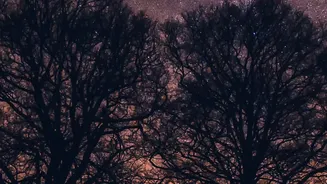
During the several minutes it takes to capture all these frames, the stars are not standing still; they are moving across the sky due to the Earth's rotation. If the software simply stacked the images without correction, the stars would appear as streaks. To prevent this, sophisticated algorithms detect the stars in each frame and precisely align them before stacking. In some advanced modes, the software is smart enough to differentiate between the sky and the foreground (like trees or mountains). It stacks the sky and foreground separately to ensure the stars are sharp points of light while the landscape remains crisp and clear, then seamlessly blends them back together. This ensures the final composition looks natural and sharp throughout.
Artificial Intelligence as the Final Artist
The final step in the process is driven by artificial intelligence. Once the images are stacked and aligned, AI-powered software performs the final enhancements. This isn't just a simple filter. The AI has been trained on thousands of professionally captured astrophotographs to understand what a high-quality night sky image should look like. It intelligently reduces any remaining noise, enhances the contrast to make faint details like the Milky Way pop, corrects colours that may be skewed by light pollution, and sharpens the final image. Some phones even use AI to specifically detect the sky and apply targeted adjustments just to that region, leaving the landscape untouched. This intelligent processing is what turns a technically proficient stack of images into a work of art.