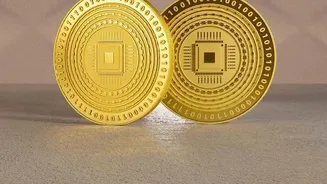








The New Gold Rush: What Is Digital Gold?
Digital gold is a modern way to invest in high-purity gold without the challenges of physical ownership. When you buy digital gold through a mobile app, you are purchasing 24-karat gold that is stored in secure, insured vaults on your behalf by the provider.
Unlike jewellery, there are no making charges, and you don't have to worry about purity checks or finding a safe place to store it. Platforms like PhonePe, Groww, Paytm, and others have partnered with trusted entities such as MMTC-PAMP and SafeGold to offer this service. This makes it incredibly easy to buy, sell, or accumulate gold in small fractions, anytime and anywhere.
Why Start Small? The Power of Micro-Investing
Investing ₹100 might not sound like much, but it's a powerful first step. For young professionals, it’s an accessible entry into the world of investing, helping to build a disciplined savings habit without straining a budget. This approach, often enabled via a Systematic Investment Plan (SIP), leverages rupee-cost averaging—you buy more gold when prices are low and less when they are high, smoothing out market volatility over time. Gold has traditionally been a hedge against inflation, and owning even a small amount helps in diversifying your investment portfolio beyond stocks and mutual funds. It’s less about the amount and more about the consistency of the habit.
Your Step-by-Step Guide to a ₹100 Gold Investment
Getting started is simpler than you might think. First, choose a trusted mobile financial platform or a dedicated digital gold app. Many popular payment and investment apps you already use likely offer this feature. Next, you'll need to complete a quick, one-time KYC (Know Your Customer) process. Once your account is set up, navigate to the 'Digital Gold' or 'Gold Locker' section. You can then enter the amount you wish to invest—starting from as little as ₹1, ₹10, or ₹100, depending on the platform. Finally, complete the payment using UPI or your linked bank account. The corresponding amount of gold is instantly credited to your digital vault, and you can track its value in real-time.
Digital Gold vs. Other Gold Investments
While digital gold is excellent for beginners due to its low entry barrier and flexibility, it's worth knowing about other paper-gold options. Gold Exchange Traded Funds (ETFs) are traded on the stock market and require a Demat account, but are regulated by SEBI and can be more cost-effective for larger investments. Sovereign Gold Bonds (SGBs) were issued by the RBI and offered interest income, making them a great long-term, tax-efficient choice, though new issues are no longer available and they can only be bought on the secondary market. For a young professional just starting, digital gold's key advantage is its sheer convenience and the ability to invest tiny amounts without needing a Demat account.
Know the Risks and Associated Costs
Transparency is key in any investment. With digital gold, the primary cost is the 3% GST applicable on all purchase transactions. Additionally, there is a small difference, or 'spread,' of about 2-5% between the buying and selling price, which covers the costs of storage and insurance. A major point to consider is that digital gold is not directly regulated by a body like SEBI or the RBI, unlike ETFs and SGBs. Therefore, the safety of your investment depends heavily on the credibility of the platform and its vaulting partners. Many platforms also have a maximum storage period, after which you may need to take physical delivery or sell your holdings.