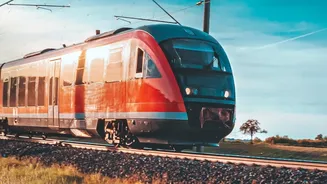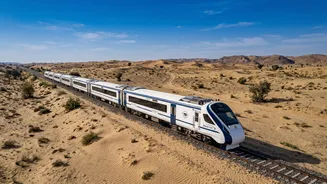



The gentle hum of the Vande Bharat Express is a modern sound, but the world unfolding outside its wide, panoramic windows is ancient. This is a journey not just between cities, but through the very heart of Rajasthan’s majestic desert scenery.
A Modern Marvel on Ancient Tracks
India's
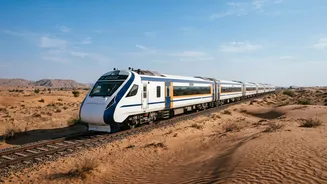
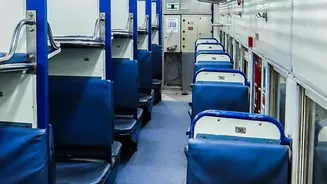
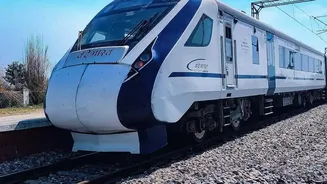
Vande Bharat Express has redefined rail travel, and its routes through Rajasthan are a testament to this transformation. These semi-high-speed trains, known for their rapid acceleration, comfort, and airline-like amenities, offer a stark contrast to the rugged terrain they traverse. With spacious, reclining seats, automatic doors, and large windows, the journey itself becomes a destination. Routes like the one connecting Jodhpur to Sabarmati (Ahmedabad) or Delhi to Ajmer are not merely about covering distance; they are curated experiences, allowing passengers to witness the state’s splendour in a way that feels both luxurious and immersive. The smooth, quiet ride minimises distractions, allowing the focus to remain squarely on the dramatic landscapes outside.
From Urban Sprawl to Arid Expanse
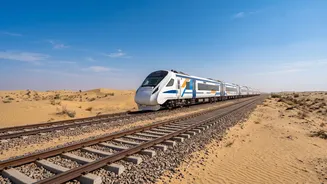
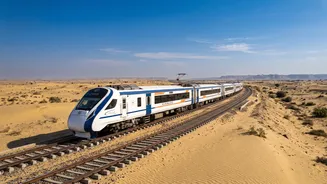
The journey often begins in the familiar chaos of a major city like Jodhpur or Jaipur. The initial views are a montage of urban life, but as the train gains speed, a remarkable transition occurs. The concrete gives way to open countryside, and soon, the first signs of the desert appear. On the Jodhpur-Sabarmati route, the train slices through the heart of the Thar Desert. The large windows frame a moving painting of arid plains, sparse vegetation, and the occasional cluster of traditional villages. It's a powerful shift, as the pace of life outside seems to slow down, inviting passengers to disconnect from the urban hustle and sync with the tranquil rhythm of the desert.
The Theatre of the Aravallis
Many of Rajasthan’s train routes are carved alongside the Aravalli Hills, one of the world's oldest mountain ranges. The Vande Bharat journey between Delhi and Ajmer, for instance, offers spectacular views of these ancient geological formations. Passengers are treated to panoramic vistas of undulating, rocky slopes that create a dramatic backdrop. During the monsoon season, these same hills are often draped in a surprising cloak of vibrant green, offering a completely different but equally mesmerising spectacle. The sight of the sleek, modern train gliding through rock cuttings and along ridges provides a stunning contrast—the pinnacle of Indian engineering set against a landscape that has stood for millennia.
A Window to the Great Salt Lake
One of the most unique sights on a Rajasthani Vande Bharat journey is the passage near Sambhar Salt Lake, India's largest inland salt lake. The route connecting Jodhpur to Delhi Cantt passes through the Jaipur-Phulera-Sambhar corridor, offering travellers a view that feels almost otherworldly. For a few mesmerising moments, the window fills with a vast expanse of shimmering, multi-hued salt pans. The sheer scale and unusual beauty of the landscape, often compared to the Rann of Kutch, is a highlight of the trip. During winter, the lake becomes a haven for migratory birds, including thousands of flamingos, adding a splash of pink and white to the saline canvas.
Sunsets, Silhouettes, and Timeless Scenes
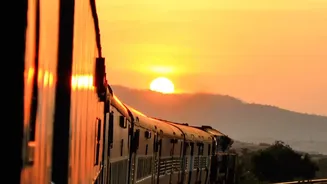
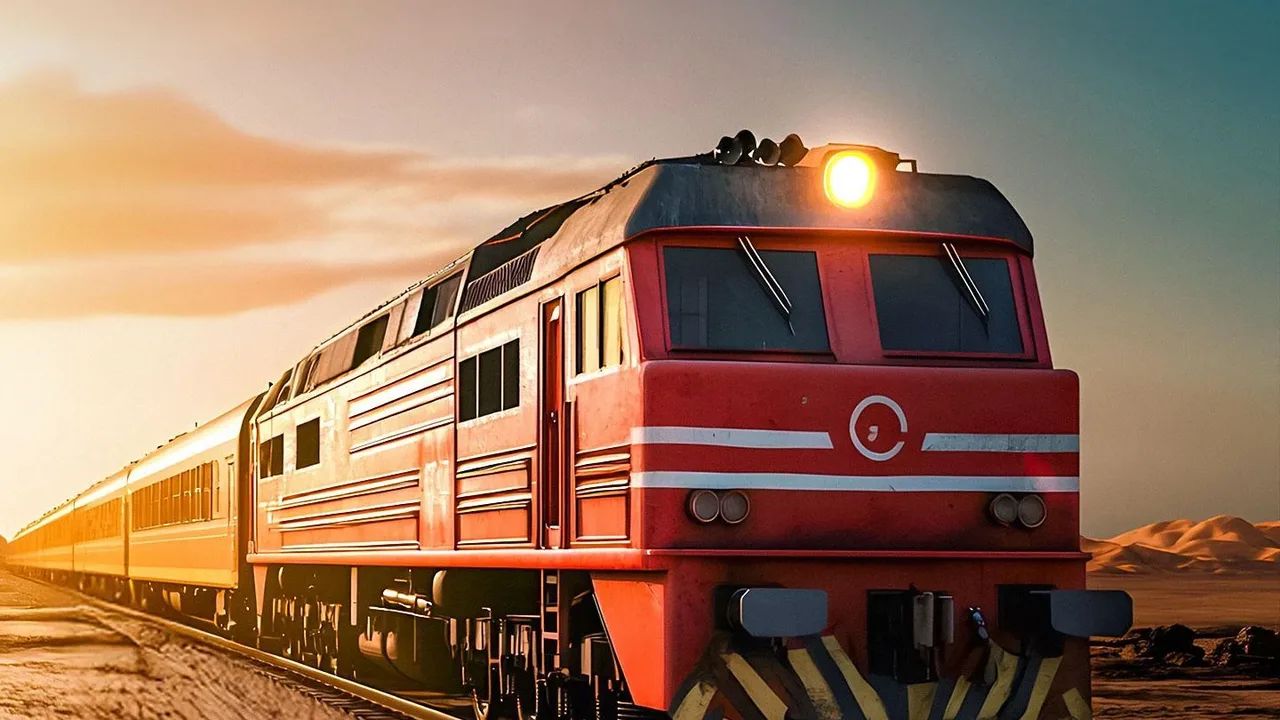
As the day draws to a close, the desert puts on its most spectacular show. A sunset viewed from the Vande Bharat is an unforgettable experience. The setting sun paints the sky in fiery shades of orange, pink, and purple, casting long shadows across the dunes. The train's large windows become the perfect frame for this daily masterpiece. Beyond the grand vistas, the journey is also about the small, timeless moments of life in Rajasthan. You might see a camel caravan silhouetted against the horizon, a shepherd guiding his flock, or women in brightly coloured attire adding a splash of life to the muted tones of the desert. These fleeting glimpses into the enduring culture of the land, viewed from the comfort of a modern marvel, make the Vande Bharat journey through Rajasthan truly special.