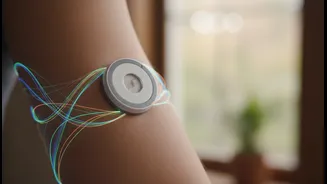









What is a Continuous Glucose Monitor?
A continuous glucose monitor, or CGM, is a small wearable device that tracks your glucose levels around the clock. It consists of a tiny sensor inserted just under the skin, usually on the arm or abdomen, which measures glucose in the interstitial fluid—the
fluid surrounding your cells. This sensor sends data wirelessly to a smartphone app or a dedicated receiver every few minutes, providing a constant stream of information. Unlike a traditional finger-prick test which gives a single reading, a CGM shows you the full picture: your glucose trends, how fast they're changing, and how they respond to food, exercise, and sleep.
Why Use a CGM for General Wellness?
While originally designed for people with diabetes, CGMs are increasingly used by health-conscious individuals to optimise their metabolic health. Your body's ability to manage glucose efficiently is a cornerstone of overall well-being. Chronically elevated or highly variable glucose levels are linked to a range of issues beyond diabetes, including inflammation, weight gain, and poor energy levels. A CGM can provide early insights into how your body responds to your specific diet and lifestyle choices. It reveals your personal reaction to different foods—what one person tolerates well might cause a significant glucose spike in another. This bio-feedback empowers you to make informed decisions to keep your glucose levels more stable.
Tips for Ensuring Accurate Data
Getting reliable data from your CGM requires understanding how it works and following best practices. The first 24 hours after inserting a new sensor can sometimes be less accurate as it settles in. It is also crucial to understand the 'lag time.' CGMs measure glucose in interstitial fluid, which can be 5 to 15 minutes behind the glucose level in your blood. This delay is most noticeable during rapid changes, like after a meal or during intense exercise. For best results: ensure the application site is clean and dry, rotate your sensor sites to avoid scar tissue, and stay well-hydrated, as dehydration can affect readings. If a reading seems unusually high or low, or doesn't match how you feel, consider confirming with a traditional finger-prick test.
Key Markers to Look For
Tracking your metabolic health with a CGM goes beyond watching for single high numbers. The patterns are what matter most. Pay attention to 'Time in Range' (TIR), which is the percentage of time your glucose stays within a healthy target, typically 70-140 mg/dL for those without diabetes. Another key metric is 'glucose variability'—how much your levels fluctuate. Ideally, you want to see gentle, rolling hills on your graph, not sharp, jagged peaks and deep valleys after meals. Monitoring your fasting glucose in the morning and how your levels behave overnight can also offer valuable clues about your stress levels and sleep quality.
Understanding the Limitations
While powerful, a CGM is not a magic diagnostic tool. It measures just one aspect of a complex metabolic picture. Research on its effectiveness for people without diabetes is still emerging. Experts caution against developing anxiety or an unhealthy fixation on every minor fluctuation, as some glucose variation is normal. Factors like pressure on the sensor while sleeping, certain medications like acetaminophen, and even intense exercise can temporarily affect readings. Use the data as a guide for lifestyle choices, not as a replacement for medical diagnosis. The goal is to identify broad patterns and make sustainable changes, not to chase a perfectly flat line on your glucose graph.