







A New Policy Frontier: The Indian Space Policy 2023
The cornerstone of this strategic shift is the Indian Space Policy 2023. This landmark document fundamentally redefines the roles within India's space sector. For decades, ISRO was the designer, manufacturer, and operator. The new policy transitions ISRO's
focus towards pioneering research and development, deep space exploration, and national security missions. This allows Non-Government Entities (NGEs), including a burgeoning number of over 400 startups, to take on end-to-end commercial space activities. These activities range from building and launching satellites and rockets to owning and operating space infrastructure and disseminating data. The goal is to unlock the private sector's potential for innovation and agility, helping to grow India's share of the global space economy from around 2% to a projected 10% by 2030.
The Single-Window Enabler: IN-SPACe
To navigate this new landscape, the government established the Indian National Space Promotion and Authorisation Centre (IN-SPACe) in 2020. Acting as a single-window agency, IN-SPACe is the crucial interface between the government and private players. Its mandate is to promote, authorize, and supervise the activities of private space companies. This streamlined approach removes significant bureaucratic hurdles that previously stifled private participation. Startups can now approach one entity for authorizations, access to ISRO facilities, and guidance on regulatory compliance. This clarity has been a game-changer, creating a more predictable and supportive environment for investment and operations.
Opening Up the Toolbox: Access to ISRO's Legacy
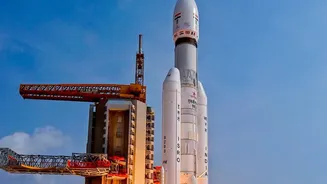
One of the most significant forms of support is granting private companies access to ISRO's world-class infrastructure. Startups can now use ISRO's testing facilities, launchpads, and ground stations for a fee, dramatically reducing the capital expenditure needed to get started. This policy of technology transfer is crucial for leveling the playing field. By June 2026, IN-SPACe had already facilitated 118 technology transfer agreements, allowing private firms to leverage decades of public-funded research. This not only accelerates development timelines for companies like Skyroot Aerospace, which launched India's first privately developed orbital rocket, Vikram-1, but also ensures a high standard of quality and reliability.
Fueling Growth with Funding and FDI
Recognizing that innovation needs capital, the government has liberalized its Foreign Direct Investment (FDI) policy and introduced dedicated funding schemes. The updated FDI rules allow up to 100% foreign investment in the manufacturing of components and up to 74% via the automatic route for satellite manufacturing and operations. This move is designed to attract global capital and technological expertise. Domestically, the government has set up several financial initiatives managed through IN-SPACe. These include a ₹1,000 crore Venture Capital Fund to provide crucial early-stage funding and a ₹500 crore Technology Adoption Fund to help startups commercialize their products. These measures have boosted investor confidence, with cumulative investments in Indian space startups reaching approximately USD 618.5 million by March 2026.