

Redefining the 'Perfect' Planet
The search for extraterrestrial life has long focused on finding an 'Earth 2.0' — a planet similar to our own. But some scientists now argue this approach might be too narrow. The concept of a 'superhabitable' world, first formally proposed in 2014 by
researchers René Heller and John Armstrong, challenges this geocentric view. Instead of just looking for Earth’s twin, they proposed a new set of criteria to identify planets that could support even greater biodiversity and a larger biomass than our own world. This isn't about finding a new home for humanity; rather, it’s about understanding the full range of conditions under which life can emerge and flourish in the universe. In 2020, a team led by geobiologist Dirk Schulze-Makuch identified a list of 24 top contenders from over 4,000 known exoplanets that fit these intriguing criteria.
The Ideal Cosmic Neighbourhood
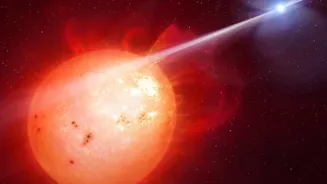
One of the key factors for a superhabitable planet is the type of star it orbits. Our sun, a G-type star, has a lifespan of about 10 billion years. While that sounds long, it took nearly 4 billion years for complex life to appear on Earth. Stars more massive than our sun burn out too quickly, but a slightly less massive, cooler star called a K-dwarf could be the sweet spot. These 'orange dwarfs' have incredibly long lifespans, ranging from 20 to 70 billion years, offering a much longer, more stable period for life to originate and evolve. They are also less volatile than the even smaller M-dwarf (red dwarf) stars, which are known for powerful stellar flares that could strip a planet of its atmosphere. A planet orbiting a K-dwarf star would have a long, peaceful cosmic history, a key ingredient for a thriving biosphere.
A Bigger, Warmer, Wetter World
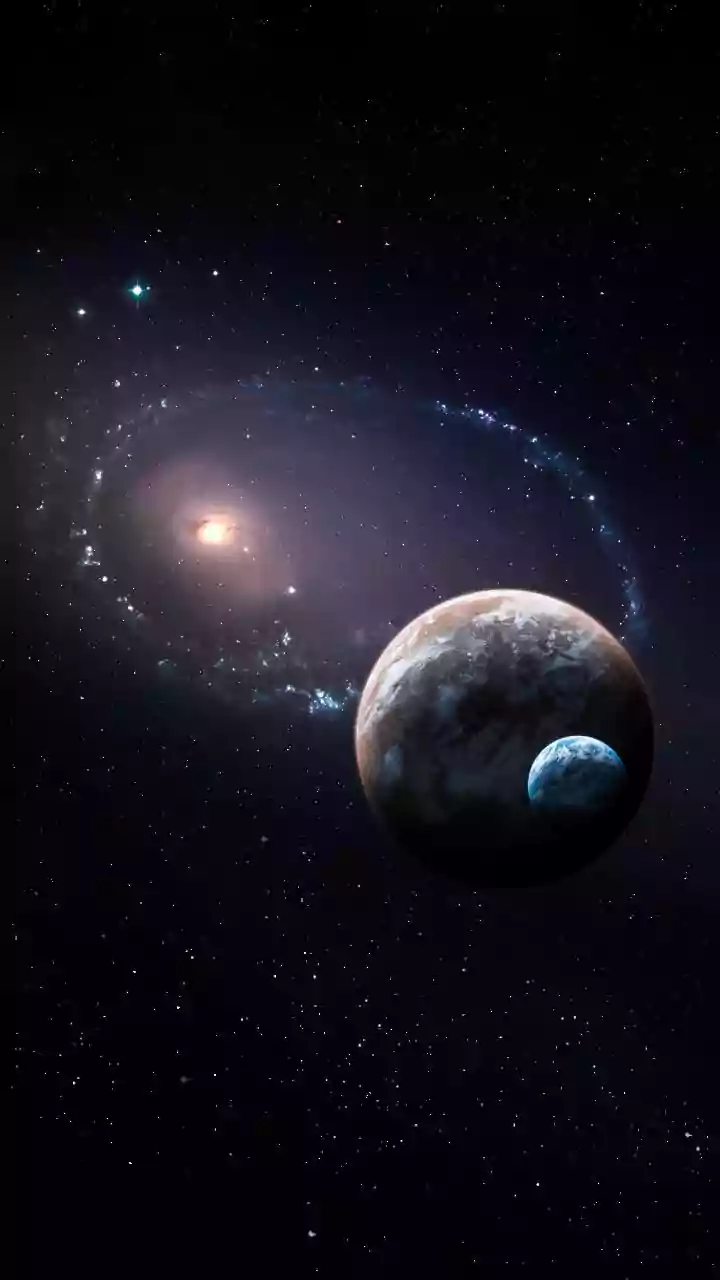
Beyond the right star, the planet itself needs specific characteristics. Scientists theorise a superhabitable world would likely be slightly older and larger than Earth — perhaps up to 1.5 times the mass and 10% larger in radius. This increased mass would help the planet retain its atmosphere and a stronger gravity could result in a flatter topography with more shallow seas, which are hotspots for biodiversity. A larger iron core could also generate a stronger magnetic field, offering better protection from harmful cosmic radiation. The ideal climate would be slightly warmer and wetter than Earth's, with an average surface temperature about 5 degrees Celsius higher. This would lead to a world rich in moisture and potentially covered in lush habitats, similar to Earth’s tropical rainforests, which host a disproportionate amount of our planet's species.
The Search for a Second Genesis
So, where are these potentially better worlds? The 24 candidates identified by Schulze-Makuch and his team are all more than 100 light-years away, making them impossible to visit. One of the most promising candidates is KOI 5715.01, a planet orbiting a K-dwarf star, which appears to meet many of the key criteria. However, these are still just candidates based on our current data. The next generation of powerful instruments, like the James Webb Space Telescope, will be crucial in studying the atmospheres of these distant worlds. By analysing the light that passes through their atmospheres, scientists can look for biosignatures — gases like oxygen and methane that could indicate the presence of life. The goal isn't just to find another planet with life, but to find one that demonstrates life can be even more abundant and diverse than it is here, giving us a profound new perspective on our own place in the cosmos.