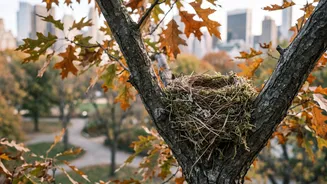




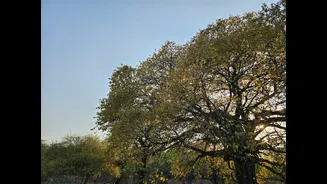

As autumn arrives, city trees put on a final, colourful show before shedding their leaves. Suddenly, the bare branches reveal what was there all along: the hidden, intricate architecture of urban bird nests. But why now, and who built them?
The Great Autumn Unveiling
The annual
shedding of leaves is a clever survival strategy for many trees, known as deciduous trees. As daylight hours shorten and temperatures drop, photosynthesis becomes less efficient. To conserve precious energy and water during the colder, drier months, trees begin to shut down operations in their leaves. A special layer of cells, called the abscission layer, forms at the base of each leaf stem, gradually cutting off nutrients and water. This causes the green chlorophyll to break down, revealing the vibrant yellow and orange pigments that were there all along. Eventually, this layer severs the leaf from the branch, causing it to fall. This process, while a sign of the changing seasons, provides a temporary window into a world that is usually obscured by dense foliage.
Architects of the Urban Jungle
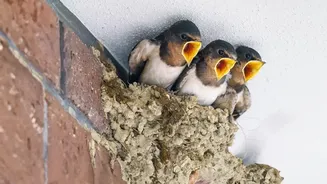
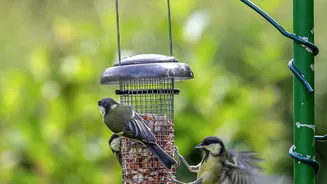
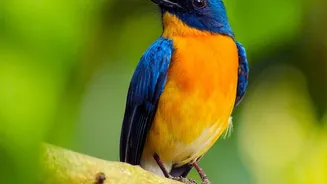
The nests you suddenly spot are the handiwork of a diverse range of avian neighbours. Indian cities are teeming with birds that have adapted to our bustling environment. You might see the messy, robust stick-and-twig platforms of House Crows, often perched high on trees or even on telephone poles. Smaller, cup-shaped nests, woven delicately from grass, roots, and cobwebs, likely belong to birds like bulbuls or sunbirds. Sparrows and mynas, meanwhile, are cavity nesters, often choosing to build their untidy homes in holes in buildings, walls, or tree trunks. The intricate, hanging pouches you might find suspended from a branch are the remarkable creations of sunbirds or weaver birds, masterpieces of avian engineering. Each nest is a marvel of resourcefulness, constructed from whatever materials the urban landscape provides, from natural twigs and grass to discarded pieces of cloth and string.
Are These Nests Still in Use?
For the most part, the nests revealed in autumn are empty. The primary breeding season for the majority of common birds in India takes place from the spring through the monsoon months, roughly from March to September. By the time the leaves begin to fall in October and November, most young birds have already fledged—matured and left the nest. The nests you see are the abandoned homes from the previous season's brood. Birds build these structures for the specific purpose of laying eggs and raising their chicks in a protected environment. Once that crucial period is over, most species do not 'live' in their nests year-round and will abandon them. So, while it's a fascinating glimpse into their family life, it's a look into the past.
The Golden Rule: Look, But Don't Touch
Discovering a bird's nest can be exciting, but the best and most responsible action is to leave it alone. India's Wildlife (Protection) Act, 1972, provides legal protection to many native birds, and this protection extends to their nests and eggs. Disturbing or destroying a nest, even if it appears empty, is illegal and can be harmful. While most birds build new nests each year, some species may reuse or refurbish old ones. Furthermore, these abandoned nests can serve other purposes in the ecosystem; they might provide shelter for other small creatures or insects. Removing a nest from your balcony or a nearby tree is generally unnecessary. If a nest is in a genuinely problematic location, it's best to wait until you are absolutely certain it has been abandoned for the season before taking any action. Allowing nature to take its course is the safest option for both you and the wildlife.