







More Than Just a Calculator
For generations, students have used tools to check their answers, from the back of the textbook to online calculators. However, interactive AI chat systems represent a fundamental shift. These are not simple answer machines. Instead, think of them as
conversational learning partners. Platforms like Khan Academy’s Khanmigo or features within Wolfram Alpha are designed to engage students in a dialogue. When a student presents a problem, the AI's goal isn't just to provide the solution, but to guide the student towards figuring it out themselves. It's the difference between being given a fish and being taught how to fish.
The Power of a Personalised Path
The magic of these AI tutors lies in their ability to 'fine-tune' explanations. A human teacher with a class of 40 students cannot always identify the exact point where each individual student is getting confused. An AI, however, can. By analysing the student’s questions and attempts, the system can pinpoint the specific concept they're struggling with. For example, if a student is stuck on an algebra problem, the AI might detect that the root issue isn't the algebra itself, but a misunderstanding of fraction multiplication from a previous grade. It can then pause the current lesson and offer a quick refresher on the foundational skill, complete with simpler examples, before returning to the more complex equation. This level of personalisation was previously only available through expensive one-on-one tutoring.
How It Works: Socratic Dialogue
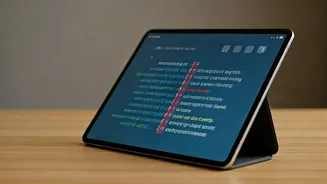
Many of the best AI tutors employ a technique known as the Socratic method. Instead of lecturing, the AI asks guiding questions. Let’s say a student needs to solve for 'x' in the equation 2x + 5 = 15. A traditional calculator gives you 'x = 5'. An AI tutor, however, might start by asking, 'What’s the first step you think we should take to get the term with x by itself?' If the student suggests subtracting 5 from both sides, the AI affirms it. If they suggest a wrong move, the AI gently corrects them with a hint, like 'Remember, we want to do the same thing to both sides of the equation to keep it balanced. What can we do to isolate the 2x term?' This interactive back-and-forth builds critical thinking and ensures the student truly understands the process, rather than just memorising steps.
A Game-Changer for Indian Students?
In the high-pressure academic environment of India, where students prepare for everything from board exams to competitive tests like the JEE and NEET, conceptual clarity is paramount. These AI tools offer a significant advantage. They provide instant, 24/7 support, acting as a tireless study companion to supplement school and coaching classes. For students in remote areas without access to quality tuition, these platforms can be a lifeline, democratising access to high-quality instruction. They can help fill knowledge gaps and build a stronger foundation, potentially levelling the playing field for many.
Navigating the Risks
Despite the promise, there are valid concerns. The most significant is the potential for over-reliance. If not used correctly, these tools can become a crutch, preventing students from developing their own problem-solving resilience. There's also the risk of students using the AI simply to get answers for homework, bypassing the learning process entirely. Educators and parents must guide students to use these systems as a tool for understanding, not a shortcut for grades. Furthermore, access to reliable internet and devices remains a barrier for many, highlighting a digital divide that could be widened by a dependency on such technologies.