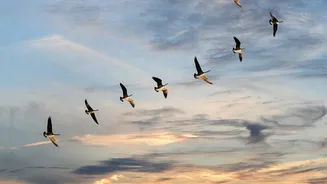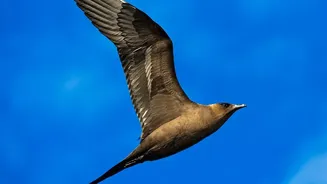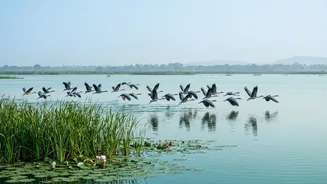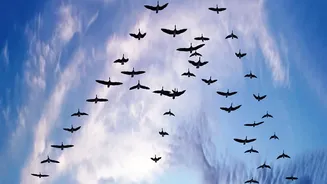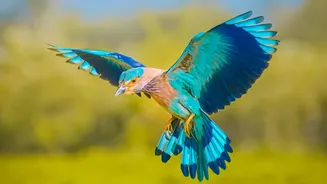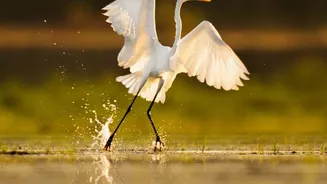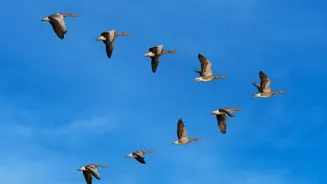








As winter settles over India, the skies fill with visitors from afar. Millions of birds, from cranes to falcons, undertake an epic journey from Northern Eurasia. This is no leisurely holiday; it is a desperate flight for survival.
An Uninhabitable Homeland
The primary motivation
for this incredible migration is the sheer brutality of winter in Northern Eurasia, particularly Siberia. From September to April, a massive dome of cold, dry air known as the Siberian High settles over the region. This weather system brings persistent, extreme cold, with average January temperatures plunging to -25°C and often reaching far lower, with some areas experiencing -50°C or colder. This intense cold, combined with short daylight hours, transforms their breeding grounds into a frozen, inhospitable landscape where survival becomes nearly impossible.
The Vanishing Buffet
Alongside the freezing temperatures, the other critical driver is the disappearance of food. As the ground freezes and is blanketed by snow, access to insects, seeds, and aquatic life vanishes. Wetlands and lakes, which are teeming with life during the short summer, freeze solid, cutting off a vital food source for waterfowl and waders. For these birds, staying put would mean starvation. The migration south is not just about escaping the cold but about following the food. India, with its milder climate and abundant resources, becomes a life-saving destination.
India: A Welcoming Winter Haven
Compared to the frozen north, India in winter is a paradise. The subcontinent offers a vast network of wetlands, lakes, coastal mudflats, and paddy fields teeming with food. From the Keoladeo National Park in Rajasthan to Chilika Lake in Odisha and the wetlands of Gujarat and Kerala, India provides the perfect wintering grounds. These habitats offer not only an abundance of food but also warmer temperatures and suitable conditions for resting and nesting before the long journey back. Over 100 species make this journey, transforming these Indian sanctuaries into vibrant, noisy hubs of avian activity.
The Perilous Journey South
The journey itself is an extraordinary feat of endurance. Most of these birds travel along the Central Asian Flyway (CAF), a superhighway in the sky that connects their Arctic and Siberian breeding grounds to South Asia. This route covers 30 countries and presents formidable obstacles, including high-altitude deserts and the mighty Himalayas. Species like the Bar-headed Goose are famous for flying at extreme altitudes to cross these mountain ranges. The birds navigate using a combination of instinct, the Earth's magnetic field, and the stars, travelling thousands of kilometres over weeks. The flyway is fraught with dangers, from bad weather to habitat loss at crucial stopover sites.
Our Feathered Winter Guests
Among the many species that arrive are some iconic visitors. The Siberian Crane, though now a rare sight, historically wintered in Bharatpur. More common today are flocks of Barheaded Geese, Northern Pintails, Common Teals, and Ruff. The Amur Falcon makes a famous stop in Nagaland on its way to Africa, while Greater Flamingos grace the wetlands of Gujarat and Maharashtra. These visitors include ducks, waders, raptors, and songbirds, each finding a niche in India's diverse ecosystems until spring beckons them northward again.