

Peeking Through Cosmic Curtains
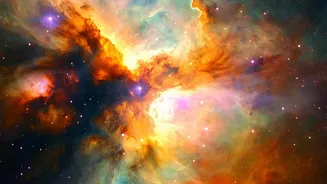
Imagine trying to watch a sculptor work inside a locked, dusty room. That’s the challenge astronomers have faced when trying to study planet formation. Stars are born inside enormous, dense clouds of gas and dust known as stellar nurseries or molecular
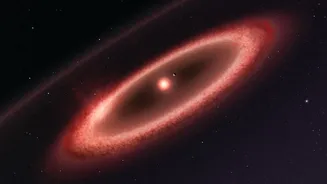
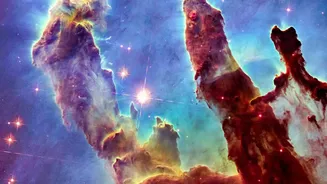
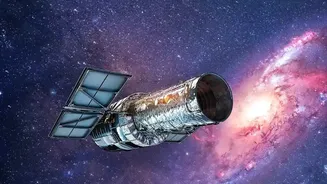
clouds. These regions are where gravity begins to pull material together, eventually forming a hot, dense core that will ignite into a new star. What's left over spins around the infant star in a flattened disc, called a protoplanetary disk. This disk is the raw material—the cosmic clay—from which planets are sculpted. The problem is that the same dust that builds planets also blocks visible light, making it nearly impossible for telescopes like Hubble to see what’s happening inside. The densest areas, where protostars are still cocooned in dust, appear completely dark.
Webb’s Infrared Superpower
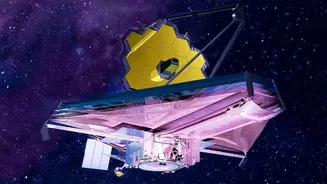
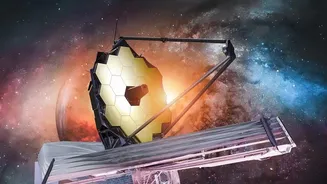
This is where the James Webb Space Telescope changes the game completely. JWST is not just a powerful telescope; it's an infrared detective. Infrared light has a longer wavelength than visible light, which allows it to pass through clouds of gas and dust that would otherwise obscure the view. Think of it like the difference between a regular photo and an X-ray. Webb’s infrared instruments, NIRCam (Near-Infrared Camera) and MIRI (Mid-Infrared Instrument), can pierce through these cosmic curtains. This allows astronomers to witness the very earliest stages of a star’s life cycle with unprecedented clarity. We can now move beyond studying the 'archaeological evidence' from our own solar system and see the process of star and planet birth happening in real-time, hundreds or thousands of light-years away.
What the Telescope Actually Sees
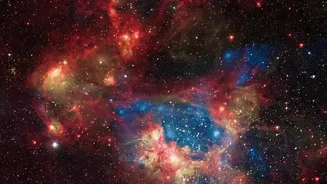
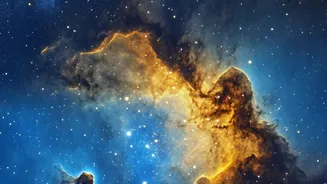
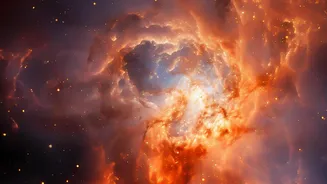
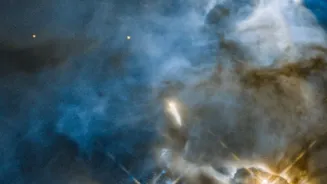
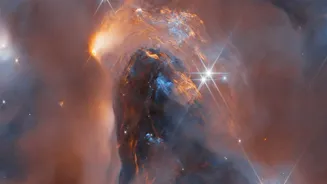
So what have these new images revealed? They are a stunning look at a chaotic and beautiful process. In regions like the Rho Ophiuchi cloud complex and the Carina Nebula, JWST has unveiled dozens of young, sun-like stars. Some images show huge, bipolar jets of material shooting out from protostars that have just burst through their dusty envelopes. These jets, often glowing red in infrared images, are signs of a star first igniting and interacting with its surroundings. In other cases, JWST has provided detailed chemical analysis of the protoplanetary disks themselves. It can detect the signatures of water, carbon dioxide, and even complex organic molecules—the potential building blocks of life—swirling in the regions where rocky planets are expected to form. By studying these chemical fingerprints, scientists are learning about the diverse environments in which planets are born.
A New Chapter in Our Cosmic Story
Each new image from JWST is more than just a pretty picture; it's a new piece of the puzzle of our own origins. For the first time, astronomers have been able to observe the very moment minerals begin to solidify in the disk around a young star, the first step in building a planet. Some discoveries have been surprising, challenging existing theories. For example, some disks have strange chemical compositions, with less water or more carbon than expected, forcing scientists to rethink their models of planet formation. Other observations have shown that for smaller stars, these planet-forming disks can last much longer than previously thought, giving planets more time to grow. By watching other solar systems form, we gain a profound understanding of the phase our own sun and planets, including Earth, went through long ago. Every discovery is a new page in the story of how we came to be.