








A Global Idea with Indian Roots
The journey of International Day of Yoga began not in an ashram, but at the United Nations. In 2014, Prime Minister Narendra Modi proposed the idea, highlighting yoga's 'holistic approach to health and well-being.' The resolution was co-sponsored by a record
177 nations and passed in under three months, a testament to yoga’s universal appeal. This global endorsement was a significant moment of pride for India. It positioned the nation not just as the birthplace of this ancient practice, but as a global leader in promoting a vision of wellness and peace. For many Indians, seeing the world embrace a core part of their heritage became a source of collective satisfaction, turning a government initiative into a grassroots point of pride.
The Great Equaliser on the Mat
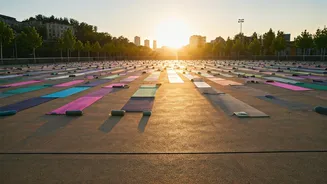
The true power of Yoga Day lies in its ability to transcend India’s complex social fabric. In public parks, school grounds, and sprawling event venues, the lines of division momentarily blur. Schoolchildren practise alongside senior citizens. Corporate executives share mat space with daily wage earners. Soldiers perform asanas in challenging terrains like Siachen, while politicians from opposing parties are often seen participating in the same events. This visual of unity is potent. In a country defined by its incredible diversity—of language, religion, caste, and economic status—finding an activity that brings so many different people together, doing the same thing at the same time, is rare. The yoga mat becomes a great leveller, creating a shared experience that cuts through the noise of daily life.
Beyond Just Physical Postures
While the striking images are of asanas, the event's impact goes deeper. It has mainstreamed conversations about mental and physical well-being. In a fast-urbanising India grappling with rising stress and lifestyle diseases, Yoga Day serves as an annual, nationwide reminder to pause and breathe. The government’s Ayush Ministry actively promotes it as a preventive healthcare measure, integrating it into schools and public health initiatives. This focus on 'swasthya' (health) offers a common goal that most can agree on, regardless of their background. It taps into a collective desire for a healthier, more balanced life, framing an ancient practice as a practical solution for modern problems.
Navigating the Politics of Wellness
Of course, the event is not without its critics. Some view its enthusiastic promotion by the government as a form of cultural nationalism, an effort to project a particular, Hindu-centric version of Indian identity. There have been debates over the chanting of 'Om' and the use of specific Sanskrit prayers, raising concerns among minority communities. However, organisers have often adapted, framing the event in more secular terms of health and wellness to broaden its appeal. While these debates are important, they also highlight the very diversity the day seeks to bridge. The fact that these conversations are happening in the open suggests that Yoga Day is not a monolithic imposition but a living, evolving idea that India is still learning to embrace on its own terms.
India’s Soft Power Signature
Ultimately, Yoga Day is one of India's most successful soft power exports. While cricket unites the subcontinent and Bollywood entertains the world, yoga offers something universally applicable: a path to inner peace. Images of mass yoga sessions in Times Square, at the Eiffel Tower, or on the Great Wall of China, all originating from an Indian initiative, profoundly shape the country's global image. It projects an identity that is both ancient and modern, spiritual and practical. For Indians at home, this global recognition reinforces the value of their own cultural heritage, creating a feedback loop of national pride that strengthens the sense of a shared identity.