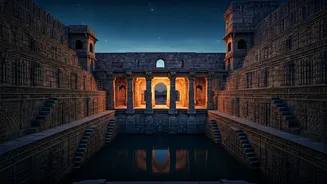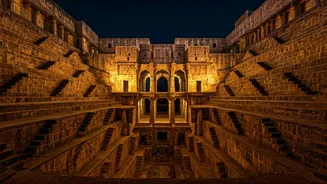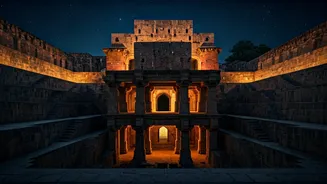



The Allure of the After-Dark Stepwell
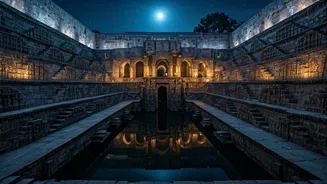
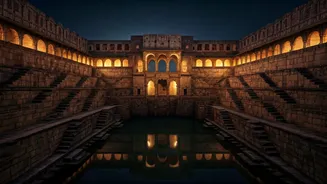
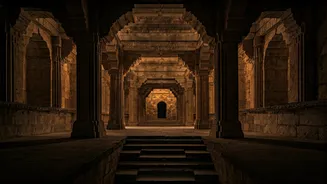
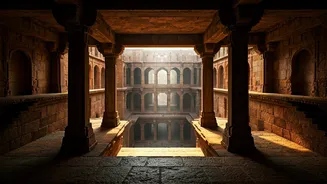
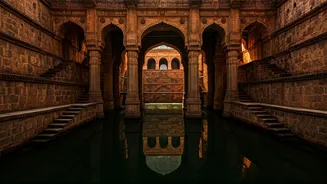
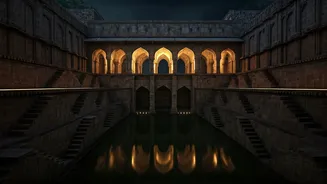
Stepwells, or ‘baolis’, are more than just historical water sources; they are subterranean works of art. While stunning by day, they take on a completely different character at night. The intense Indian sun is replaced by the soft glow of city lights
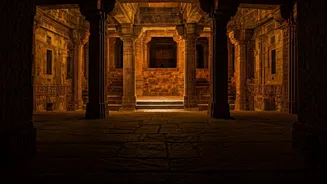
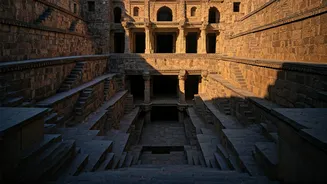
or the stark drama of your own torch. Shadows deepen, carving out geometric patterns that are often lost in the flat light of midday. This low-light environment allows for long-exposure photography, turning the stone structures into serene, ghostly landscapes. It’s an opportunity to escape the heat, the tourists, and to connect with these spaces in a more intimate and creative way. An after-dark ‘crawl’ is less about a formal tour and more about a self-guided photographic mission to capture these wonders in a new light.
Choosing Your Location: A Tale of Three Baolis
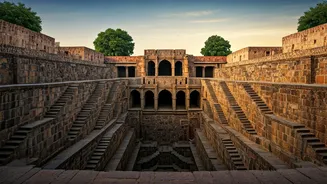
Not all stepwells are accessible after hours, so planning is key. Start with these iconic and relatively accessible options. **1. Agrasen ki Baoli, Delhi:** Nestled in the heart of the capital, this is the most accessible for an evening shoot. While it officially closes in the early evening, its location means ambient light from the surrounding city spills into its depths, creating a unique glow. You can capture its impressive scale from the street level even after closing. Always check the latest timings before you go. **2. Rani ki Vav, Gujarat:** This UNESCO World Heritage site is a masterpiece of intricate carvings. While the site itself has strict closing times, its grandeur can be appreciated and photographed during the 'golden hour' just before sunset and the 'blue hour' just after. The soft, fading light is perfect for bringing out the details of the 7-storey structure without the harsh shadows of the day. **3. Chand Baori, Rajasthan:** One of the deepest and most visually striking stepwells, Chand Baori presents a challenge. It is not typically open to the public at midnight. The strategy here is to focus on dusk. Arrive late in the afternoon to scout your angles and stay until the last possible moment as the light fades, capturing the 3,500 steps as they descend into shadow.
Essential Gear for Night Photography
Packing light isn't the goal here; packing smart is. Your gear will make or break your night-time architectural shots. * **A Sturdy Tripod:** This is non-negotiable. For the long exposures needed in low light, a tripod is the only way to get sharp, blur-free images. * **A Wide-Angle Lens:** To capture the immense scale and geometry of the stepwells, a lens in the 16-35mm range is ideal. It allows you to get close while still fitting the entire structure into your frame. * **A Remote Shutter Release or Self-Timer:** Pressing the shutter button manually can cause camera shake. Use a remote or your camera's two-second timer to ensure maximum sharpness. * **A Small Torch or Headlamp:** Primarily for safety—navigating uneven steps in the dark requires a light source. It can also be used for 'light painting,' a technique where you selectively illuminate parts of the stepwell during a long exposure.
Mastering the Shot: Camera Settings
Don't rely on auto mode. Taking control of your camera's settings is crucial for capturing the scene you see. * **Shooting Mode:** Use Manual (M). This gives you full control over the three key settings. * **ISO:** Start with the lowest native ISO your camera offers (usually 100 or 200). This minimizes digital noise and keeps your images clean and detailed. * **Aperture:** Set your aperture (f-stop) to between f/8 and f/11. This range typically provides the sharpest results for most lenses and ensures a deep depth of field, keeping both the foreground and background steps in focus. * **Shutter Speed:** This will be your variable. Since your ISO and aperture are fixed, adjust the shutter speed until the exposure looks right on your camera's screen. This could be anywhere from 5 seconds to 30 seconds, or even longer, depending on the ambient light.
Safety and Respectful Exploration
These sites are precious heritage, and your safety is paramount. Always go with a friend or in a small group. Inform someone of your plans. Be aware of your surroundings, especially in urban locations after dark. Most importantly, respect the site. These are ancient structures; do not climb on fragile walls or restricted areas. Follow the principle of leaving no trace—take only photographs, and leave only footprints. Check local regulations, as some sites may require special permissions for tripod use or professional photography.