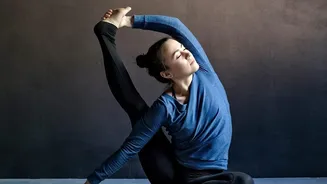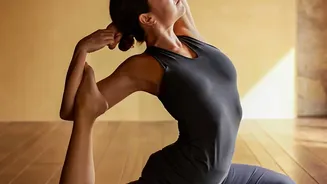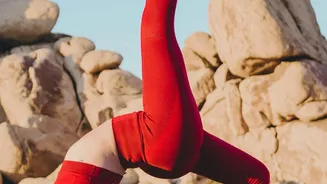




More Than Just a Stretch
Often seen as a morning ritual to greet the sun, Surya Namaskar is a powerhouse of a workout. This sequence of 12 yoga postures, when performed in a flowing series, engages nearly every major muscle group in the body. It’s a fitness 'hack' that has existed
for centuries, offering a full-body workout that improves strength, flexibility, and cardiovascular health in a short amount of time. The dynamic nature of the practice elevates the heart rate, providing an excellent cardio workout, while the poses themselves build functional strength and endurance.
Step 1: Pranamasana (Prayer Pose)
The sequence begins here, in a state of calm. Standing with feet together and palms joined at the chest prepares you mentally and physically. This pose helps to center the mind and improve posture, setting a foundation of balance and focus before the dynamic movement begins.
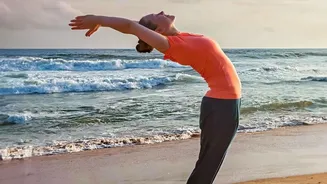
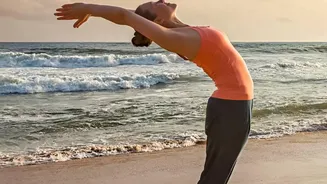
Step 2: Hasta Uttanasana (Raised Arms Pose)
Inhaling, you sweep your arms up and arch your back gently. This isn't just a simple stretch; it elongates the spine, opens the shoulders, and expands the chest to improve lung capacity. It invigorates the body, stretching the abdominal muscles and energizing the entire system.
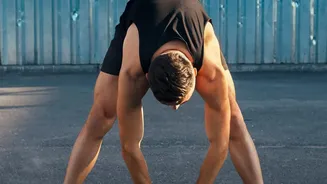
Step 3: Hastapadasana (Hand to Foot Pose)
Exhaling, you fold forward from the hips. This intense forward bend stretches the entire back of your body, especially the hamstrings and calves. It also provides a gentle massage to the abdominal organs, which can aid digestion, while increasing blood flow to the brain.
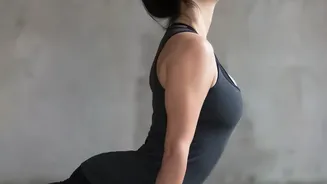
Step 4: Ashwa Sanchalanasana (Equestrian Pose)
From the forward fold, you inhale and step one leg back into a deep lunge, lifting your chest and gaze. This pose is a fantastic hip opener, stretching the hip flexors and quadriceps. It also strengthens the legs and core while improving balance and concentration.
Step 5: Dandasana (Plank Pose)
Now, you step the other leg back to join the first, holding your body in a straight line like a plank. This pose is a major core-strengthening 'hack'. It engages the abdominal muscles, back, shoulders, and arms, building stability and upper body strength.
Step 6: Ashtanga Namaskara (Eight-Limbed Pose)
Gently lowering your knees, chest, and chin to the floor, you create this unique pose. The name comes from the eight parts of the body touching the mat. It’s an effective way to build strength in the chest, arms, and shoulders in preparation for the next pose.
Step 7: Bhujangasana (Cobra Pose)
Inhaling, you slide forward and lift your chest, keeping your hips on the floor. Cobra pose is a powerful backbend that strengthens the spine, increases its flexibility, and opens up the chest and shoulders. It can help alleviate stress and fatigue.
Step 8: Adho Mukha Svanasana (Downward-Facing Dog)
Exhaling, you lift your hips and press back, forming an inverted 'V' shape. This iconic yoga pose is a full-body reset. It stretches the hamstrings, calves, and spine while building strength in the arms and shoulders. It also helps to calm the mind and energize the body.
Step 9: Ashwa Sanchalanasana (Equestrian Pose)
Inhaling, you bring the opposite foot forward between your hands, returning to the lunge position. This mirrors Step 4, continuing to work on hip flexibility and leg strength, ensuring a balanced workout for both sides of the body.
Step 10: Hastapadasana (Hand to Foot Pose)
Exhaling, you step your back foot forward to meet the front and return to the forward fold. This gives your hamstrings and back another beneficial stretch.
Step 11 & 12: Returning to the Start
Inhaling, you rise back up with a lengthened spine into the Raised Arms Pose (Hasta Uttanasana), and on the final exhalation, you return to the Prayer Pose (Pranamasana) where you began. This completes one cycle, which is then typically repeated leading with the opposite leg in the lunge.